

Why choose this specialty?
Interdisciplinary training in the specialty is a prerequisite for a broad engineering perspective and the ability to correctly interpret and solve complex problems. An additional advantage of a graduate bachelor engineer in electronic information technologies is the ability to easily adapt to a new or unfamiliar environment and to join scientific and development teams.
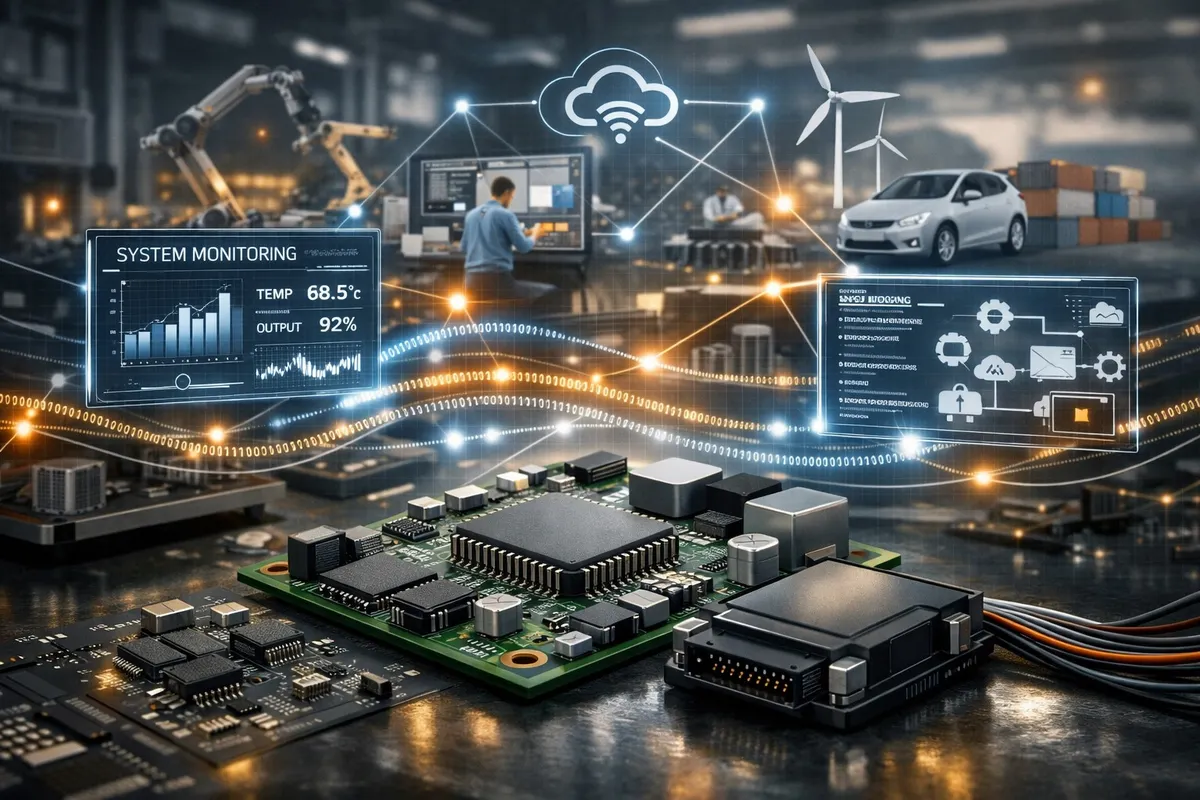
The specialty "Electronic Information Systems" (EIS) will replace the existing specialty "Electronics" in professional field 5.2. It is interdisciplinary and includes disciplines from the fields of fundamental natural sciences, electronics and microelectronics, information and communication technologies, technical legislation and standardization, and business management. The advantage lies in the possibility of a natural combination of competencies in hardware and software engineering. The curriculum will allow students to acquire an optimal set of knowledge for the development of programmable electronic modules and systems for monitoring and controlling processes in their entirety – from recording various quantities and transmitting them via modern communication interfaces, to forming databases and subsequent processing.
The specialty "Electronic Information Systems" (EIS) will replace the existing specialty "Electronics" in professional field 5.2. It is interdisciplinary and includes disciplines from the fields of fundamental natural sciences, electronics and microelectronics, information and communication technologies, technical legislation and standardization, and business management. The advantage lies in the possibility of a natural combination of competencies in hardware and software engineering. The curriculum will allow students to acquire an optimal set of knowledge for the development of programmable electronic modules and systems for monitoring and controlling processes in their entirety – from recording various quantities and transmitting them via modern communication interfaces, to forming databases and subsequent processing.