
Bozhidar Stefanov is a senior assistant at the Department of Chemistry (FETT). His main scientific interests are in the field of nanostructured materials, functional coatings, and photocatalysis. Photocatalysts are materials that, upon absorbing light energy, can initiate chemical reactions on their surface. They are mainly used in technologies for removing pollutants from water and air (for example, self-cleaning window coatings and photocatalytic paving for removing pollutants from the air in the urban environment).
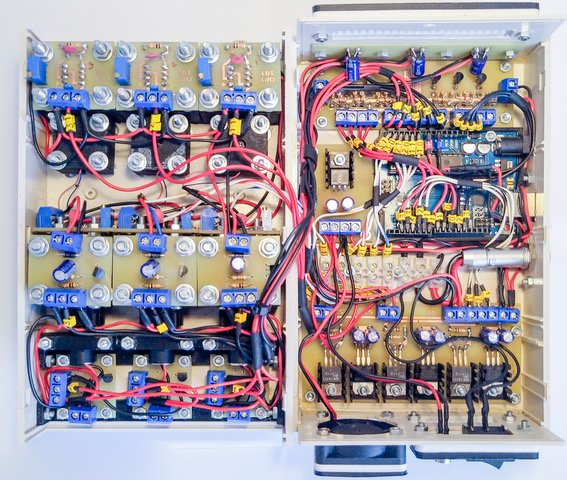
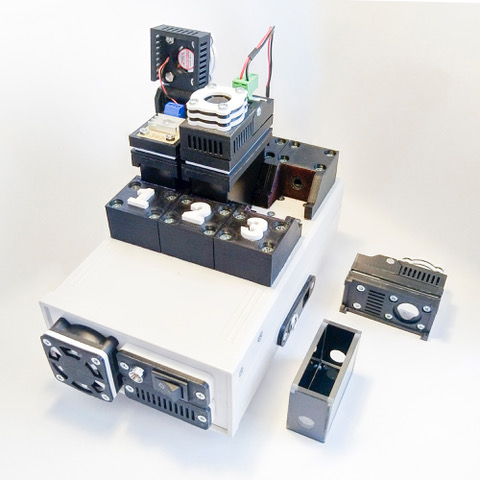
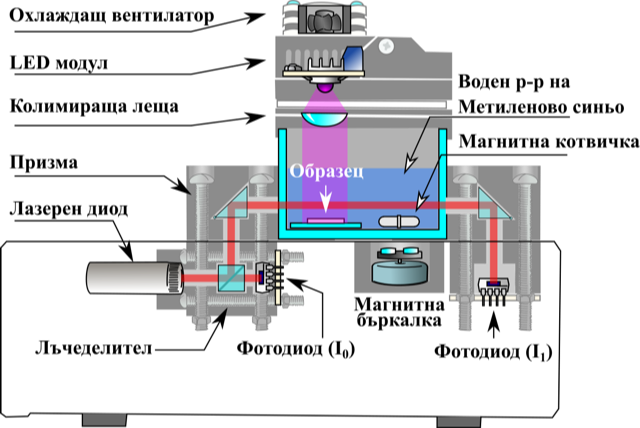
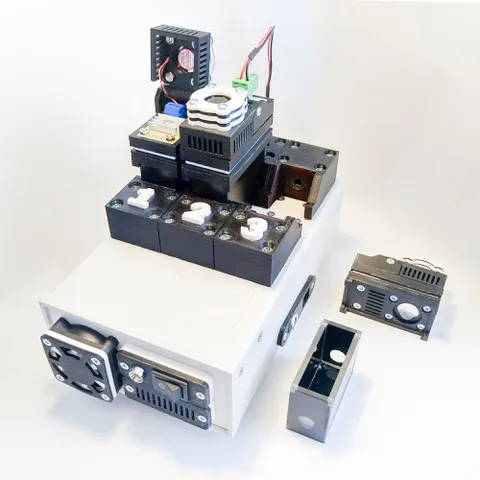
A key point in the development of new photocatalysts is determining their activity - this is most often done by measuring the rate at which the photocatalyst degrades a model pollutant in air or liquid phase. Bozhidar Stefanov developed an automated reactor for rapid determination of the activity of photocatalytic coatings. The determination is carried out in an aqueous phase with a model pollutant - the dye Methylene Blue, whose concentration can be monitored in real time by the absorption of a laser beam by the solution. The device has three reaction cells and allows the parallel conduct of three experiments, with the results for photocatalytic activity available within 90 minutes. All structural components of the reactor are produced by 3D printing, accessible and inexpensive optical components are used, and the electronics are based on an Arduino microcontroller development board. The development is within the framework of the successfully completed project 201PR0013-03 "Photocatalytic activity of nanoporous TiO2/Al2O3 composites" under the "Perspective Leaders" program of the NIS at TU-Sofia and was presented at the XXIX International Scientific Conference Electronic Engineering - ET2020.
A key point in the development of new photocatalysts is determining their activity - this is most often done by measuring the rate at which the photocatalyst degrades a model pollutant in air or liquid phase. Bozhidar Stefanov developed an automated reactor for rapid determination of the activity of photocatalytic coatings. The determination is carried out in an aqueous phase with a model pollutant - the dye Methylene Blue, whose concentration can be monitored in real time by the absorption of a laser beam by the solution. The device has three reaction cells and allows the parallel conduct of three experiments, with the results for photocatalytic activity available within 90 minutes. All structural components of the reactor are produced by 3D printing, accessible and inexpensive optical components are used, and the electronics are based on an Arduino microcontroller development board. The development is within the framework of the successfully completed project 201PR0013-03 "Photocatalytic activity of nanoporous TiO2/Al2O3 composites" under the "Perspective Leaders" program of the NIS at TU-Sofia and was presented at the XXIX International Scientific Conference Electronic Engineering - ET2020.