
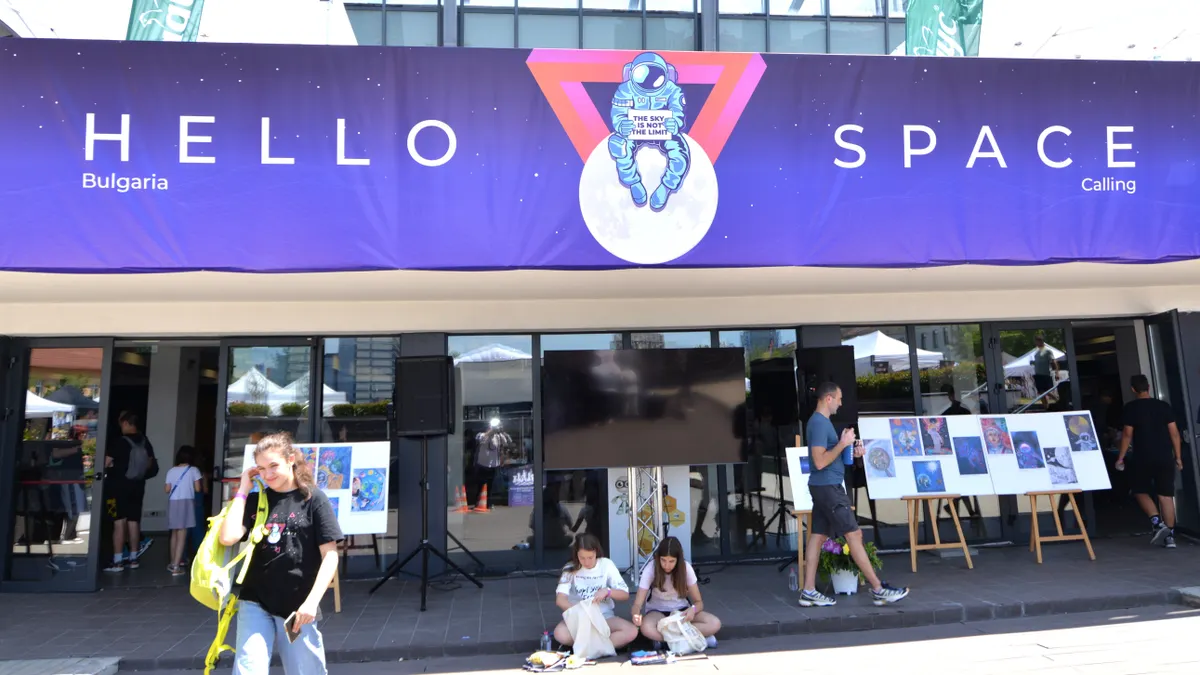
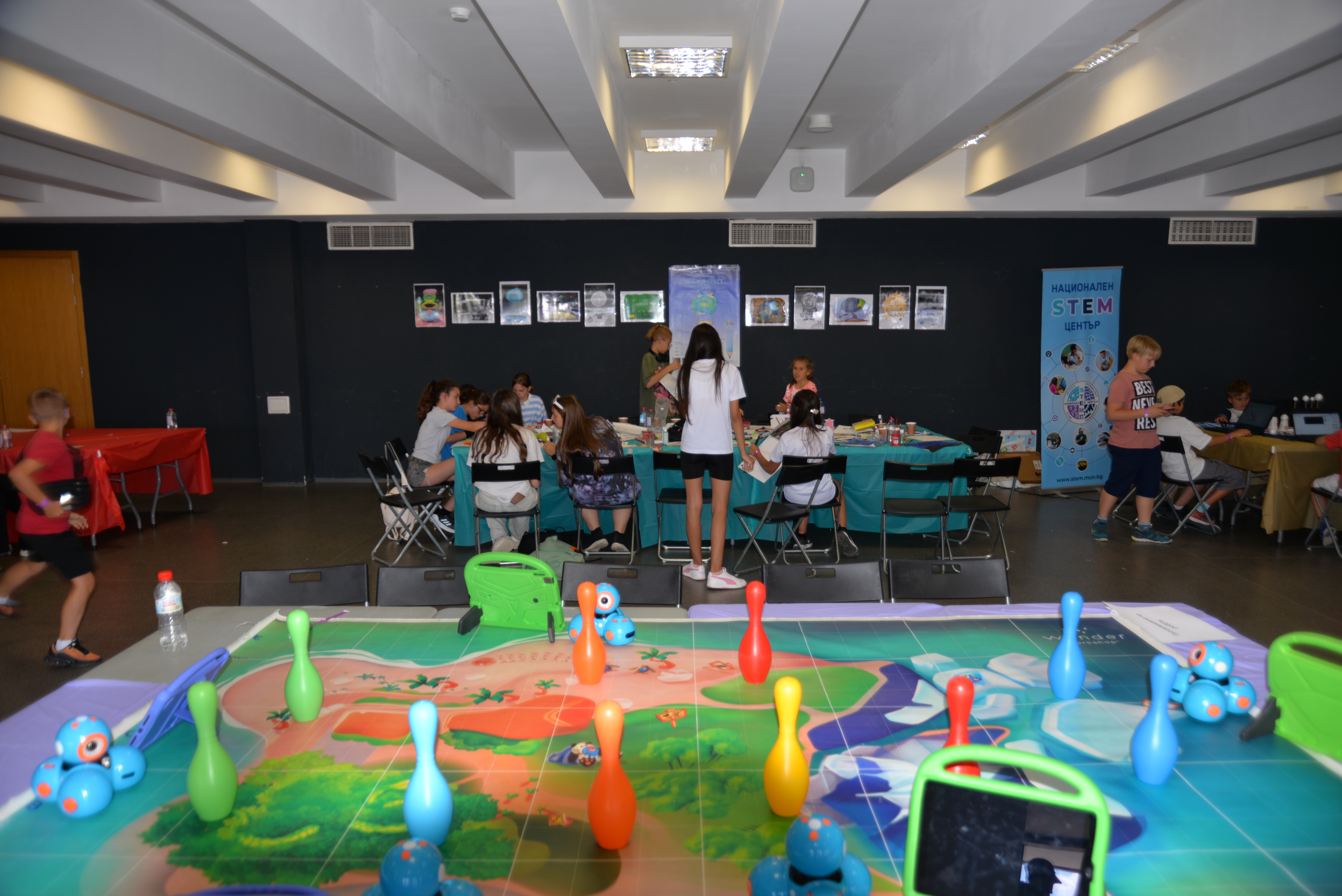
The festival set one of the most ambitious goals for our country – the preparation and sending of the third Bulgarian astronaut into space. The one-day festival of curiosity inspired and engaged children and adults alike with the wonders of science, technology, engineering, mathematics, and the arts.
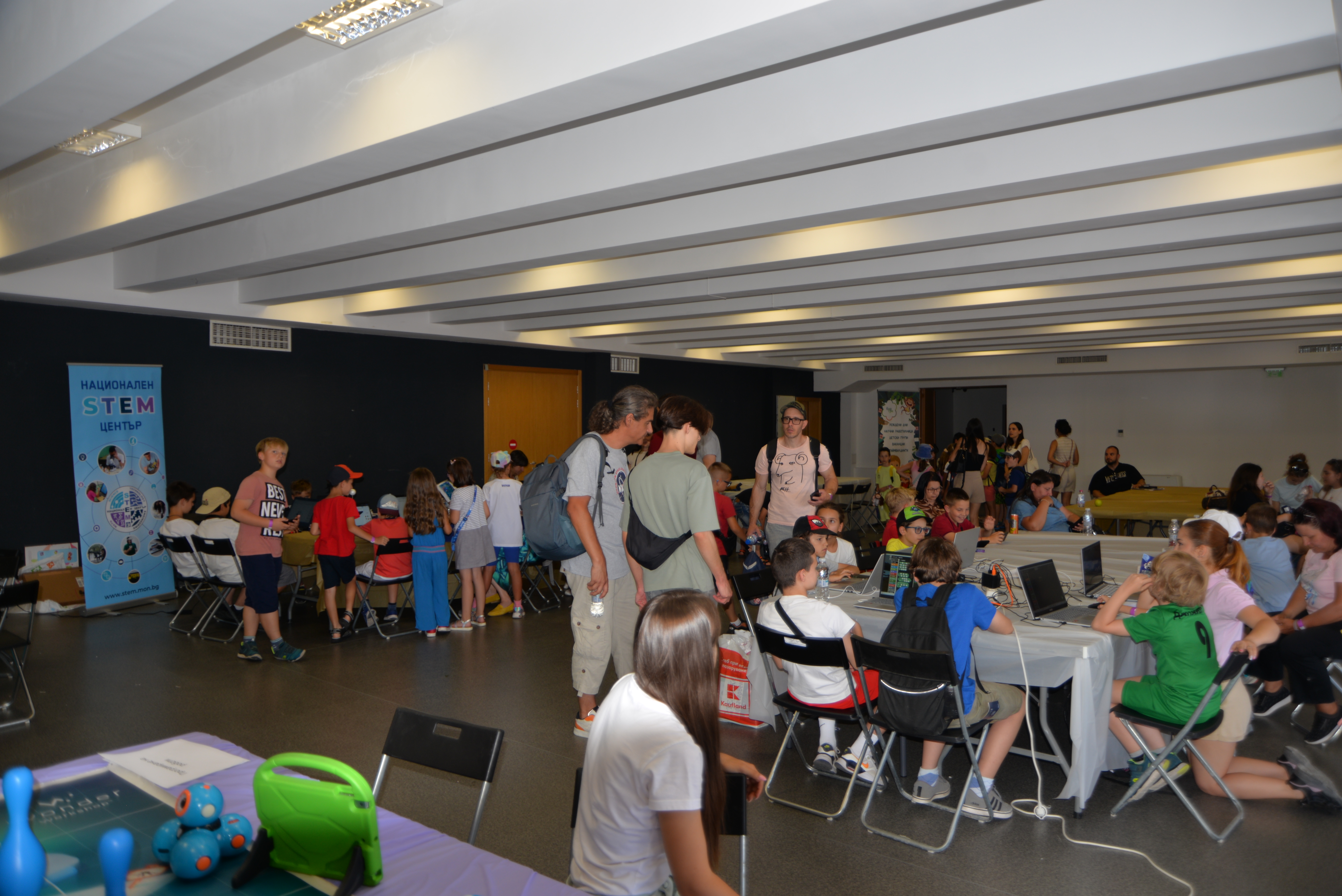
At the festival „"Hello, Space! This is Bulgaria" were represented by 5 faculties of the Technical University of Sofia: Faculty of Industrial Technologies, Faculty of Transport, Faculty of Telecommunications, Faculty of Automation, and Faculty of Electronic Engineering and Technologies.
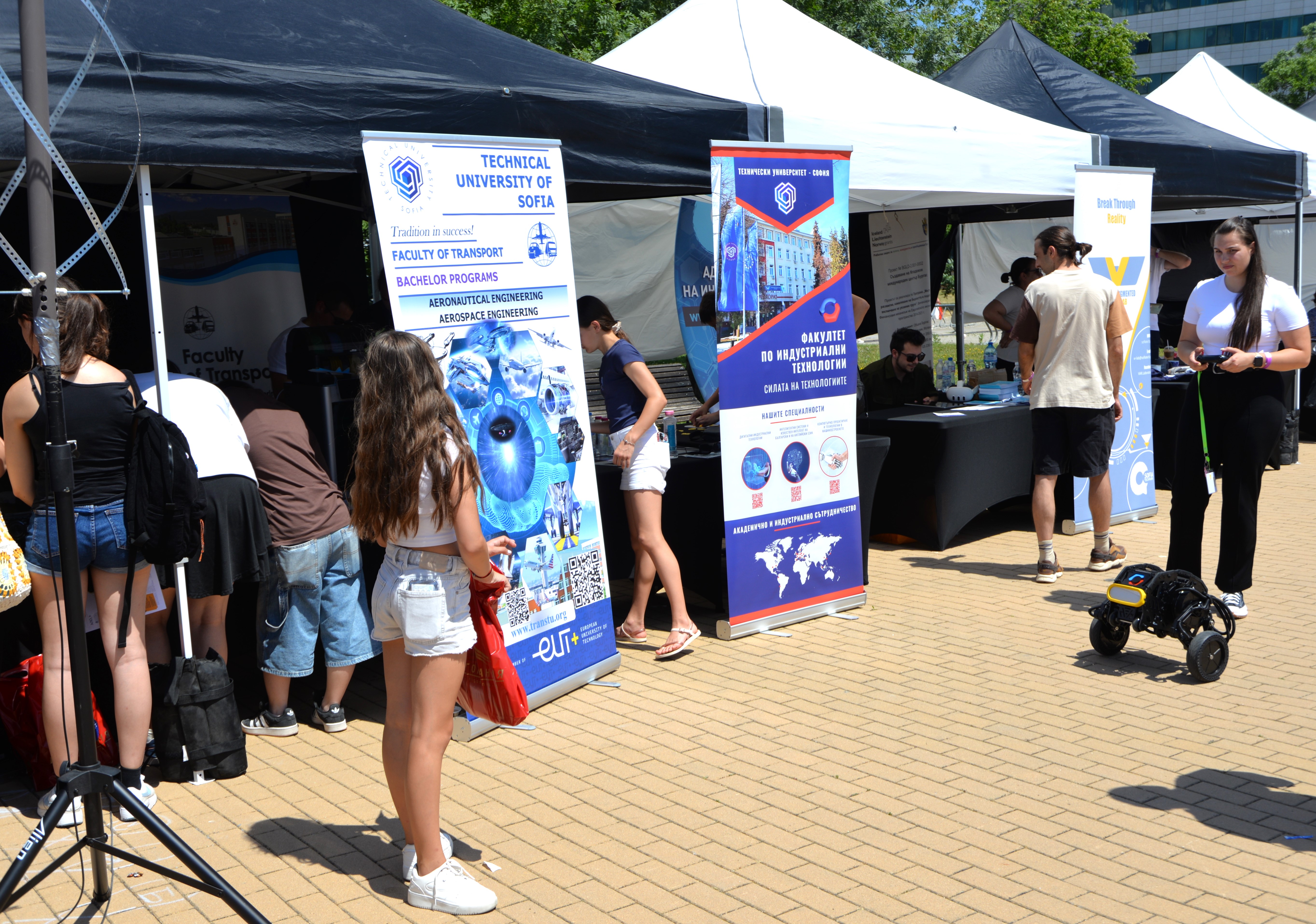
The Faculty of Industrial Technologies was represented by Assoc. Prof. Dr. Eng. Radoslav Milchev, MSc Eng. Antonia Gadjalova, and MSc Eng. Kalin Krustev. They demonstrated a two-wheeled mobile platform used by FIT students for upgrading algorithms for autonomous driving and sensorics. Visitors were introduced to the specialties studied at FIT: "Computer-Aided Design and Technologies in Mechanical Engineering", "Digital Industrial Technologies", "Intelligent Systems and Artificial Intelligence (in Bulgarian and English)", "Engineering Ecology", "Industrial Robotics and 3D Technologies".
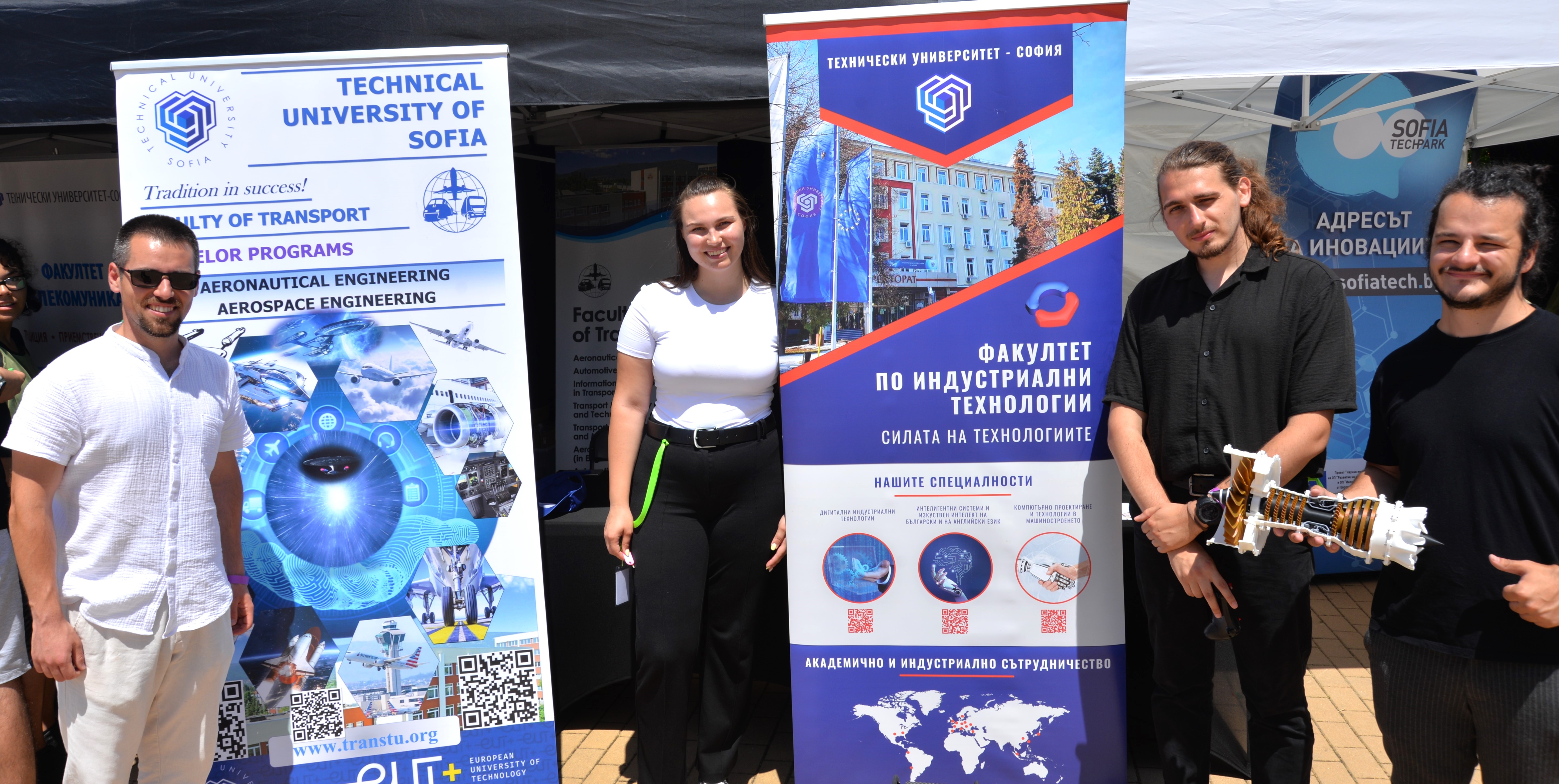
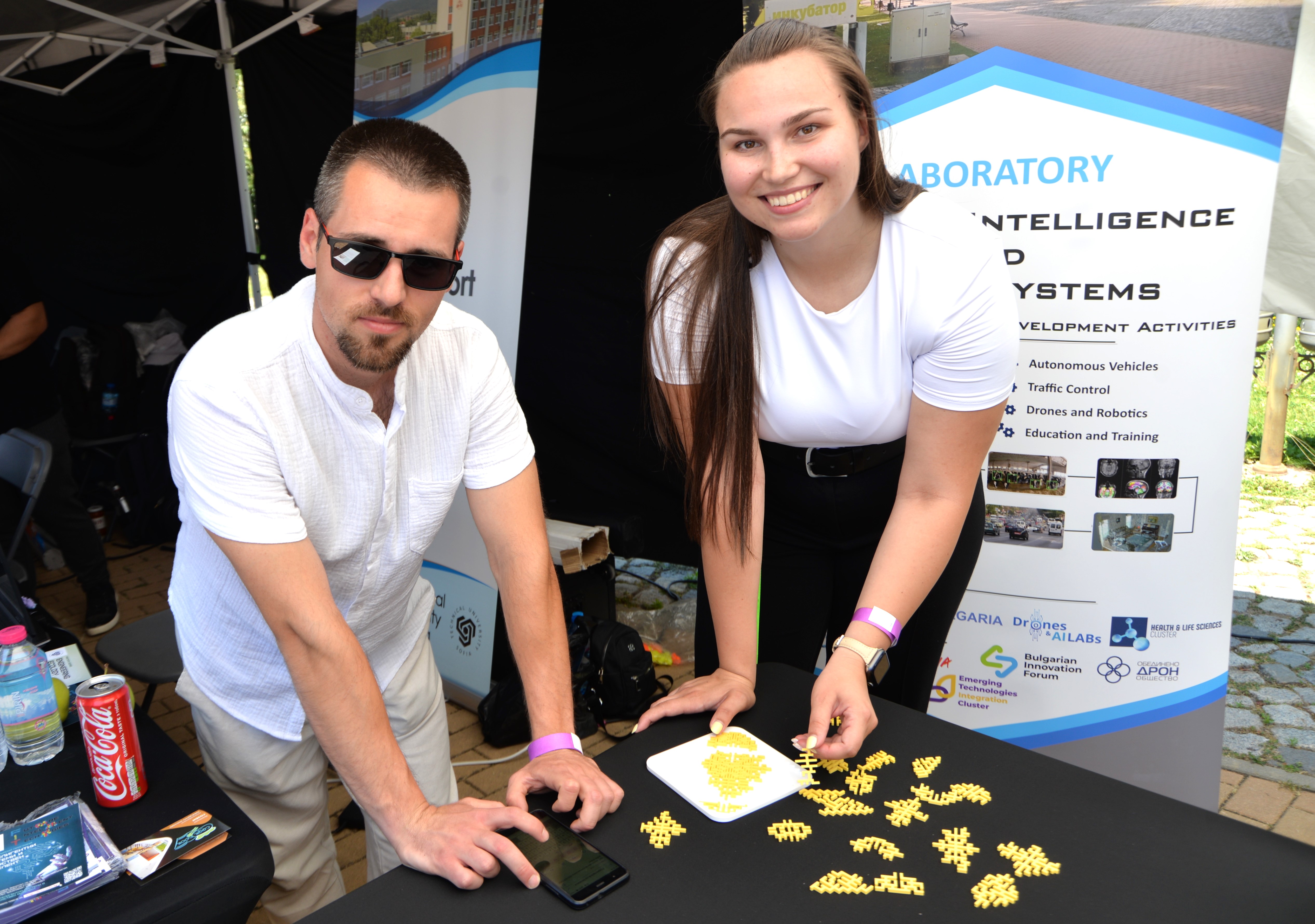
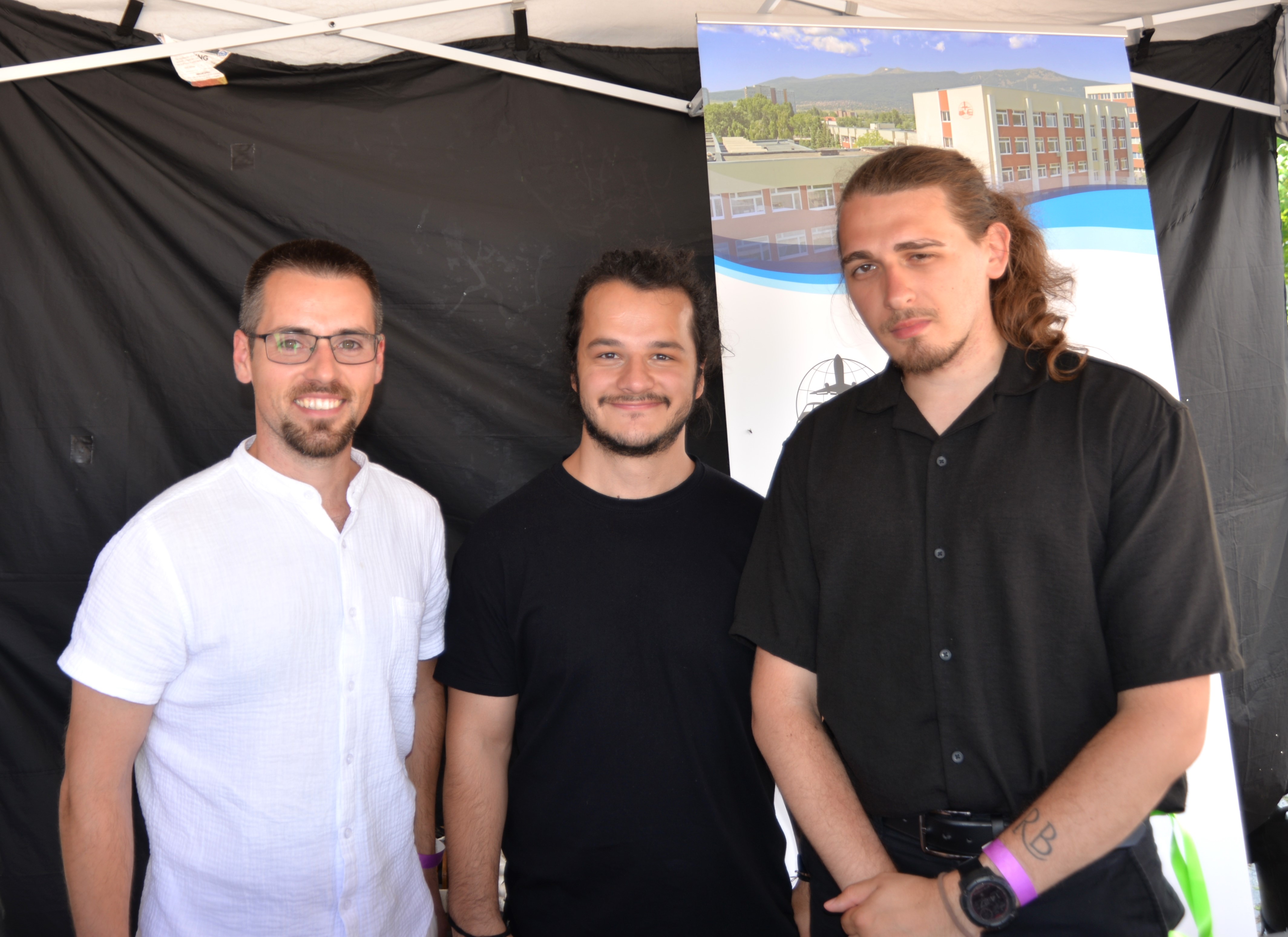
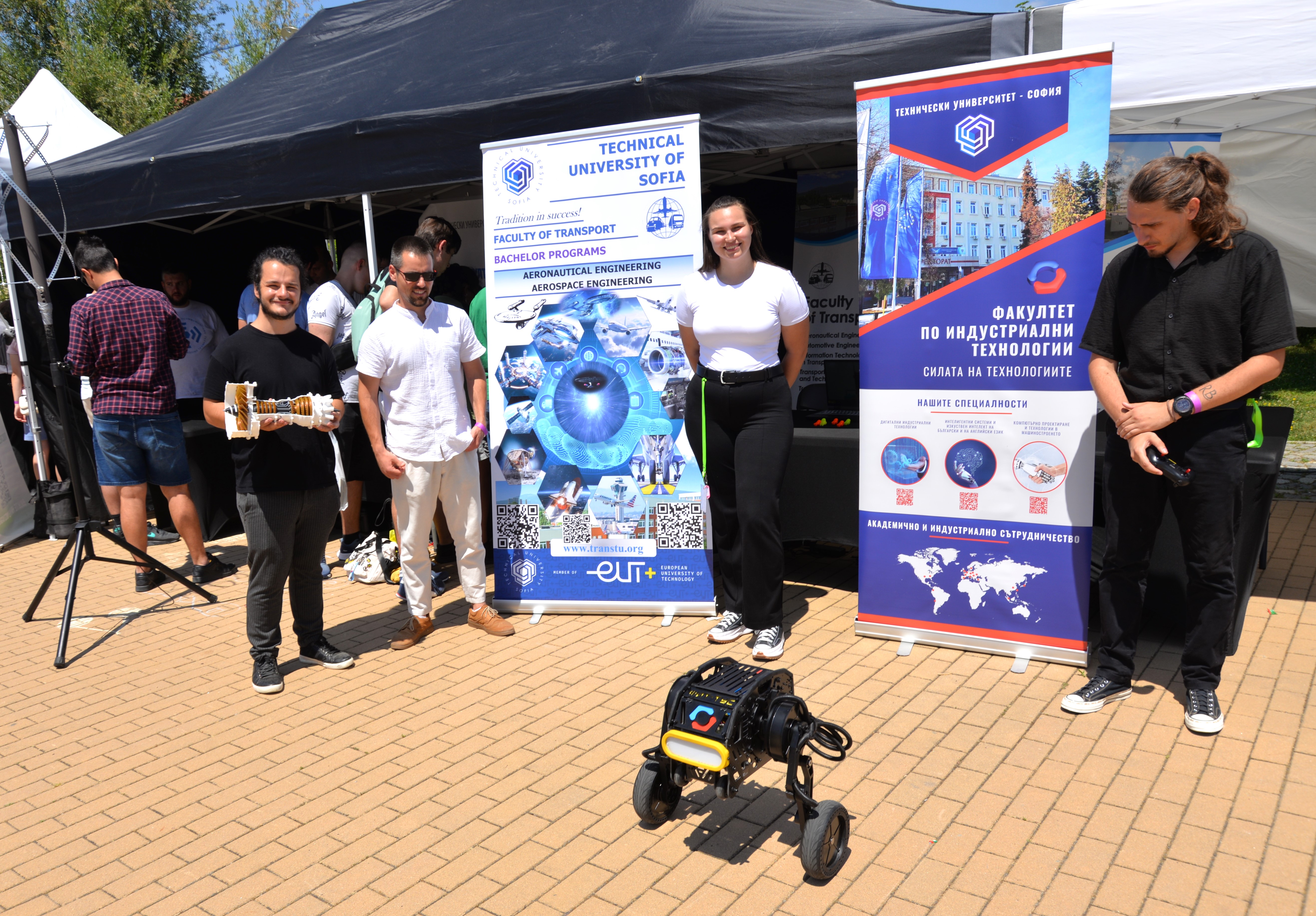
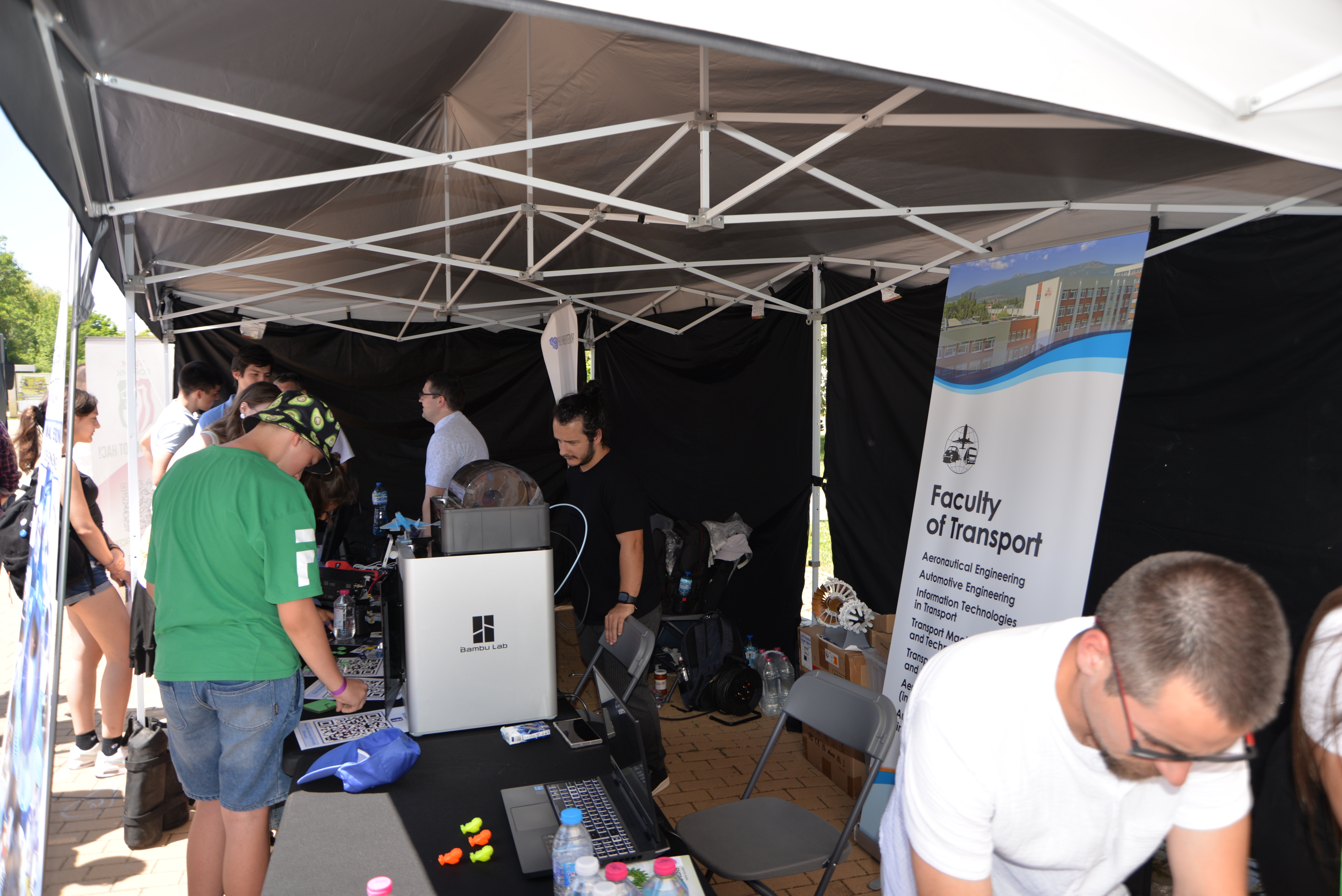
The Faculty of Transport was represented by Senior Lecturer Dr. Eng. Dimitar Ginchev, MSc Eng. Martin Voykov, and MSc Eng. Tsvetomir Gichev. They demonstrated to festival visitors a 3D printer for polymer materials and many different models and mock-ups of engines, aircraft, and space equipment, all printed and processed by this printer. The specialties studied at the Faculty of Transport were also presented: "Aviation Technology and Engineering (in Bulgarian and English)", "Aerospace Engineering (in English)", "Transport Technology and Engineering", "Transport Technology and Management", "Automotive Technology", which is studied part-time.
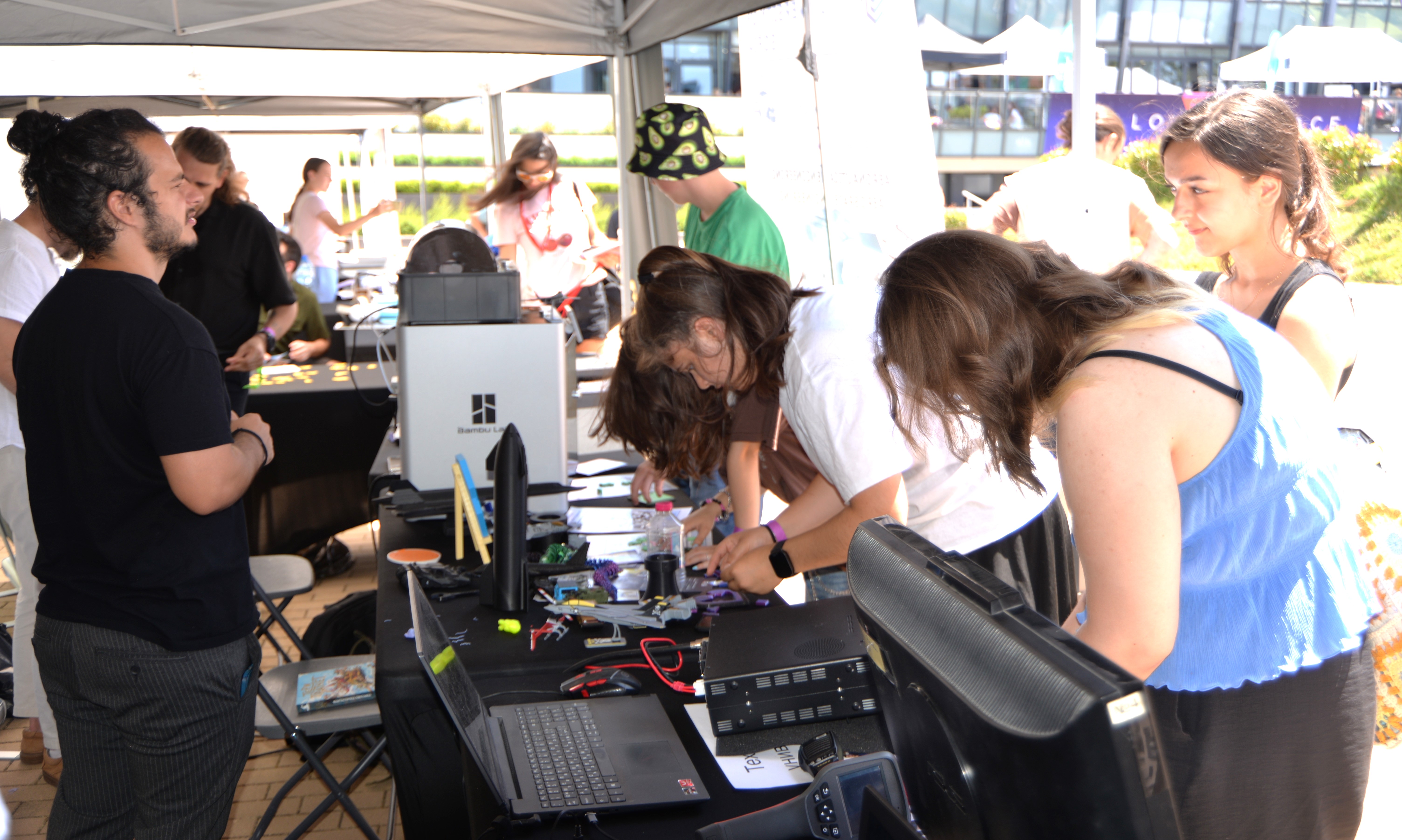
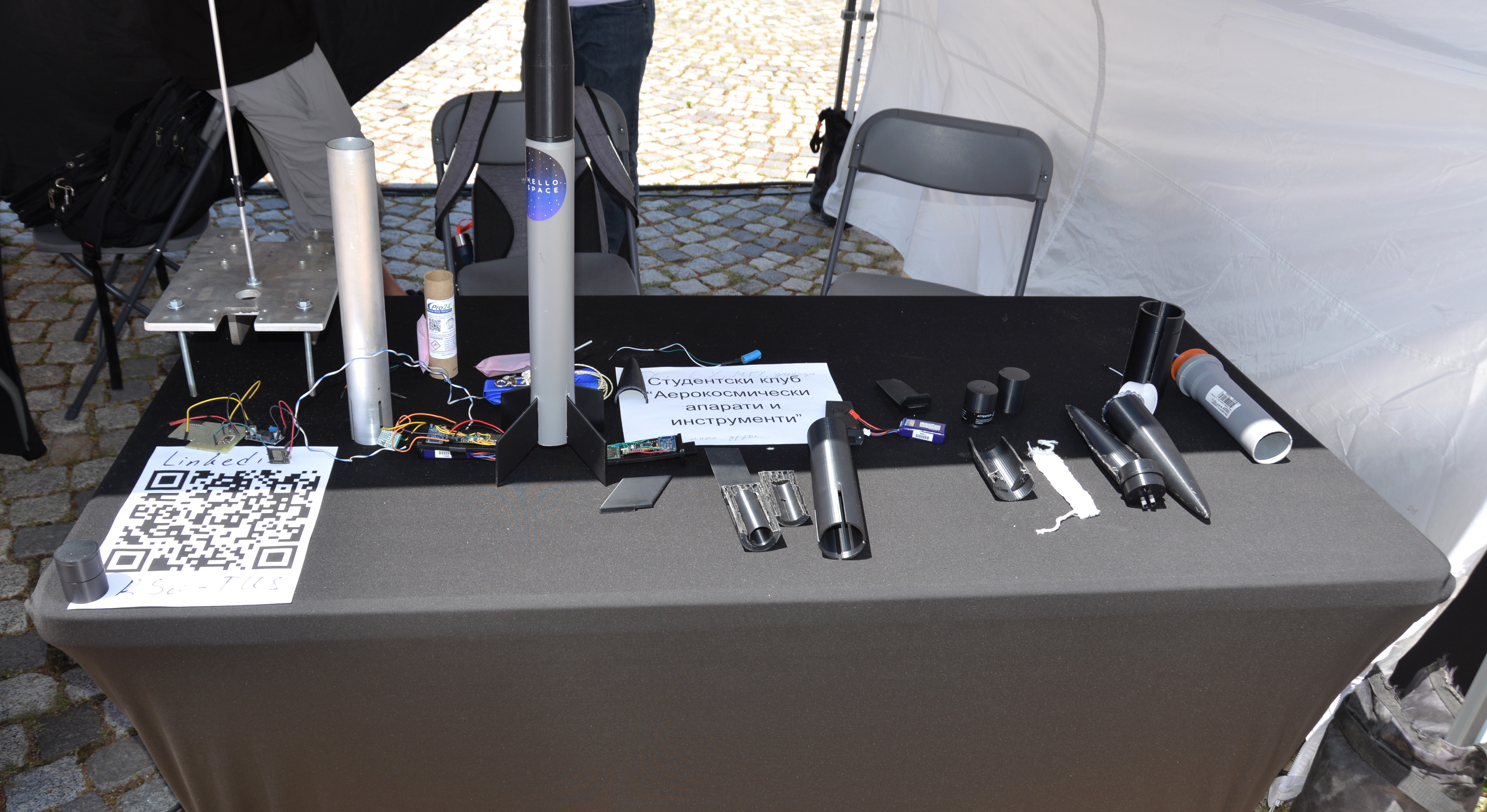
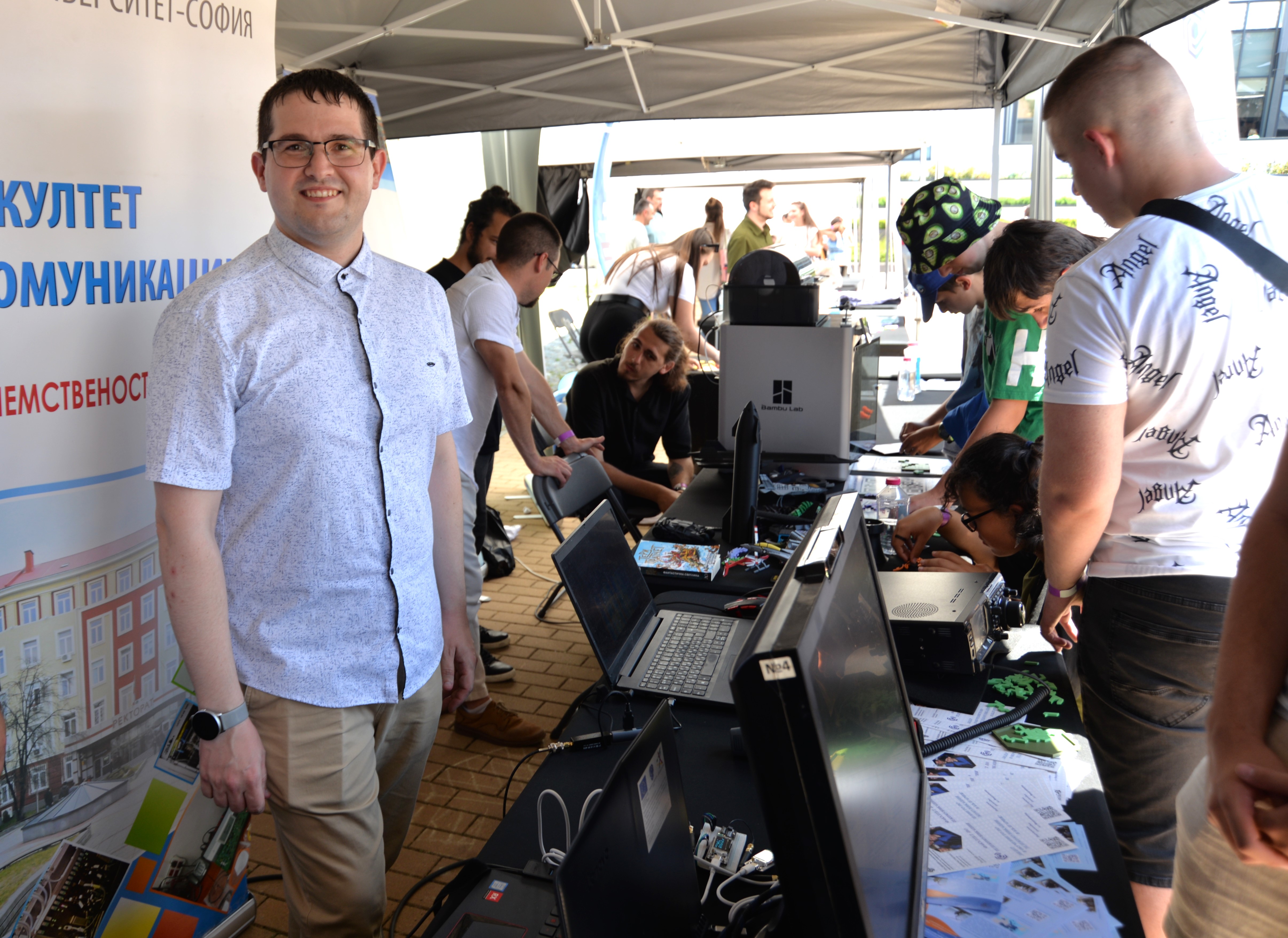
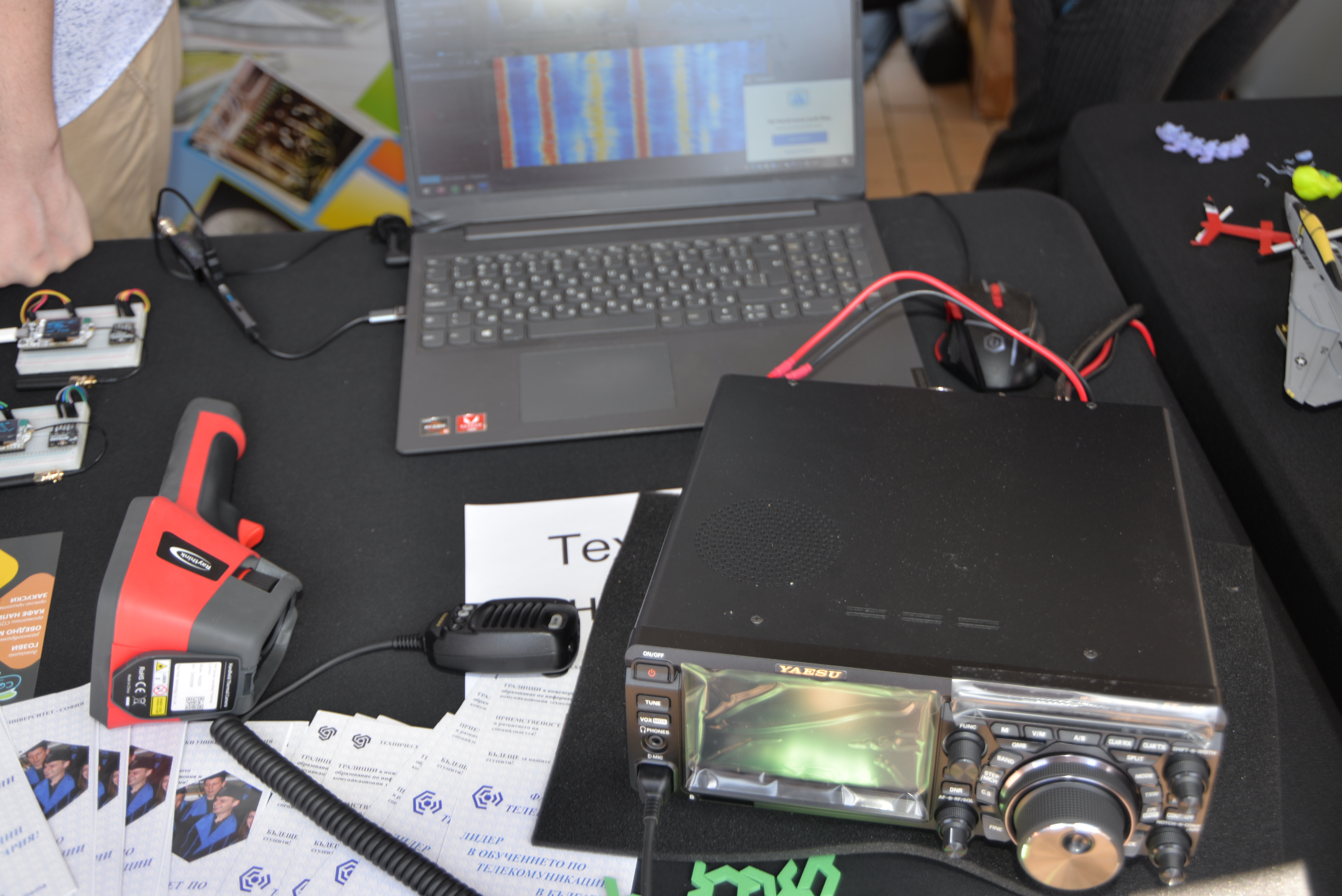
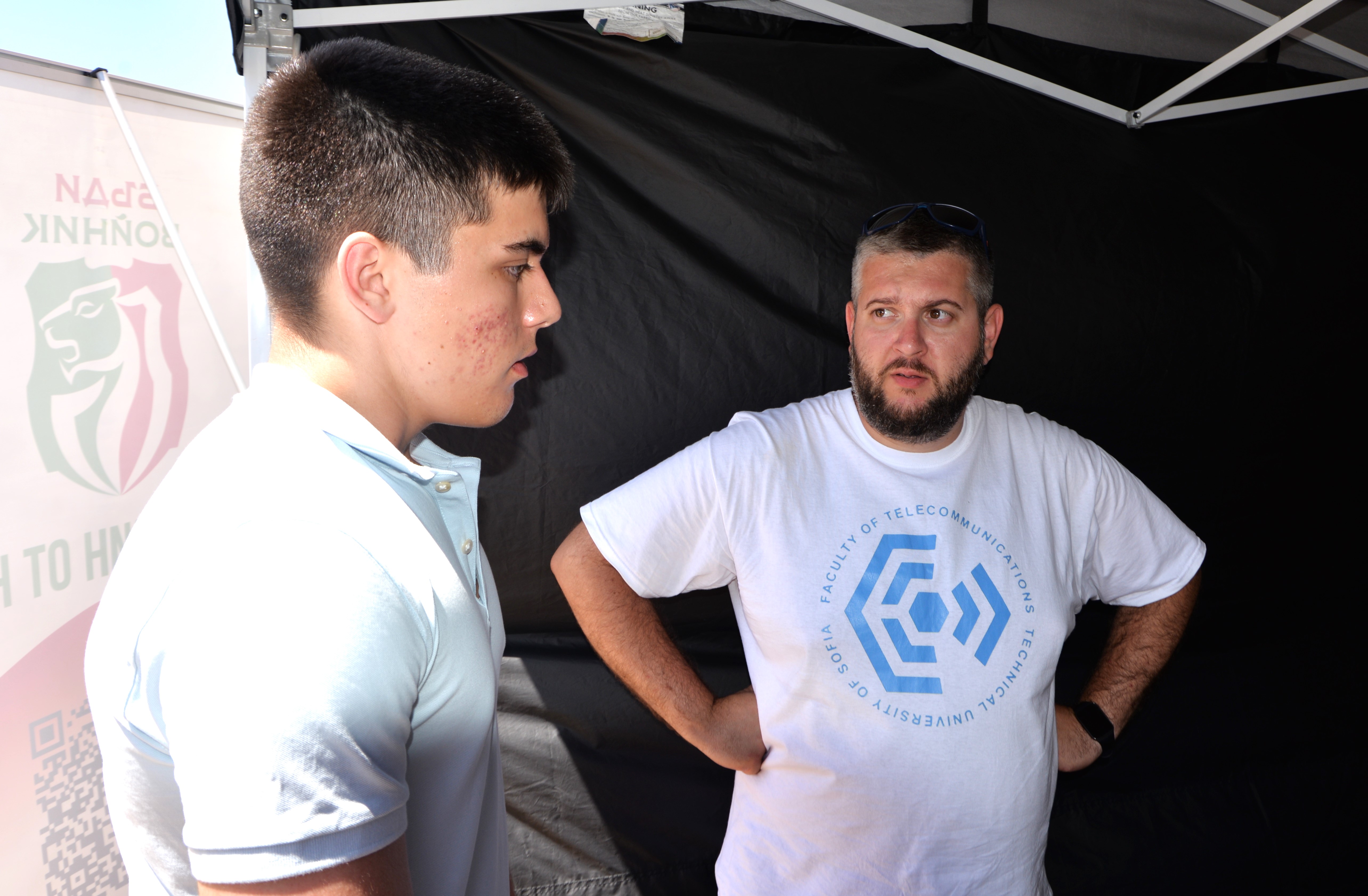
The Faculty of Telecommunications was represented by Senior Lecturer Dr. Eng. Lyubomir Laskov, Senior Lecturer Dr. Eng. Tsvetan Valkovski, and Senior Lecturer Dr. Eng. Ivaylo Nachev. They demonstrated the operation of a professional thermal camera and explained its applications in practice. The engineers demonstrated the establishment of an amateur radio link and how to work with software-defined radio – SDR. The recording and processing of ECG signals (electrocardiogram signals) also attracted public interest. A system for remote monitoring of environmental parameters – temperature, humidity, atmospheric pressure, etc. – was also shown. It was interesting for many visitors to see how these data, when received, are transmitted via the internet and monitored worldwide via mobile phones or other devices. Everyone was interested and asked many questions about the "Telecommunications" specialty.
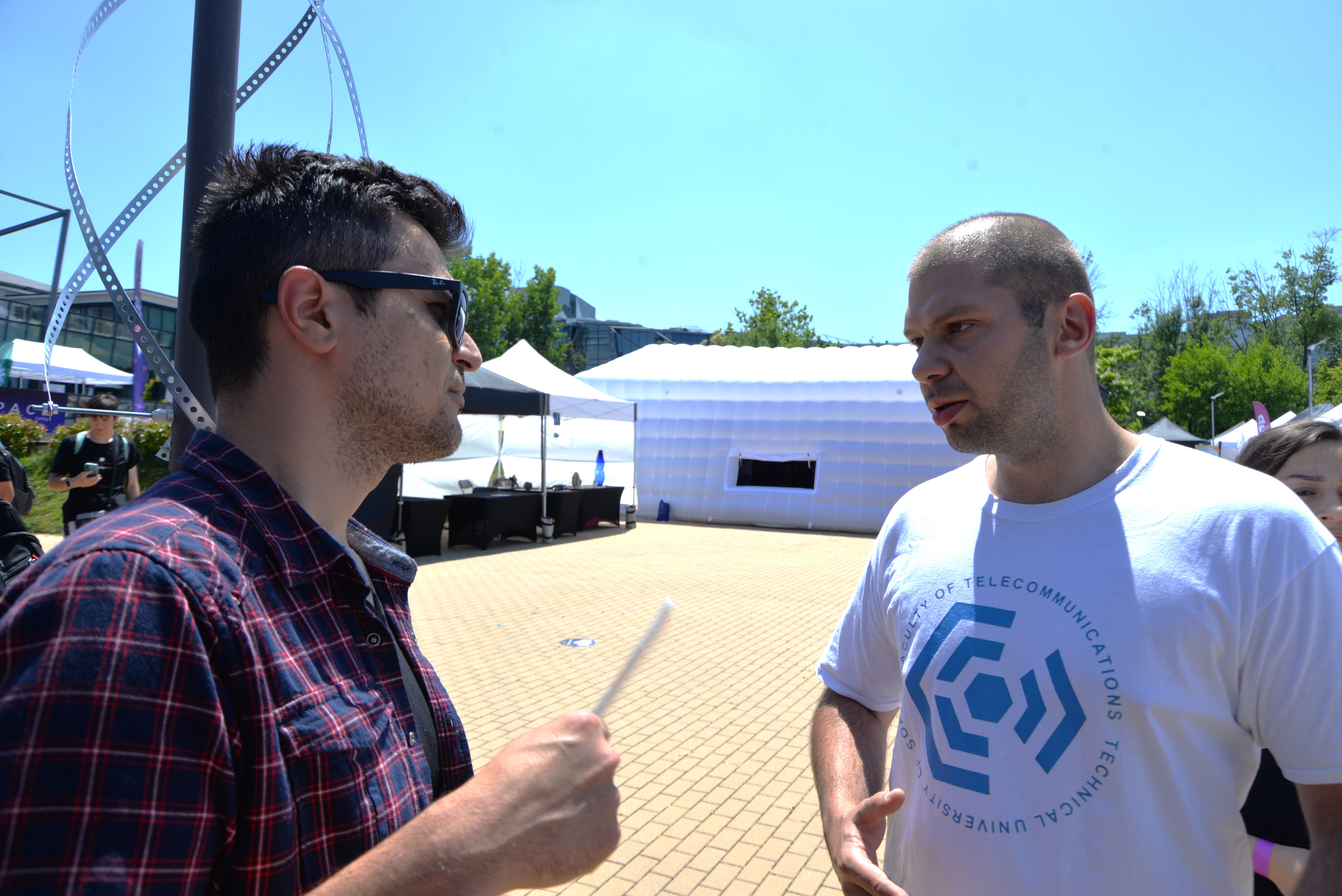
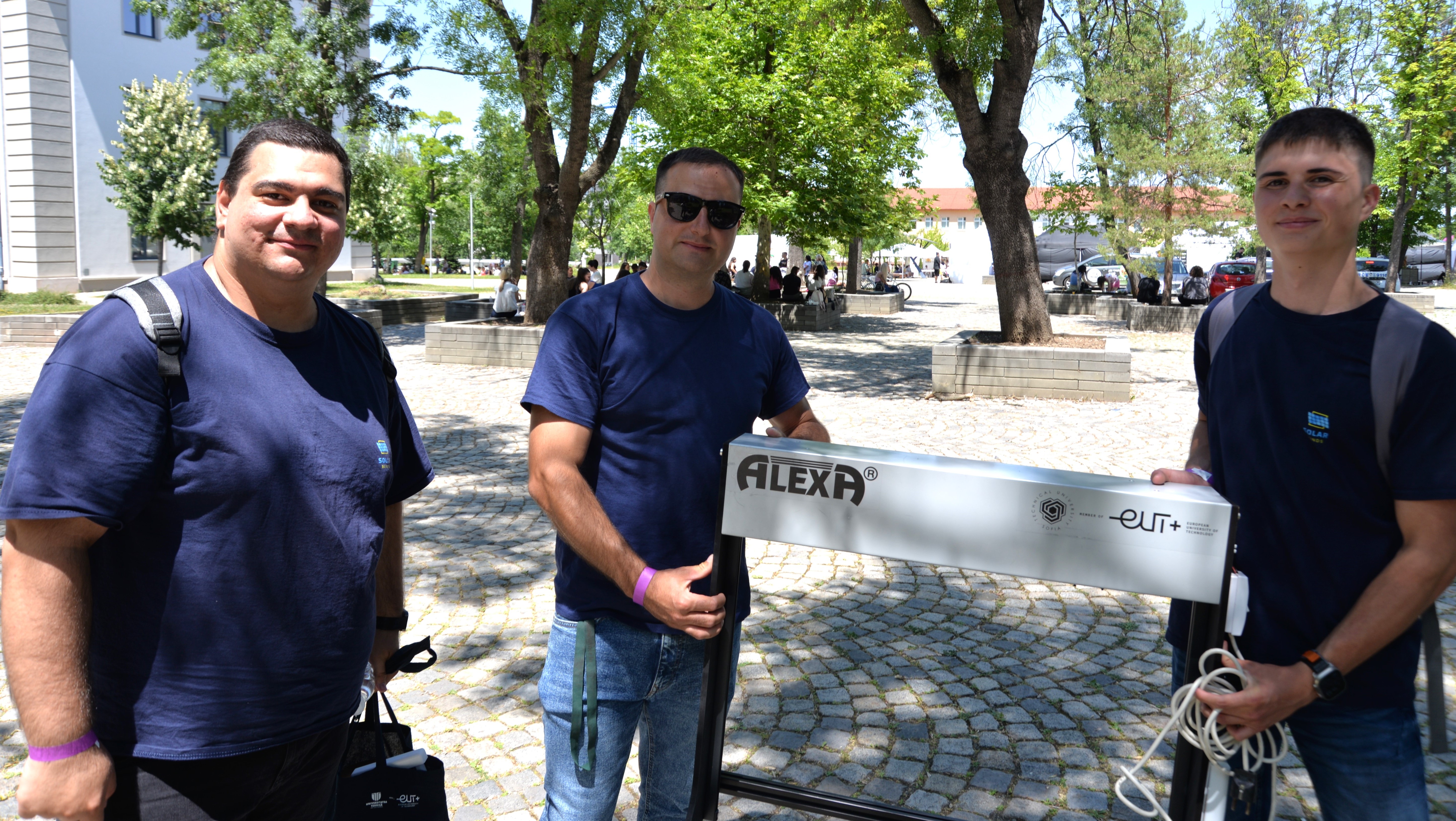
The Faculty of Automation and the Robotics Club were presented by Assoc. Prof. Dr. Eng. Vladimir Hristov, Senior Lecturer Dr. Eng. Danail Slavov, and students Denis Ismetov and Ivian Stoyanov. They presented various robots that demonstrated engineering capabilities – prototyping, gesture control, and artificial intelligence control. The Robotics Club participated with two projects: one for external shutters that generate energy from the sun, and the second for gesture-controlled robots with artificial intelligence. Many of the festival attendees were interested in the specialties "Automation, Information and Control Engineering" and "Intelligent Systems in Industry, City, and Home".
The Faculty of Electronic Engineering and Technologies was presented by Assoc. Prof. Dr. Eng. Dimitar Nikolov and two doctoral students. They presented the "CHIPS of Europe" project, focused on the semiconductor industry of the EU, which aims to increase the attractiveness of related educational programs and careers. The goal of the project is to build a talent pipeline to the industry, update curricula, and raise public awareness in the field of semiconductors. Visitors also learned about the sought-after specialties studied at the Faculty of Electronic Engineering and Technologies – "Electronic Information Systems" and "Automotive Electronics".
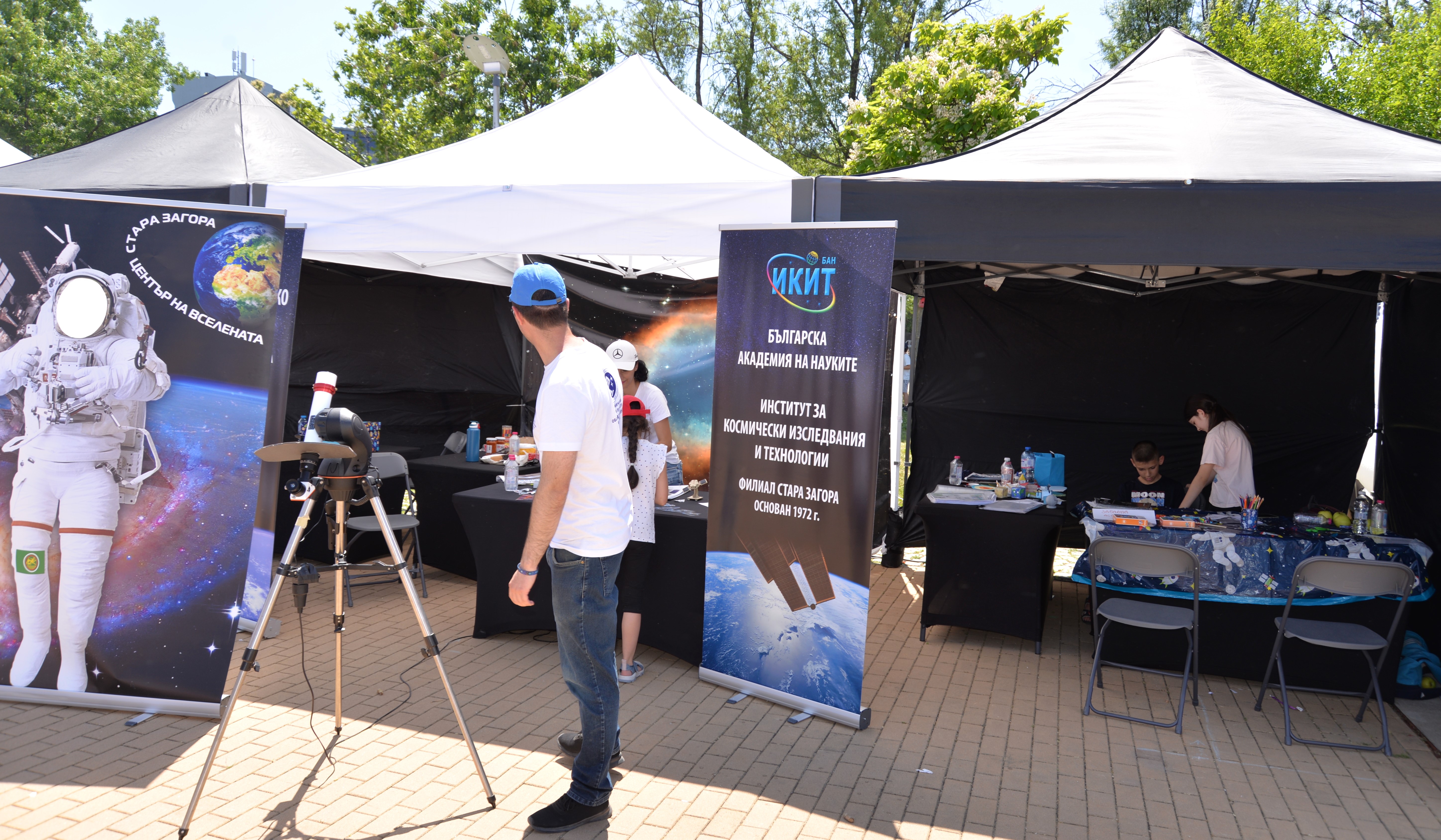
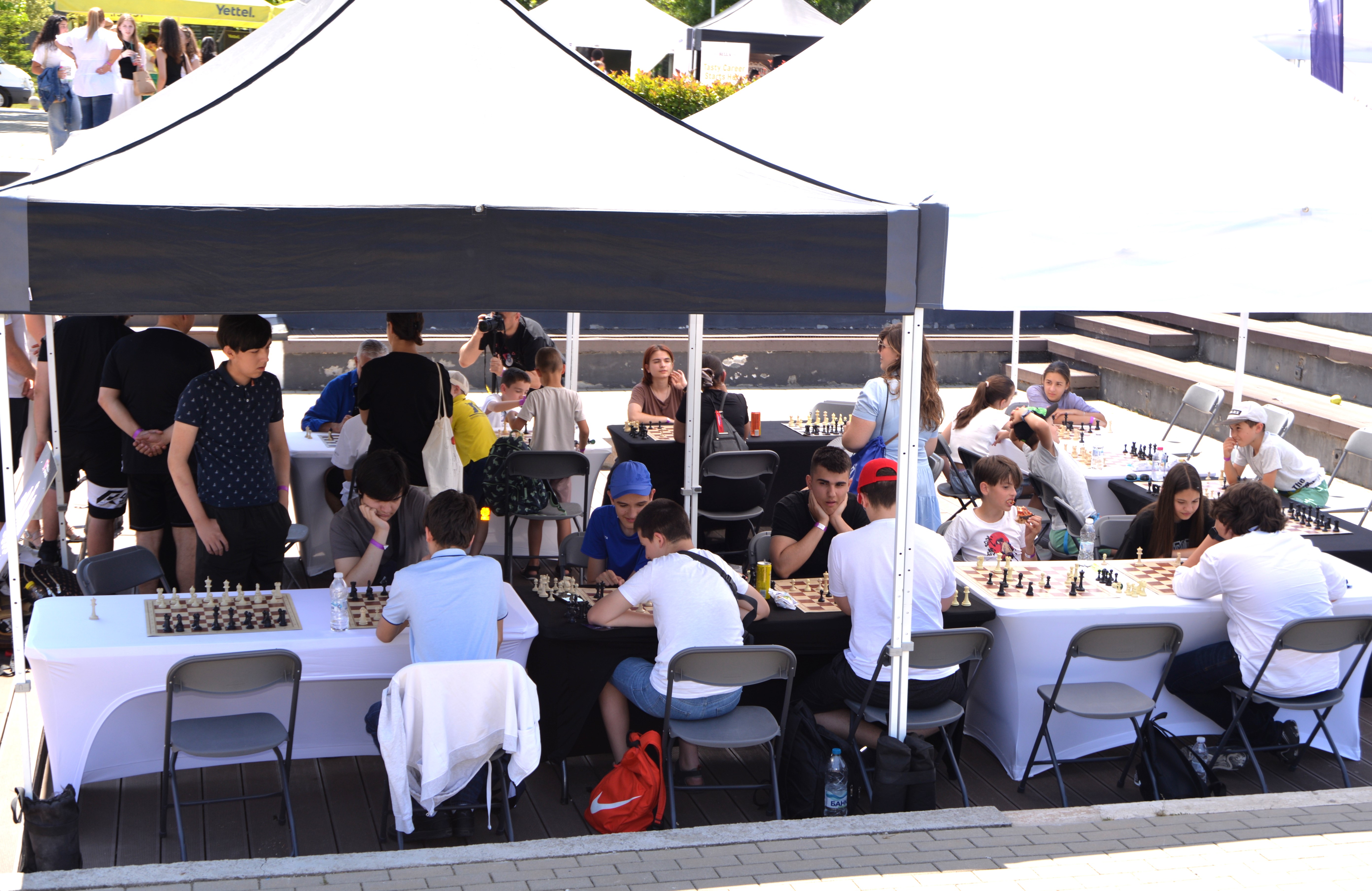
The event attracted the interest of young people in science and technology and showed that Bulgaria has the potential to once again become a high-tech space nation.