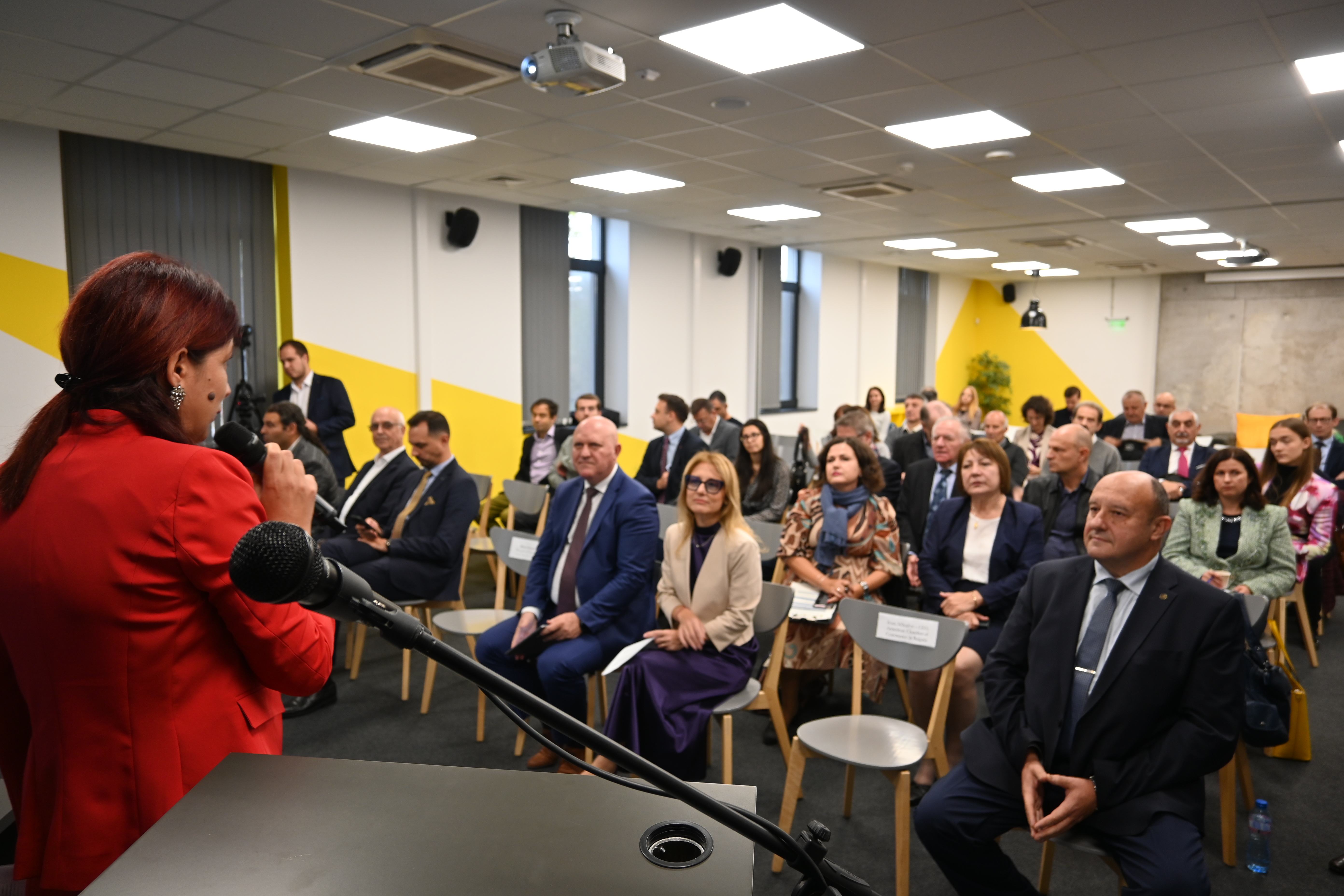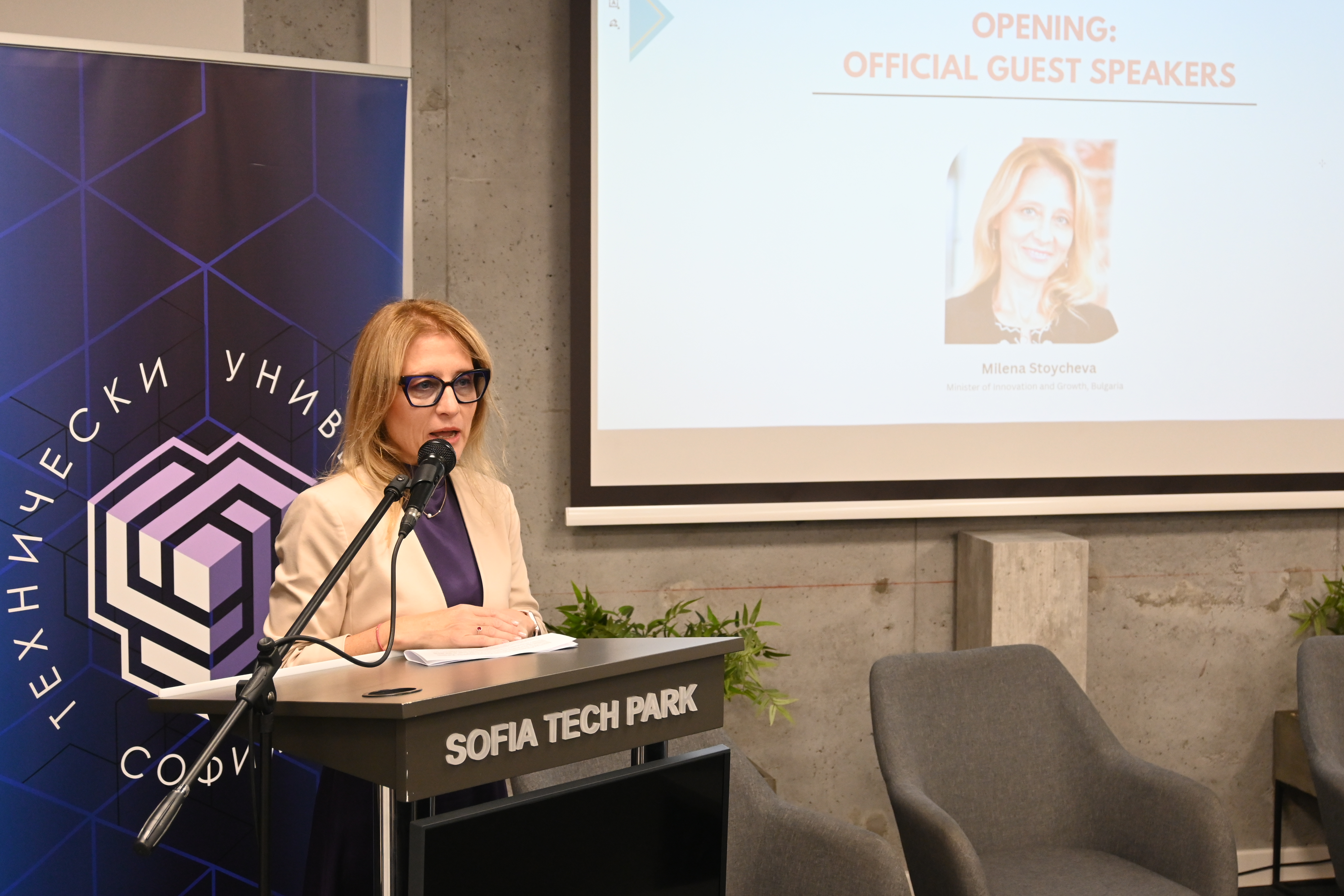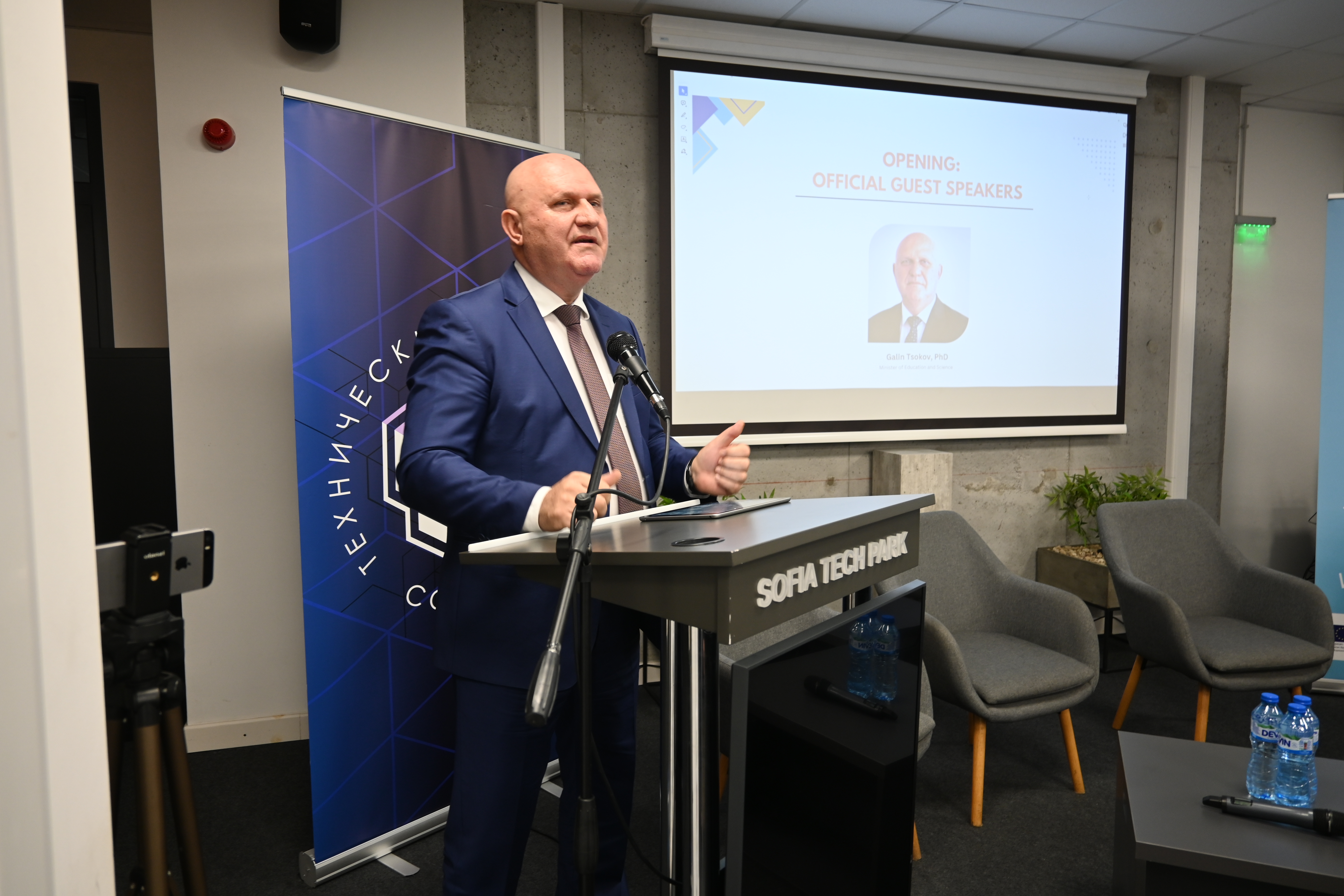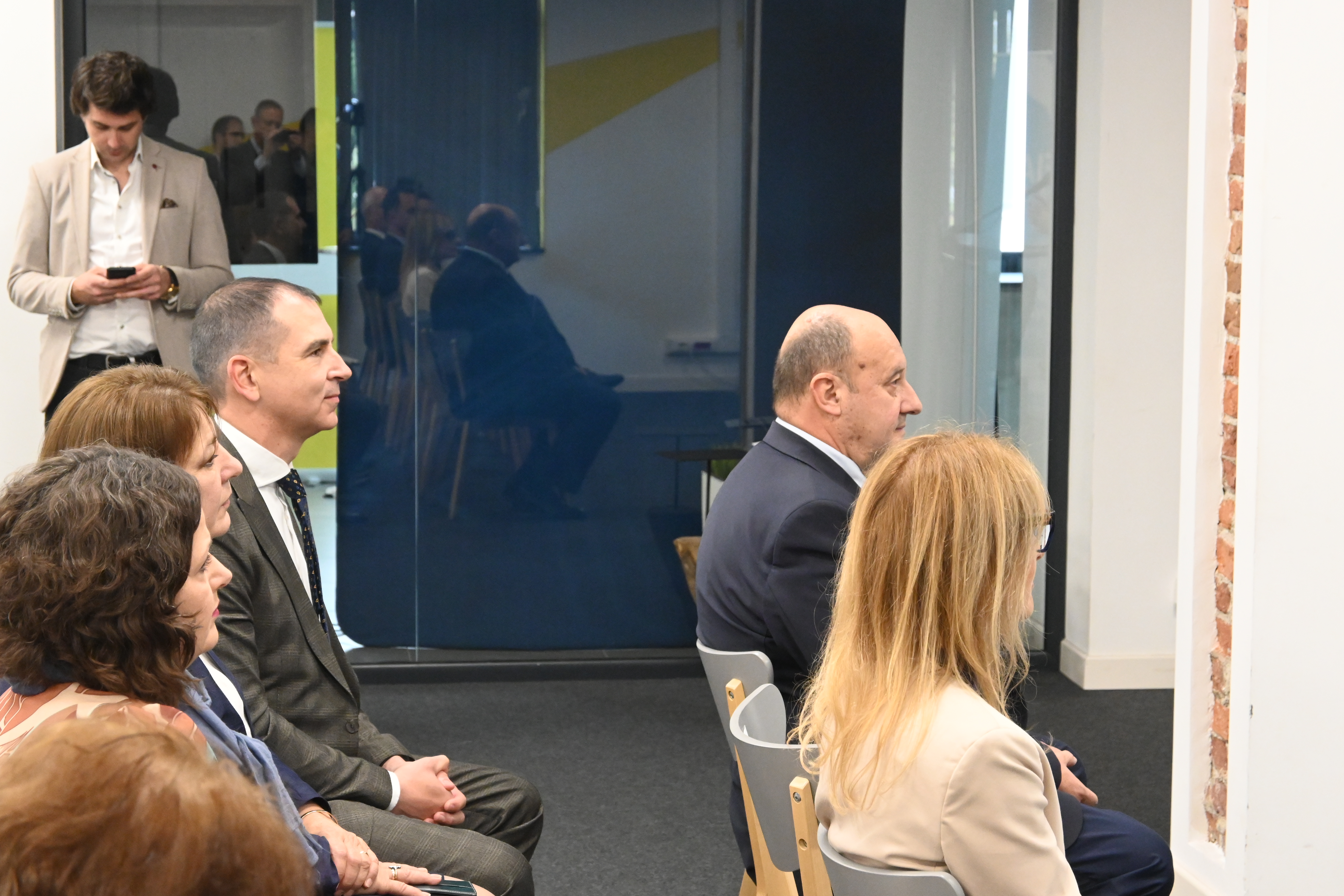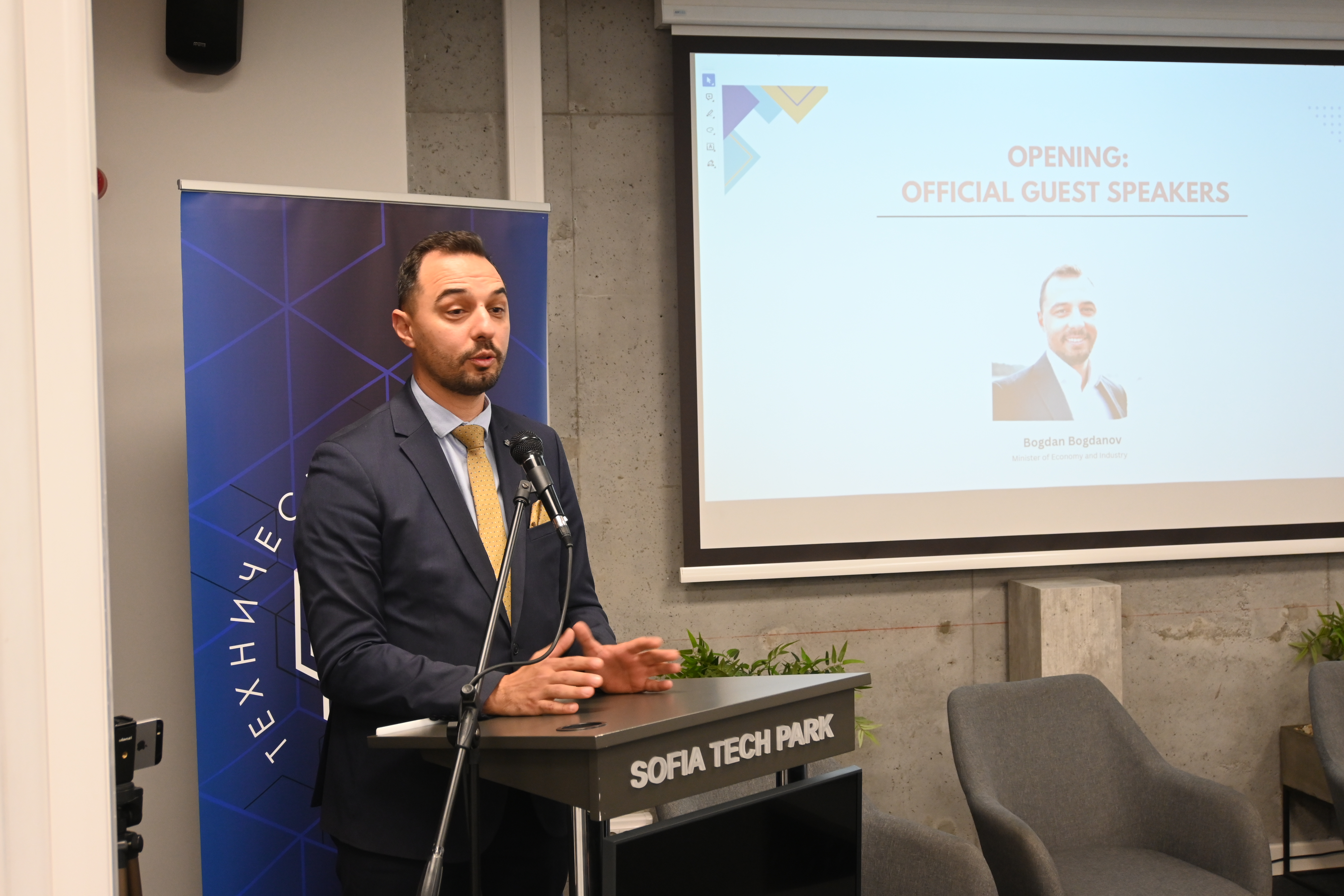

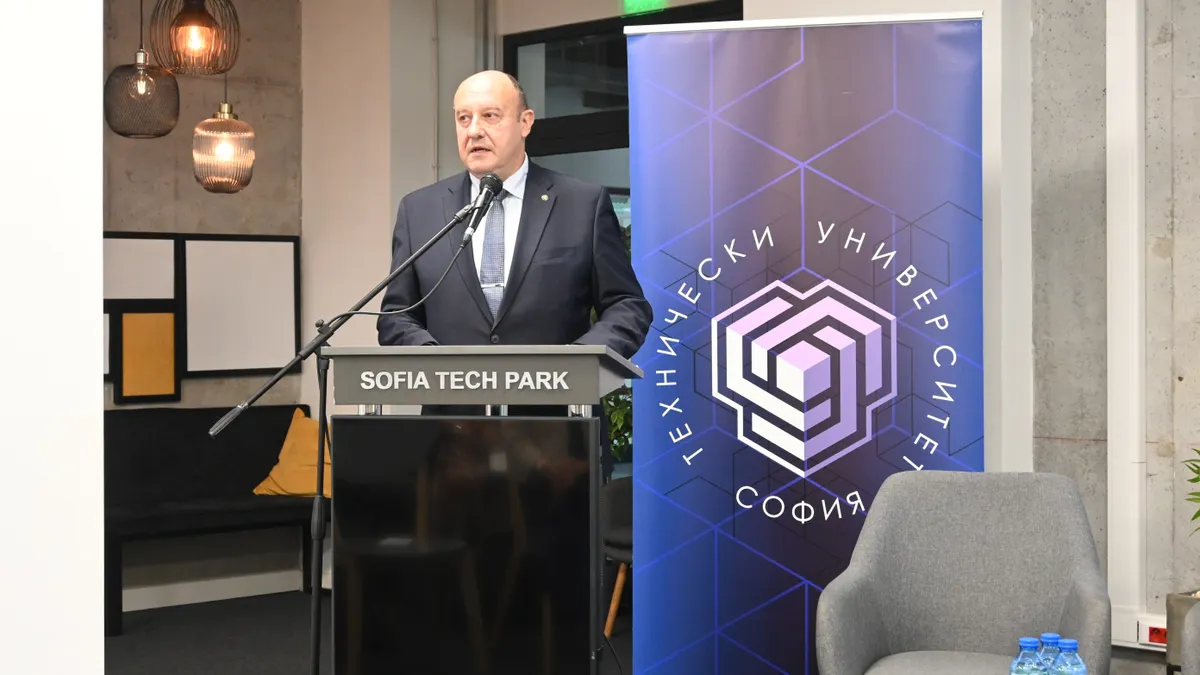
The place of Bulgaria in the semiconductor industry was discussed by politicians, business representatives, and the academic community at the third "Microelectronics and Mechatronics" forum held on November 2, 2023, in The Venue hall at Sofia Tech Park. Bulgaria has the potential to expand existing activities in the semiconductor industry supply chain towards integrated circuit design, chip assembly and testing, and the development of technological processes and manufacturing elements. The third edition of the International Forum "Microelectronics and Mechatronics" raised a number of topics regarding Bulgaria's inclusion and active participation in the European Chips Act. To implement the measures outlined in the Chips Act, over 43 billion euros will be mobilized in several areas, including a chip design platform (integrated circuit design), pilot lines (development of technological processes and technologies), and manufacturing capacity (clean rooms for chip production). Measures are also included for preparation, anticipation, and response to potential future disruptions in the semiconductor industry supply chain. Digital transformation is associated with the emergence of new markets based on semiconductor integrated circuits (chips), including artificial intelligence (AI), intelligent and autonomous vehicles, cloud technologies, the Internet of Things, gigabit connectivity, space, defense, and high-performance computers (supercomputers). The event began with speeches by Milena Stoycheva – Minister of Innovations and Growth, Prof. Dr. Galin Borisov Tsokov – Minister of Education and Science, Bogdan Bogdanov – Minister of Economy and Industry, Eva Maydell – Member of the European Parliament, Prof. Dr. Eng. Ivan Králov – Rector of the Technical University – Sofia, and Ivan Mihaylov – CEO of the American Chamber of Commerce in Bulgaria (AmCham).
The Rector of the Technical University – Sofia, Prof. Dr. Eng. Ivan Králov, emphasized that the university participates in and has built three Centers of Excellence in the final stage and two Centers of Competence. Over 160 young researchers work there. "It is an honor and pride for us that the top graduates of our cohorts are there, and seven of them have stayed to create and work with us. This is a clear proof of sustainability that what we planned more than ten years ago we continue to implement, and the work is already yielding results. And here I state with full responsibility that we have technology in the field of design, research, and assembly of microelectronics. Components that are world-class, and we already have trained specialists and teams to work with them. Therefore, summarizing, I state that we already have a share, we are working hard, and successes are evident. The equipment we have and the young specialists are a sufficient basis for us to support business, and for business to be very active with us, so that we achieve the goals we have set for ourselves".
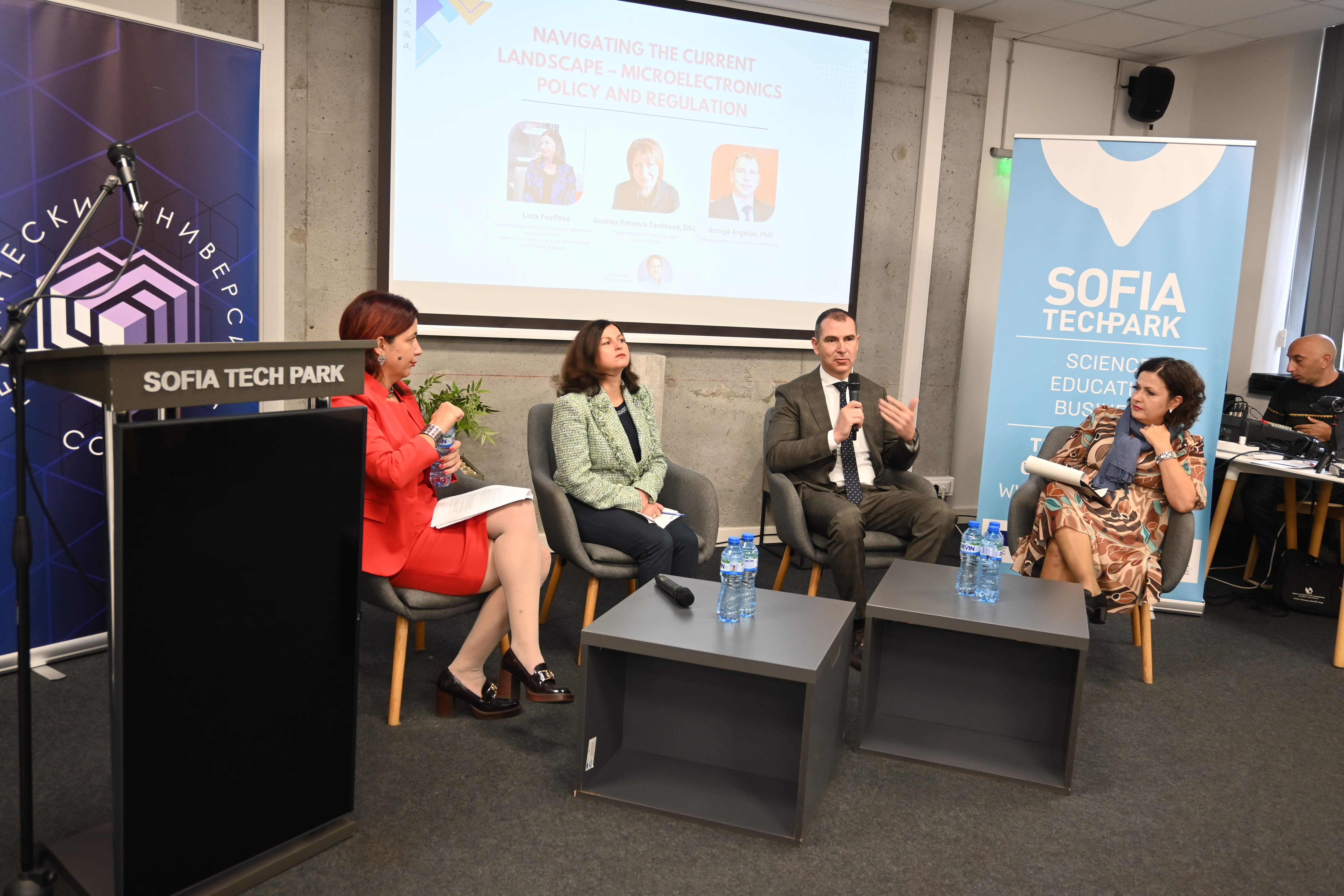
The first panel included Prof. Dr. Eng. Georgi Angelov – Deputy Minister of Innovations and Growth, Milena Damyanova – Director of the "Science" Directorate at the Ministry of Education and Science, and Lora Yosifova – Head of the "Scientific Research, Innovations and Digitalization for Intelligent Transformation" (PRIIDIT) Program at the Main Directorate "European Funds for Competitiveness" under the Ministry of Innovations and Growth.
"Bulgaria has a mature ecosystem in the field of high technologies, specifically in information technology and semiconductor electronics (microelectronics). Developed economies worldwide have recognized the critical importance of the microelectronics industry. The trend shows a growth in chip demand, which will continue sustainably in the coming decades, with the chip manufacturing market doubling by 2030 – reaching $1 trillion from the current approximately $550 billion. Europe has adopted the EU Chips Act, which focuses on expanding existing manufacturing infrastructure as well as creating new capacity. In Bulgaria, the microelectronics ecosystem can expand its scope of activities along the value chain, namely integrated circuit design, development and testing of technological processes, testing and assembly of chips, training and qualification of specialists, including retraining. It is also possible to establish manufacturing capacity for chips. The first step in this process is the establishment of a Microelectronics Competence Center based on the established Center of Excellence in Mechatronics and Clean Technologies and the laboratory complex at Sofia Tech Park, with the participation of academic institutions and companies from Bulgaria and Europe. The Competence Center will cover niche activities, creating teams of professionals (including foreign ones) and ensuring financial sustainability in accordance with state aid regulations and partnership with industry and academia." – Prof. Dr. Georgi Angelov
"The development of the semiconductor industry in Europe and, in particular, in Bulgaria, is of strategic, economic, and geopolitical significance! Currently, through the opportunities offered by the EU Chips Act, we have a real chance to create a Competence Center specialized in the field of microelectronics, which would unite the existing scientific research infrastructure in the field." – shared the main organizer and Chairman of the Cluster "Microelectronics and Industrial Electronic Systems" (CMIES) – Assoc. Prof. Dr. Dimitar Nikolov.
Among the main topics of discussion during the forum were the opportunities for Bulgaria to become a research and development technological center in the microelectronics industry, mechatronics, and their applications such as Artificial Intelligence (AI), space, and defense. These topics were discussed by the participants and guests of the event, including Pavel Lisev (member of the Board of Trustees of the Funds Fund), Lyubomir Stanislavov (CEO of Automotive Cluster), Prof. Dr. Eng. Georgi Todorov (Head of the Center of Excellence in Mechatronics and Clean Technologies at TU-Sofia), Daniela Chonkova (CEO of Cluster "Mechatronics and Automation"), Kristina Eskenazi (AI Cluster Bulgaria), representatives of Sofia University "St. Kliment Ohridski", TU-Varna, TU-Gabrovo, Ruse University "Angel Kanchev", MINOLab, GlobalFoundries Bulgaria, Melexis Bulgaria, Infineon Technologies, LEM, Renesas Design Bulgaria, FACET, IMEC (Belgium), and many other foreign partners.
The forum was organized by the Cluster on Microelectronics and Industrial Electronic Systems (CMIES) with the support of Sofia Tech Park, Technical University-Sofia, Sofia University "St. Kliment Ohridski", Technical University-Varna, Technical University-Gabrovo, Ruse University "Angel Kanchev", MINOLab, GlobalFoundries, Melexis Bulgaria, LEM, Renesas Design Bulgaria, FACET, AI Cluster Bulgaria, Biotechnology and Health Cluster.