
The team of the Department of Foreign Language Education and Applied Linguistics, TU – Sofia, is organizing Spring Event „3 in 1“ at TU – Sofia with awards for linguists, presentation of a scientific publication, and introduction of the academic community to the activities under the European University of Technology (EUt+) project.
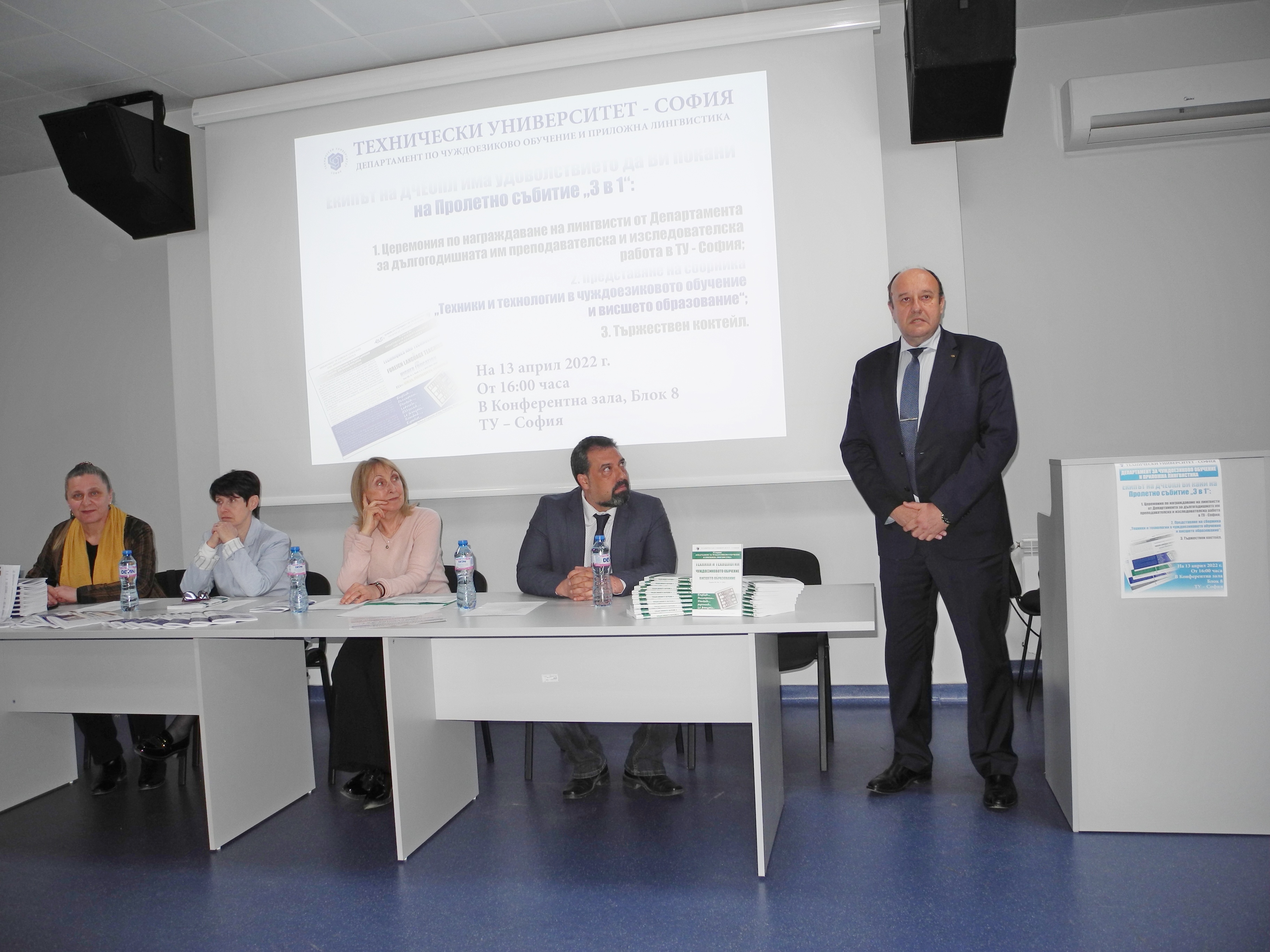
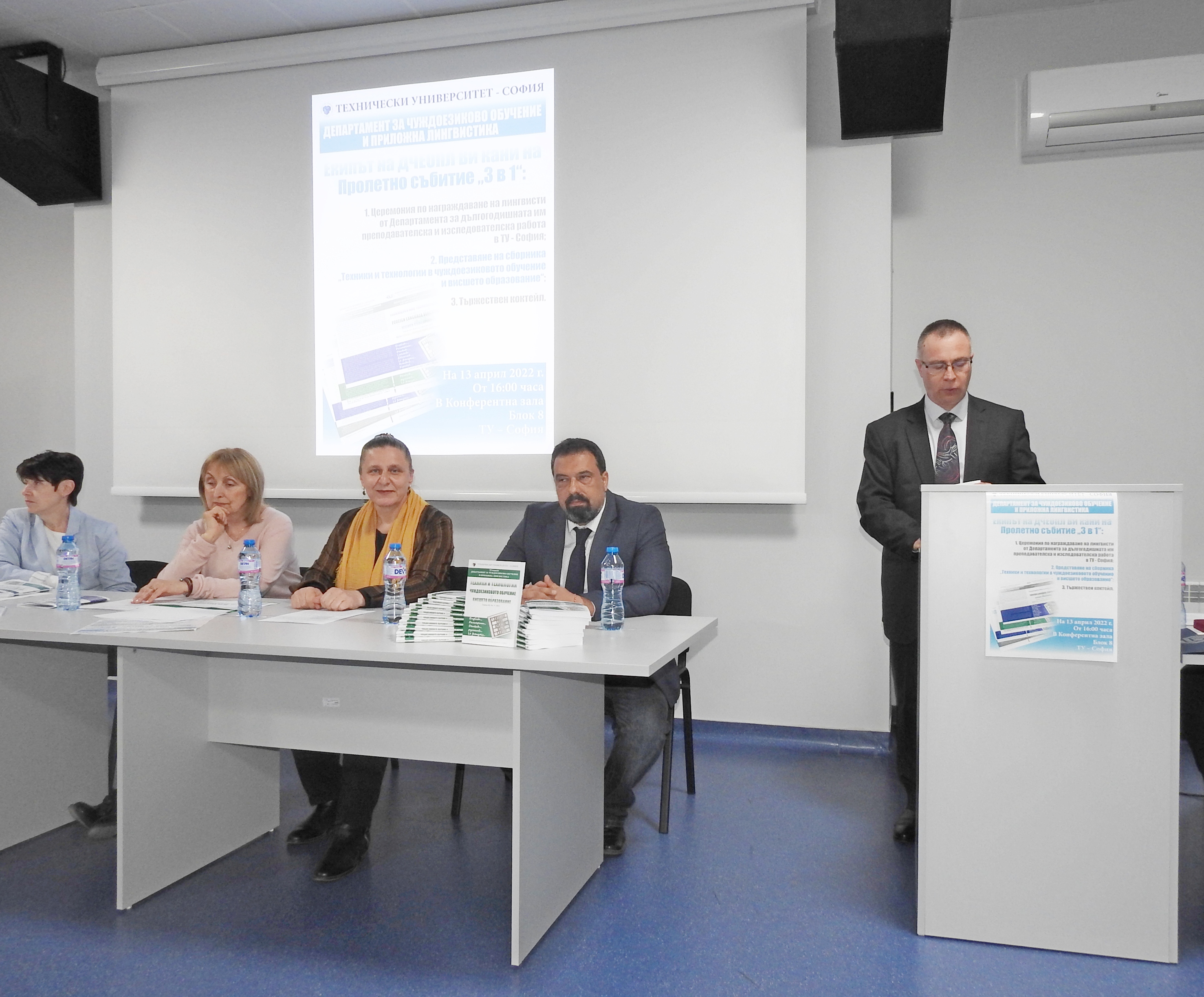
On 13.04.2022, in the „Prof. Tsvetan Lazarov“ Conference Hall in the renovated Block 8 – National Center for Mechatronics and Clean Technologies, TU – Sofia, the team of DFEAL, in the presence of the Rector Prof. Dr. Eng. Ivan Králov, awarded its teachers and staff for their long-term work and contribution to the development of the Department.
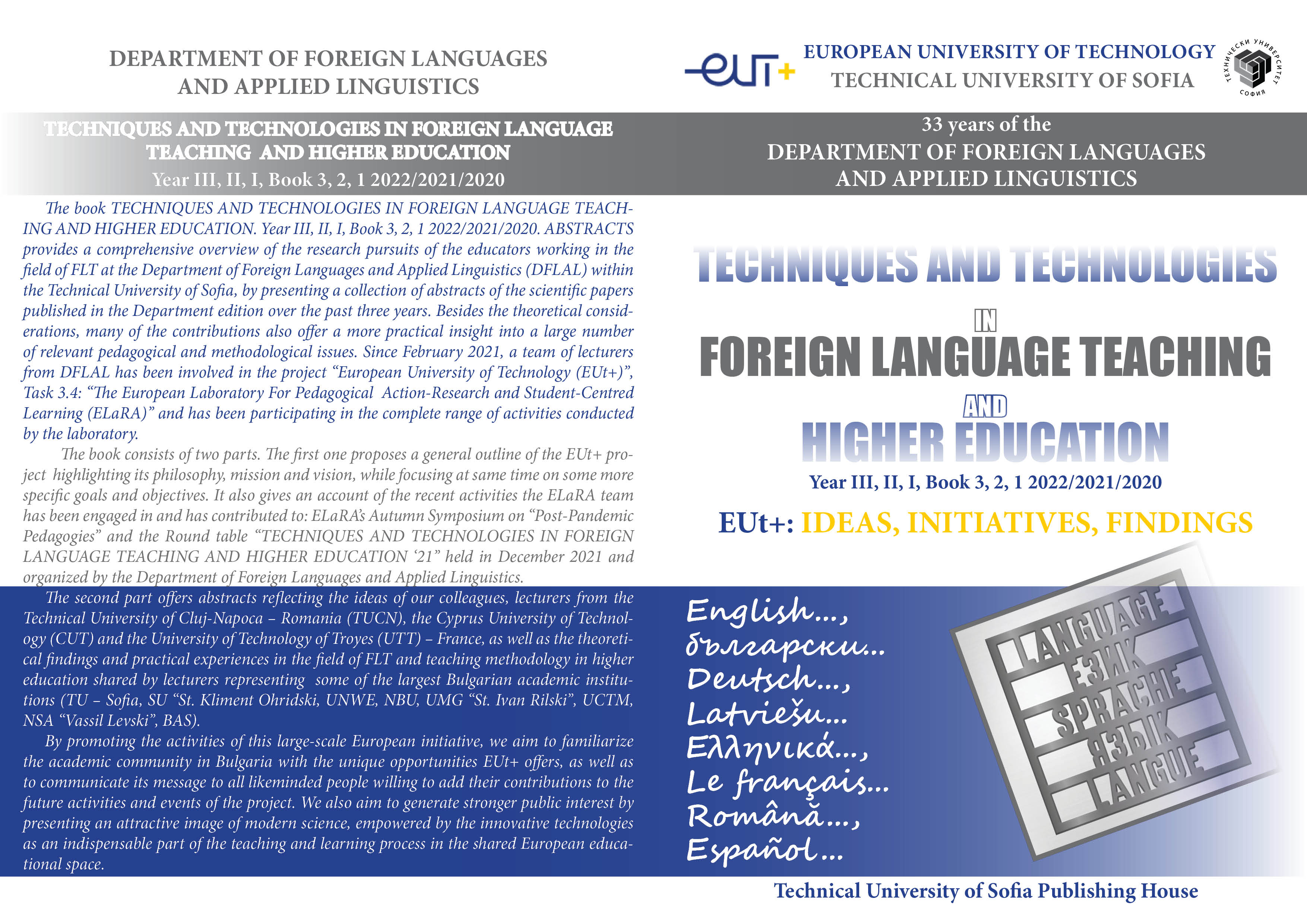
Two editions of „Techniques and Technologies in Foreign Language Education and Higher Education“ were presented at the event – Book 3, 2022, and the special issue with abstracts in English – Techniques and Technologies in Foreign Language Teaching and Higher Education. EUt+: Ideas, Initiatives, Findings, edited by Assoc. Prof. Dr. Ivaylo Peev, responsible editor Sr. Lect. Todor Todorov, scientific editor Assoc. Prof. Dr. Aneta Dineva, reviewers Assoc. Prof. Dr. Galya Mateva and Assoc. Prof. Dr. Vessela Slavova, translators: Sr. Lect. Bistra Vasileva and Sr. Lect. Filip Bozov.
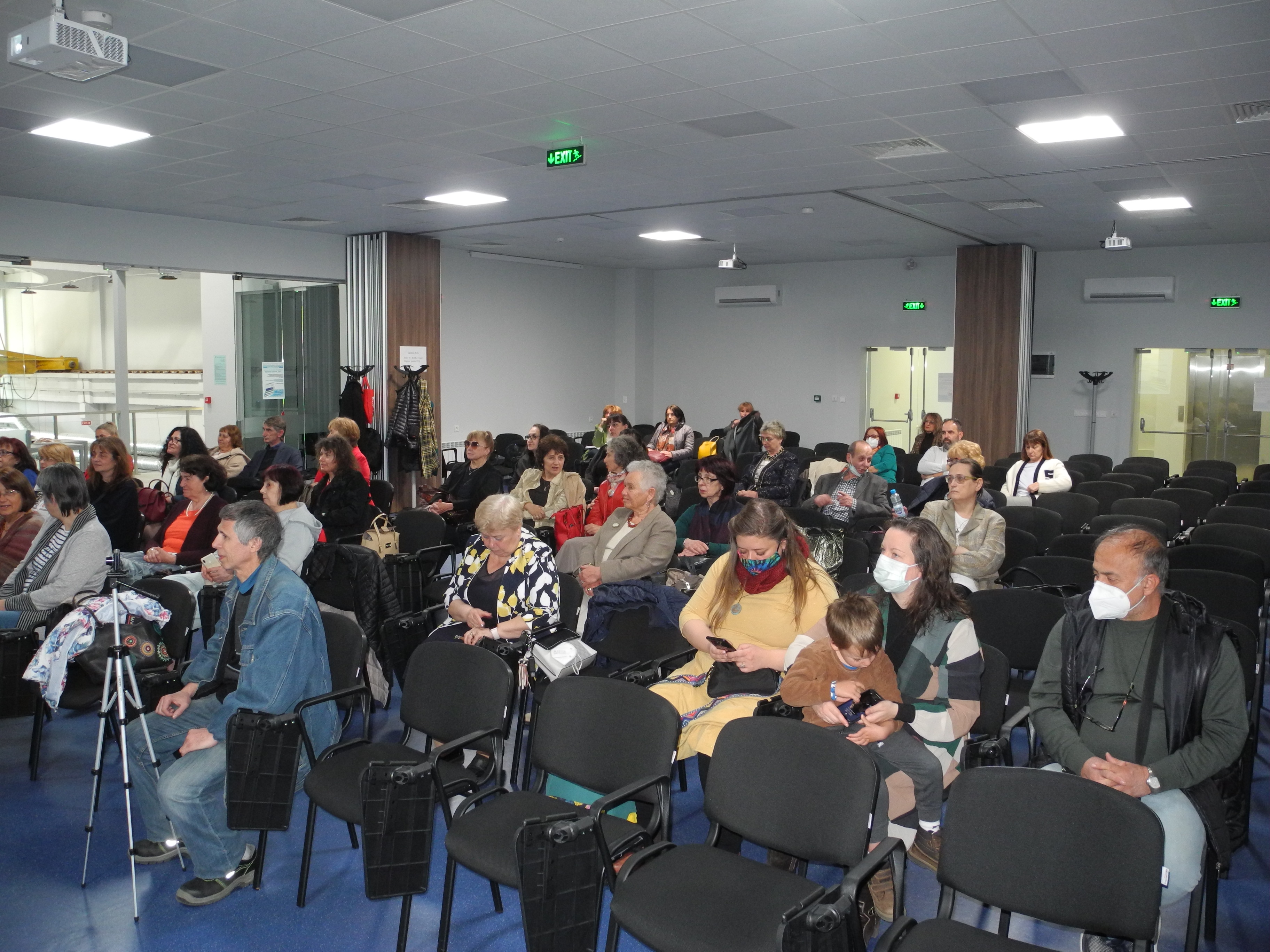
Prof. Ivan Králov congratulated the team for the well-executed work and for the initiative to inform the scientific and general public, through the organization of an informational event that presents the research and applied work of the educators from the Department. Among the guests were representatives of Sofia University „St. Kliment Ohridski“, MGU „St. Ivan Rilski“, University of Chemical Technology and Metallurgy, University of National and World Economy, and National Sports Academy „Vasil Levski“, some of whom are also authors in the scientific collection.
Assoc. Prof. Ivailo Peev briefly introduced the audience to the tasks the team from the Department of Computer Engineering and Technologies is working on under Work Package 3.4., which includes The European Laboratory for Pedagogical Action-Research and Student-Centred Learning (ELaRA), as well as to the editorial process of the publication. In his exposition, Senior Lecturer Todor Todorov presented details about the philosophy and goals of the European University of Technology project and the topics of the studies, part of the work of ELaRA: "We were pleased to note that the scientific research interests of our Bulgarian colleagues are in full sync with the research priorities of the laboratory, namely: the creation of innovative teaching methods and educational models focused entirely on the student, stimulating lifelong learning as a guarantee for intellectual development and personal growth, analyzing the transformation and adaptation of traditional pedagogical practices under the influence of the pandemic situation, developing post-pandemic pedagogical theories and practices and the resulting refocused perspectives on the educational process in the new reality, taking into account the culturological component in teaching and cultivating habits for working in a multicultural environment, and not least, adopting a multidisciplinary and transdisciplinary approach to teaching through the integration of a wide range of technical and humanities sciences, because the fundamental principle of the European University of Technology is 'Technology is primarily human'."
The presentation concluded with a speech by Senior Lecturer Bistra Vasileva, a member of the TUs team in ELaRA: "My participation in this remarkable scientific dialogue with representatives of academic communities gave me, in general, a broader perspective on the current issues of foreign language teaching in the conditions of teaching and learning in a digital environment. Of particular interest were the studies that analyze the different perspectives on using the potential of technologies in education, aiming at the successful integration of student activities into the educational process, as well as the creation and implementation of technical tools through which teaching in the digital environment can develop successfully and yield positive results."
Speeches followed from the reviewers of the publication, Assoc. Prof. Vesela Slavova and Assoc. Prof. Galya Mateva, who shared their satisfaction with the work on editing the scientific collection and were unanimous in their assessment that the goals set, even in the first book in 2020, to expand the scope of topics and attract more authors from various academic institutions, have been achieved, and the scientific level is becoming higher with each subsequent book, and they expressed wishes for the team to continue moving forward and upward.
In the second part of the initiative, jubilee gold medals, plaques, and certificates were awarded to linguist lecturers and staff for their long-term work at the Department personally by the Rector – Prof. Králov and the Director of the Department of Foreign Languages and Applied Linguistics, Assoc. Prof. Peev. Gold awards for contributions to the development of foreign language teaching and applied linguistics were received by: Assoc. Prof. Dr. Aneta Dineva, Senior Lecturer Antonia Velkova, Senior Lecturer Aneliya Bozhkova, Assoc. Prof. Dr. Galya Mateva, Senior Lecturer Denisa Zaharieva, Senior Lecturer Margarita Atanasova, Senior Lecturer Dr. Rayna Monewa, Senior Lecturer Svetlana Daskalova, Senior Lecturer Stanka Murdzheva, Senior Lecturer Stilyana Russeva-Khalacheva. Senior Lecturer Milena Mihova and Mag. Emilia Shopova were honored with plaques, while long-term administrative staff – Mag. Eng. Kameliya Vasileva and Mag. Eng. Ivan Nonchev – were awarded certificates of honor.
All attendees received a copy of the booklet with abstracts – Techniques and Technologies in Foreign Language Teaching and Higher Education. EUt+: Ideas, Initiatives, Findings. The event concluded with a ceremonial cocktail, during which participants had the opportunity in an informal atmosphere to discuss the topics covered in the official part, share their impressions of the event, and communicate face-to-face after two years of emergency situation, during which large-scale events were not held and communication was mainly conducted in a virtual environment.