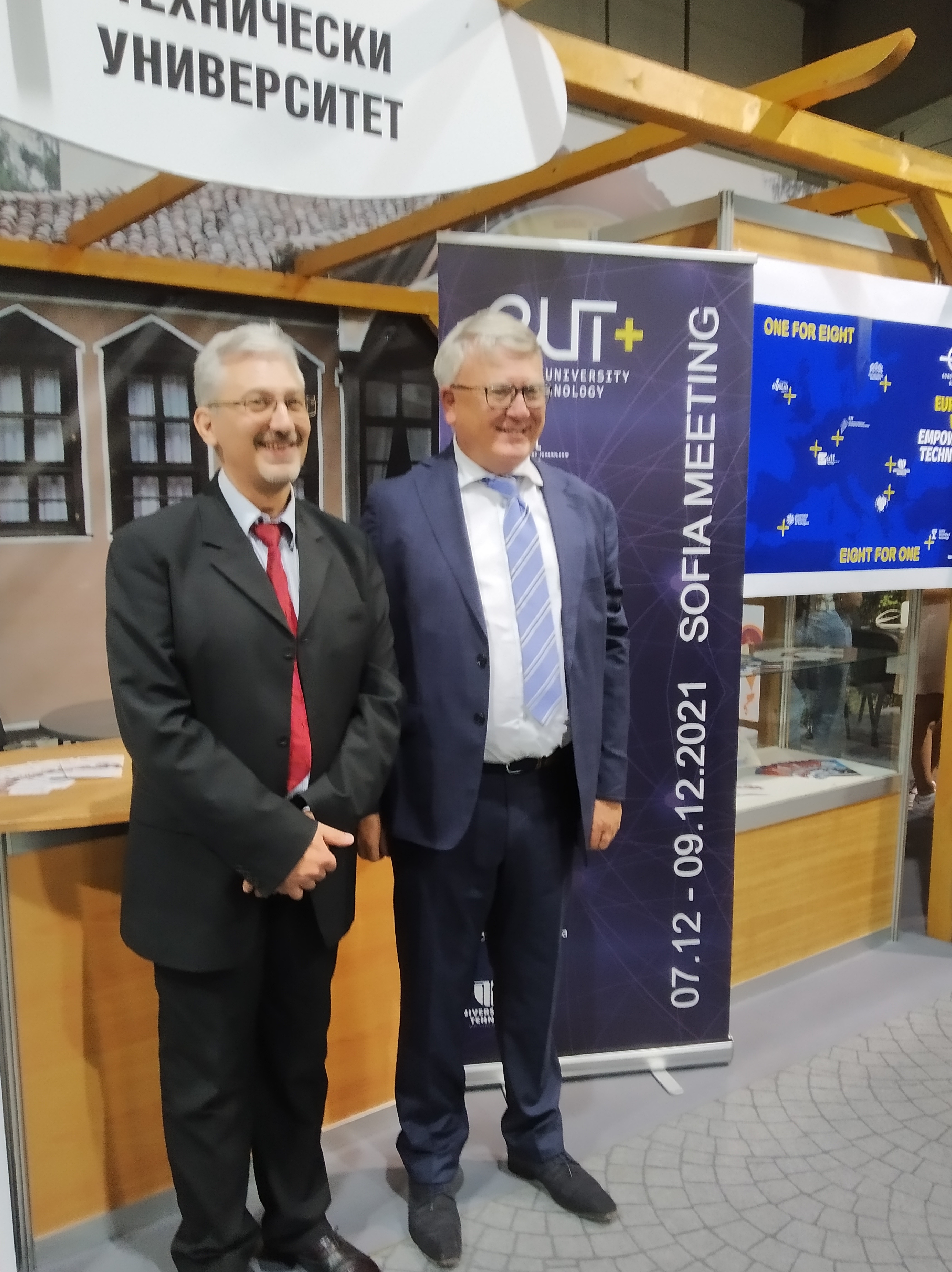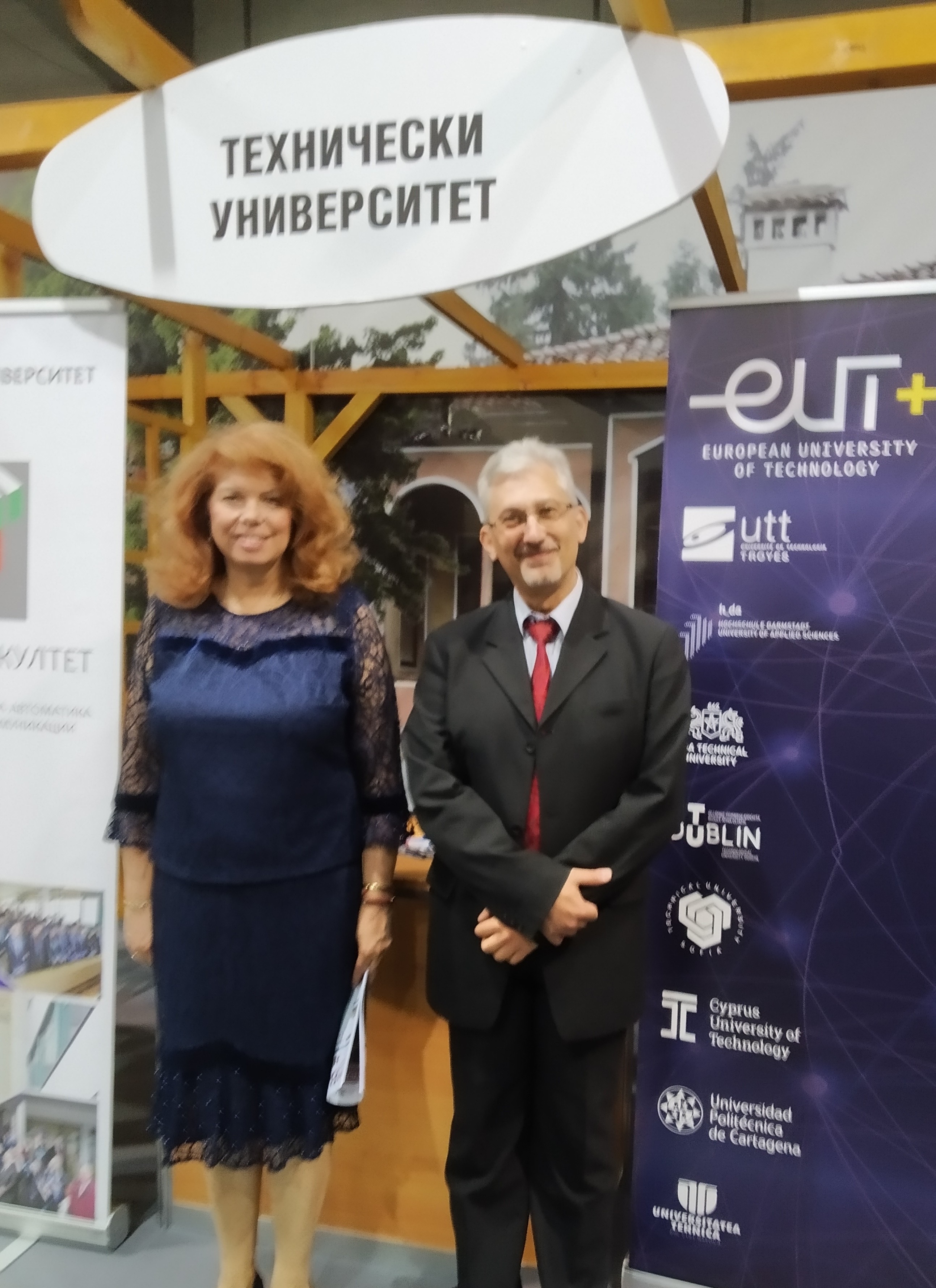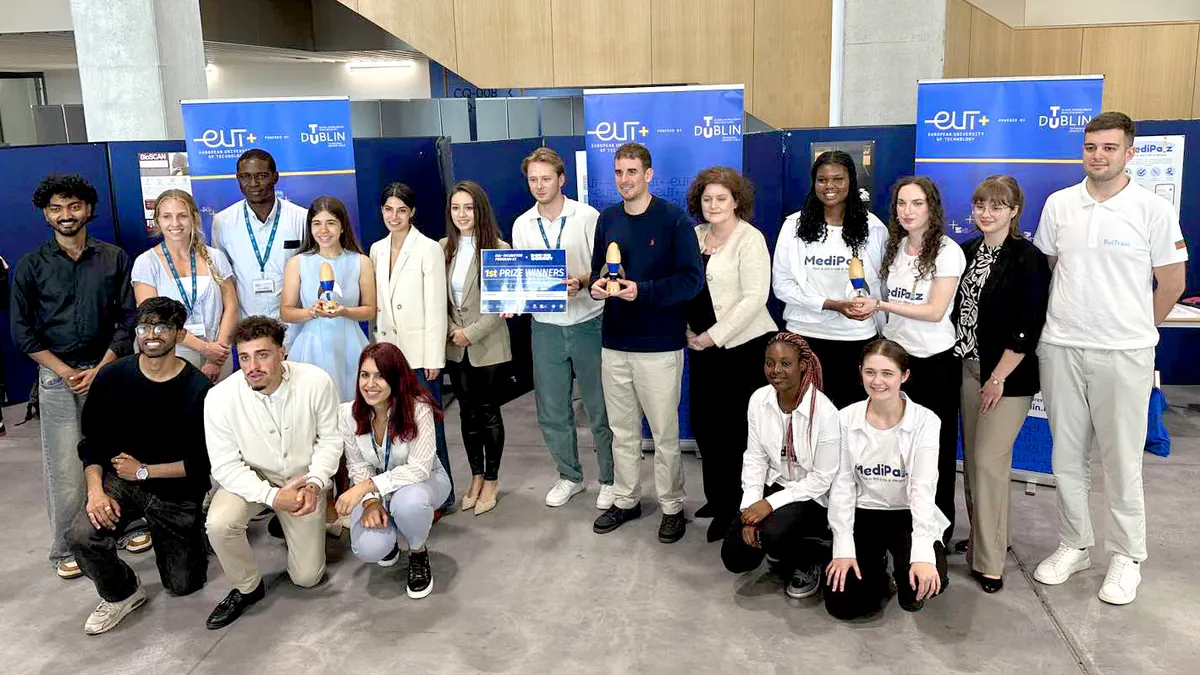

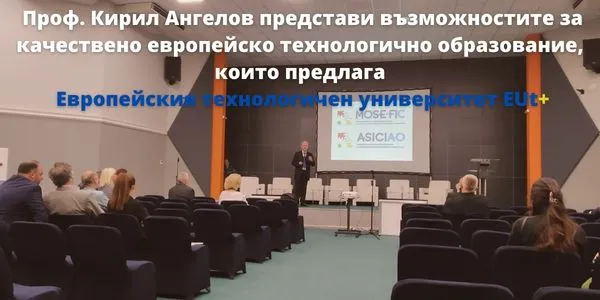
Within the framework of the tenth anniversary edition of the European Forum for Social and Solidarity Economy (June 20-23, 2022, Plovdiv), a special round table and a scientific-practical conference were organized. In his plenary report, Prof. Kiril Angelov, Dean of the Faculty for French-language instruction in Electrical Engineering at the Technical University – Sofia, presented the opportunities offered to students for quality technological education through the joint efforts of eight European universities united in one European Technological University EUt+. He particularly emphasized one of the main principles of EUt+ - "Think Human First", which is fully consistent with the social and solidarity economy. Prof. Angelov also presented all the opportunities for applying international standards in education through the MOSEFIC and ASICIAO projects, funded under the "Erasmus+" programme, specifically focusing on the main objectives of the projects for the benefit of engineering education.
Over the last decade, the European Forum for Social and Solidarity Economy has established itself as a large-scale social platform with a modern vision and innovative means of expression, which concentrates important events, key figures, and significant topics illustrating current European and regional trends in the development of the social and solidarity economy. It was organized by the National Union of Labor-Production Cooperatives in partnership with the Bulgarian Ministry of Labour and Social Policy and attracted representatives of European and national public institutions, municipalities, academic circles, and enterprises from the social economy.
The event was officially opened by the Vice President of Bulgaria, Mrs. Iliana Yotova, the European Commissioner for Employment and Social Rights, Mr. Nicolas Schmit, and the Mayor of Plovdiv Municipality, Mr. Zdravko Dimitrov. Among the official guests were also the Minister of Labour and Social Policy, Mr. Georgi Gëkov, the Minister of Agriculture, Mr. Ivan Ivanov, mayors, and representatives of academic circles. The three-day forum brought together social entrepreneurs, people working in the social and solidarity economy, and presented the results of this economy to the wider public.