
An effectively functioning public-private partnership between research universities and companies would give a strong boost to the Bulgarian economy.
Rector, how does the university you lead function as of today – lectures, exercises, exams, applicant campaign… Is the integrity of the institution preserved, working in an unusual situation?
– The Technical University of Sofia is an educational and research complex – the largest higher technical school in our country. It is characterized by the fact that it has territorial branch units – our branch in Plovdiv, the faculty and college in Sliven, the College of Energy and Electronics based in Blagoevgrad, the college in Kazanlak. The structure of TU also includes the unique schools – the Technological School of Electronic Systems in the capital and the Professional Gymnasium of Computer Systems and Technologies in Pravets. In this complexity, the functioning of the University is a complex process, even more so in today's situation. To my delight, we have a very good organizational structure, with established traditions. As for the so-called distance and e-learning, we have been preparing for several years thanks to completed projects under the OP "Human Resources Development". I call the aforementioned training distance learning. The technologies used are many, but the main meaning is that learners participate in the educational process remotely. At the moment, as a result of the crisis situation, we are conducting distance learning in almost all disciplines. Where it is not possible to conduct it – for example, laboratory exercises that require the use of specific material base, equipment, require safety and occupational health measures, etc., they will be conducted later in person. All other lectures and seminar classes are currently conducted remotely. Over 80 percent of subjects and some exercises are covered through the distance form of training. Of course, there is a specificity. Different technologies and platforms are used in the units. But all have been developed and tested years ago. Now we are simply updating part of the material and applying it in practice.
– The Technical University did not postpone the preliminary applicant exams either…
– What I have said so far regarding distance learning also applies to the admissions campaign. We decided not to postpone the preliminary admissions exams, which had been announced as in-person, but to conduct them via internet connection. We conducted the first remote admissions exam in the country. It was in mathematics, took place in March, and nearly 700 people registered for it. This was followed by exams in drawing and composition, for which one applies for the specialization "Engineering Design," and exams in foreign languages and a second mathematics exam. All of this was implemented mainly with platforms developed by us, but we also use some universal software products. We have established the organization and conducted tests. Although we are using these formats for the first time, we believe that no problems will arise and that a good result will be achieved.
- Can we talk about the advantages of the remote exam format?
- The format is known worldwide. It is applied in various modifications. And it has its advantages. First, candidates are in a natural environment, the stress is lower, and this helps them present themselves in the best possible way. Second, significant commitments and costs, such as travel and accommodation, additional time and emotions for finding the exam venue, etc., are eliminated, and the necessary technical equipment is usually available here; any additional equipment is easy and inexpensive to acquire. The preliminary admissions exam is also a suitable way for self-assessment – the candidate can objectively evaluate their level of preparation before the upcoming state exams and before the main university application. This diversification of methods, ways of examination, and control through an entrance test is beneficial for everyone, allowing them to see their strengths, prepare, and present themselves in the best possible way.
- First place in 6 professional directions – what does this mean for the Technical University – Sofia? It is hardly just about prestige…
– The Technical University prepares specialists primarily in 9 professional fields, 6 of which are engineering. In addition to engineering, we also have economic specialties, such as "Business Administration." It is not a classic economic specialty like "Accounting and Control" or "Finance and Credit." Business Administration is inextricably linked to the technology of organization, management, and control of processes in an enterprise. It is a mandatory qualification for any manager in an industrial enterprise or in the economy of a country. In this field, we are also among the top places in the Rating System. The Technical University also prepares future teachers. Our branch in Sliven was established in the 1980s for the training of engineering-pedagogical staff. Engineering pedagogy is particularly relevant today – an example is e-learning, the preparation of students in professional high schools. It is logical that we are first in the engineering fields – we are located in the capital, and we are the largest among technical universities. This year we also celebrate our 75th anniversary. In recent years, we have invested heavily in the scientific development of our teachers and researchers – we are implementing a number of international and significant national projects, the publication activity of the staff has nearly tripled internationally, and we partner very closely with business. And as is well known – quality, so-called "Ivy League" universities, are a symbiosis of traditions and teachers. Now our goal is to occupy a visible place in the European and global educational and scientific space.
– Will we see TU among research universities?
– We are such: in recent years, we have had a continuous rise in the number of publications and citations in world-renowned and indexed scientific databases. This is also the first indicator of the quality of our scientific research. The growth is significant; compared to 4–5 years ago, it is several times larger on an annual basis. In the last year, we moved up several hundred places in world rankings. Of course, our goals are much higher. But there are also specifics in this regard that need to be taken into account.
– Could you elaborate?
– In some world rankings, it is taken into account, with a very high degree of significance, where graduates start working and with what salary. Our graduates are employed in their specialty, including in foreign companies based in our country, with a relatively high salary for our country. But with a significant difference in salaries compared to those working abroad. In addition, rankings take into account that they are employed in a national firm, not in a world giant, for example. Naturally, this does not make us less ambitious to climb higher in the rankings. In this direction, we have taken many steps.
– What do they consist of?
– For example, we have cooperation agreements with over 150 international universities, research organizations, and companies, which is significant for us. With these partners, we work on many joint programs and training courses. Some of the training courses, including research, are entirely commissioned by businesses. We have exchanges of students, faculty, and researchers. In this way, we try to achieve a higher ranking in the rankings by meeting criteria that assess the interaction between business and academic activities, international mobility, and others.
– The university you lead is a member of European and international associations. What are your views, as rector and scholar, on the inclusion of TUT in European university networks?
– We are now striving to become a member of the network of European universities. This will take us to the next level as a European university or a member of a confederation of European universities, and consequently, we will be much more visible and significant, recognizable in this space. Last year, we applied with such a project and received the highest evaluation among Bulgarian projects. We missed by one point to win. I hope that this year, despite increased competition, we will win with the project for the European Technological University. Our partners are representatives from France, Germany, Spain, Romania, Ireland, Cyprus, Latvia, Greece – countries known for their technical education. With the sister universities in each of them, we have cooperation agreements. We also work on joint projects, some of which have already been completed. On this basis, taking into account the advantages of academic mobility under 'Erasmus+', we have achieved good synergy. We not only know each other but are partners with traditions. I am convinced that these are advantages that will tip the ranking of the competition in our favor.
– Your comment on the recent amendments to the Higher Education Act? Would you like them to reflect anything else?
– One can always wish for more, but definitely most of the changes are positive. The evaluation in accreditation is based primarily on objective criteria. It is good that teachers and researchers will be counted in only one university during its accreditation. I will not list all the positive changes. Of course, the fragmentation of educational and scientific fields needs to be reconsidered. In modern life, science is too interdisciplinary and integrated. Some fields, such as information and communication technologies, are more horizontal than parallel to others. They are present in all areas of life, and it is not possible to evaluate, for example, mechanical or electrical engineering without knowledge, without experience in information and communication technologies, without mathematics. In my opinion, it is extremely important to clarify some provisions in the Public Procurement Act.
– Are you seeking simplification of procedures?
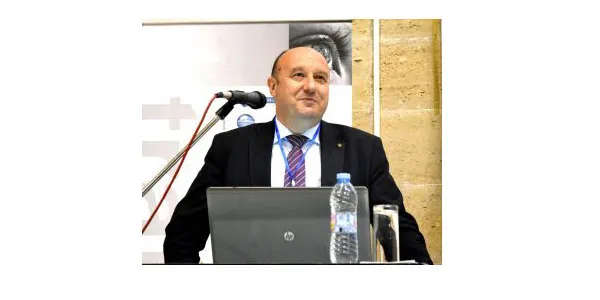
– It is not a matter of losing control, but rather of slowness and excessive bureaucracy. I am speaking directly about absurd situations. For example, in some cases, technologies become morally obsolete not in years, but in months. In recent years, we have gone through 4G and 5G communication technologies, and we are already on the verge of 6G. A procedure under the Public Procurement Act, especially if there is an appeal, sometimes lasts more than a year. Even if we order equipment that is current at the time, after the procedure is completed, the equipment in question not only becomes morally obsolete but is no longer manufactured. Another example is the implementation of long-term national scientific projects. In the project phase, the delivery of new equipment is planned, for example. The period from submitting the project proposal, through evaluation, contracting, to the first funding takes at least six months to a year after the project is submitted. With the delivery under the Public Procurement Act procedures, the equipment arrives no earlier than after another such period, and that is if there are no court disputes. And if the initial funding is not sufficient for the delivery of an entire system, for example, then waiting for the next funding tranche usually renders the investment pointless due to its moral obsolescence. Another challenge is the lack of an effectively functioning public-private partnership. Both business, regions, research and academic structures, and society as a whole need such regulated cooperation. The fact is that part of our educational programs, as well as internships and traineeships, are requested by business, but this is not enough. It is necessary to develop and implement ideas, prototypes, and solutions that we have patented through public-private partnership with business specialists, so that we can produce and implement them together. In this way, both the university and its researchers will benefit. This is not possible today or is strongly restricted for state higher education institutions. The good news is that recently there has been visibility and work is being done in dialogue with the authorities. We are ready for cooperation. Together we will succeed. Prof. Králov is a mechanical engineer, holds a PhD in "Dynamics, Strength and Reliability of Machines" and a Doctor of Sciences degree in the field of "Applied Mechanics". He served as Deputy Rector for Scientific and Applied Activities for nine years. In 2011, he launched and continues to lead the "E-University" electronic system of the Technical University. He is a member of the Board of Directors of the "National Center for Excellence" being established. in mechatronics and clean technologies". He is the author and co-author of over 140 scientific publications, patents, and utility models. He is the chairman of the scientific and organizing committees of our and foreign scientific forums. He is the chairman of the "Technical Sciences" section and vice-chairman of the Union of Scientists in Bulgaria.
See the interview here