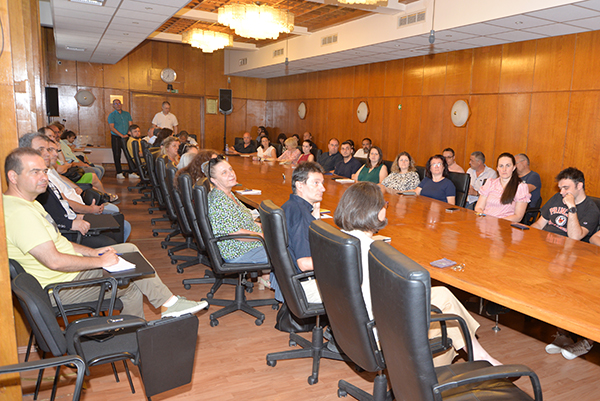


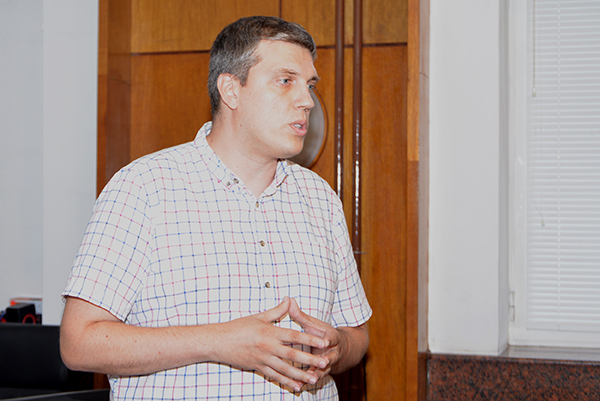
The lecturer was Assoc. Prof. Dr. Eng. Georgi Tsochev, who explained to managers and members of scientific groups how to use artificial intelligence so that university teachers and students can accumulate knowledge, logical thinking, and solve scientific and practical problems. According to him, over the past three years, artificial intelligence has deeply penetrated our daily life in many sectors, with machines that mimic human knowledge and tasks becoming increasingly sophisticated. It is becoming increasingly imperative to improve the interaction of AI with human work, so that artificial intelligence can take over more human perceptions. This helps to reproduce a number of actions and functions and make them helpful to each of us.
Every day we ask ourselves: what is artificial intelligence, and we understand that, besides intellectual power, it is a means to improve people's lives in sectors that are highly loaded or developing very rapidly.
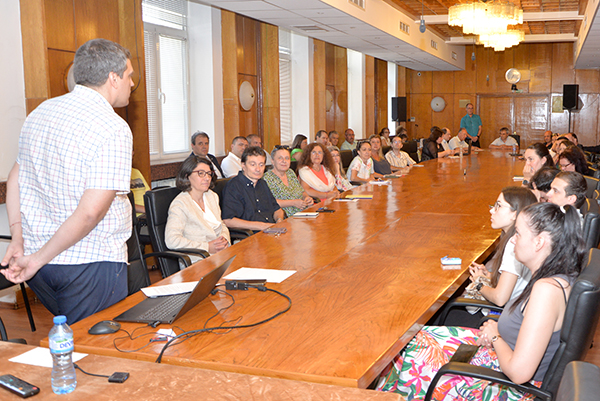
During the training, various aspects of AI usage were discussed, and above all, what should be taken into account in its application. The academic staff listened attentively to Assoc. Prof. Tsochev's presentation that AI must be aligned with human rights and values, used fairly, and above all responsibly, because it is associated with many activities where its impact and benefits must be tracked. The algorithms used must be useful and understandable, and each of us must be fully aware of when we are interacting with artificial intelligence and when with a human, above all, knowing who is responsible for a given decision.
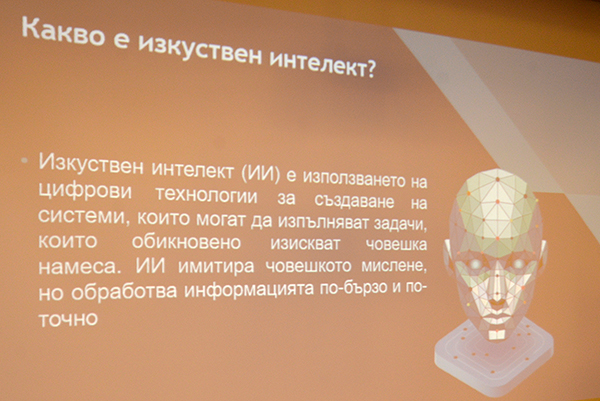
The issue of responsibility and misuse of AI related to gender, age, racial division, and various other criteria was raised. Emphasis was also placed on the fact that data collected by people is personal and must comply with personal data protection laws – GDPR – and be used only with informed consent. Attention was drawn to the fact that artificial intelligence systems must be protected from abuse and hacking attacks, must support people in certain professions, and not replace them. A person must always control the processes of creating and using AI in many activities and fields.