

Prof. Krassimir Marchev holds patents for the world's largest corporations, and with his help, one of the most beloved shaving blades was invented.
When a university attracts a top specialist from the USA in coatings and new materials like Prof. Krassimir Marchev, then a single project can become a carrier rocket for a number of others with exceptional benefits for industry, science, and society. The reason is that new high-efficiency tools for the production of plastic products have significantly improved wear resistance, leading to accelerated production speed and reduced product prices.
It all started with the scientists' huge desire to show that they could reach world level in their field. Of course, realizing the reality that over the years part of the expertise in this field has been lost and the world has moved too far ahead. Then they ask themselves the only correct question - how can they quickly catch up with the dramatic lag? At some point, they remember that one of the best in this field is Bulgarian. Prof. Krassimir Marchev is a legendary name in this field since the times when, at the head of his team, he created the blades for the most modern razors of the company, whose motto is The Best a Man Can Get. Yes, we are talking about the giant Gillette.
In addition to the patents for this company, the Bulgarian scientist has many others for industry giants such as Procter and Gamble, Sikorski Aircraft, as well as for Northeastern University. Due to his achievements in the development of new materials, plasma-diffusion technologies, and innovations, Prof. Marchev was elected a member of the American Society for Metals (Fellow of American Society of Metals International) - the leading global organization uniting 25 thousand scientists and engineers from all over the world.
This title is awarded to only 15 specialists per year who have made an exceptional contribution to the field of metallurgy, materials science, and engineering sciences. At the same time, Prof. Marchev, who is the head of the Advance Manufacturing and Engineering Technology program at the College of Professional Studies at Northeastern University in Boston, has not for a moment lost his connection with business, which is directly interested in his research. It was this top scientist from TU - Sofia who managed to attract him as the head of the scientific group "Innovative Technologies for Surface Treatment - InnoSurfTech". Thanks to this, the "24 Chasa" team managed to meet with Prof. Dr. Eng. Marchev in a laboratory at the Mechatronics Center at the university.
"We are creating a system for physical deposition of coatings in a vacuum - Prof. Marchev explained to "24 Chasa". - We are making efforts to develop such coatings that are suitable for applications in the Bulgarian industry. Our goal is for companies to
use our equipment and technologies to improve their products and make their production faster, higher quality, and more efficient. We plan to invite all interested companies and give them the opportunity, with the help of our colleagues from TU-Sofia, to adapt and modernize their production machines and technologies. The important thing is that in our joint work, they learn about the new processes, equipment, and the opportunities arising from them. We believe that we will achieve a mutually beneficial symbiosis - the more the companies know, the better it will be for them and for the industry, which in turn will help science and academic institutions like TU-Sofia. All these factors will serve our society as a whole."
One of the important tasks in the project is to achieve more effective coatings on the molds used for plastic injection molding.
"In Bulgaria, this industry is well developed, especially in the automotive sector - noted the colleague of Prof. Marchev from TU-Sofia, Assoc. Prof. Dr. Eng. Yavor Sofronov. - The cluster has nearly 380 member companies." In this field, forming tools are continuously used into which plastic is "injected" to produce the items that fill our daily lives. These are highly efficient productions for tens of millions of pieces, and the industry is highly interested in extending the life of the tools and reducing the cost of production.
Part of it is also the industry producing plastic bottles and their caps. According to scientists, Bosch, which produces the handles for its power drills here, might also show interest in innovative coatings. The product itself is made of a hard polymer, coated on top with a soft material. An extremely complex technology, because between the two injection molding steps, it is necessary to fill with anti-vibration rubber.
"As someone who successfully combines teaching at the university with business contacts, I can say that the industry worldwide generally solves similar problems - explained Prof. Marchev. - A fundamental challenge for manufacturers is that the tools are expensive, so it is necessary to use them for a longer time to save resources and time for creating new ones. If the mold and the punch (the protruding part for stamping - ed. note) are coated on the first floor of the Center of Excellence in "Mechatronics and Clean Technologies" - "Student City" campus, the lifespan, which is on the order of ten thousand hours, can be significantly extended to 15-20 thousand hours depending on the specific application. If the required injection time was previously around 30 seconds, thanks to the increased thermal conductivity and reduced friction coefficient of our coatings, it can be reduced to about 20-25 seconds."
Thus, the industry will be able to produce much more in a shorter time, which will seriously increase efficiency and reduce costs.
"Currently, with Corresponding Member Prof. Georgi Todorov and Assoc. Prof. Yavor Sofronov, we are trying to establish a direct link between academia and industry to achieve a mutually beneficial synergy," Prof. Marchev smiles. But the scientists at TU - Sofia are grateful to him for another reason as well.
"Thanks to him, we received synthesized information that allowed us to choose the best equipment currently on the market - explained Assoc. Prof. Sofronov. - It would have taken us a lot of time and effort to research what tools and technologies we could use to achieve our goals."
Prof. Marchev jokingly admits that he acquired this expertise even while working in the billion-dollar corporation. It was there that he created a system for analyzing and qualifying various equipment. It involved meetings, presentations, and demonstrations from suppliers during which he and his team carefully evaluated their pros and cons.
"The process of identifying and selecting various equipment for the needs of TU - Sofia took us almost 6 months, and if I did not have this knowledge, I fear that colleagues might have fallen into various traps - thoughtfully noted Prof. Marchev. - When suppliers present their products, they are usually very sweet-talking. And that is their job, but one must be a wary hare to know when they are talking nonsense."
The professor's know-how and personal contacts proved important and significantly accelerated the process. For example, sending a specialist from Munich to demonstrate new equipment and train the team at TU - Sofia became possible with just one phone call to the USA and the subsequent engagement of the company's European branch. The next day, the specialist landed at Sofia Airport.
Today, the scientists are more enthusiastic than ever that they have acquired know-how valued worldwide, and they are eager to share the results with the Bulgarian business.
"It is important to achieve the perfect symbiosis, as it is in the USA - smiles Prof. Marchev. - TU - Sofia has overcome the lag and instead of moving step by step, it jumps several steps at once."
168chasa.bg
When a university attracts a top specialist from the USA in coatings and new materials like Prof. Krassimir Marchev, then a single project can become a carrier rocket for a number of others with exceptional benefits for industry, science, and society. The reason is that new high-efficiency tools for the production of plastic products have significantly improved wear resistance, leading to accelerated production speed and reduced product prices.
It all started with the scientists' huge desire to show that they could reach world level in their field. Of course, realizing the reality that over the years part of the expertise in this field has been lost and the world has moved too far ahead. Then they ask themselves the only correct question - how can they quickly catch up with the dramatic lag? At some point, they remember that one of the best in this field is Bulgarian. Prof. Krassimir Marchev is a legendary name in this field since the times when, at the head of his team, he created the blades for the most modern razors of the company, whose motto is The Best a Man Can Get. Yes, we are talking about the giant Gillette.
In addition to the patents for this company, the Bulgarian scientist has many others for industry giants such as Procter and Gamble, Sikorski Aircraft, as well as for Northeastern University. Due to his achievements in the development of new materials, plasma-diffusion technologies, and innovations, Prof. Marchev was elected a member of the American Society for Metals (Fellow of American Society of Metals International) - the leading global organization uniting 25 thousand scientists and engineers from all over the world.
This title is awarded to only 15 specialists per year who have made an exceptional contribution to the field of metallurgy, materials science, and engineering sciences. At the same time, Prof. Marchev, who is the head of the Advance Manufacturing and Engineering Technology program at the College of Professional Studies at Northeastern University in Boston, has not for a moment lost his connection with business, which is directly interested in his research. It was this top scientist from TU - Sofia who managed to attract him as the head of the scientific group "Innovative Technologies for Surface Treatment - InnoSurfTech". Thanks to this, the "24 Chasa" team managed to meet with Prof. Dr. Eng. Marchev in a laboratory at the Mechatronics Center at the university.
"We are creating a system for physical deposition of coatings in a vacuum - Prof. Marchev explained to "24 Chasa". - We are making efforts to develop such coatings that are suitable for applications in the Bulgarian industry. Our goal is for companies to
use our equipment and technologies to improve their products and make their production faster, higher quality, and more efficient. We plan to invite all interested companies and give them the opportunity, with the help of our colleagues from TU-Sofia, to adapt and modernize their production machines and technologies. The important thing is that in our joint work, they learn about the new processes, equipment, and the opportunities arising from them. We believe that we will achieve a mutually beneficial symbiosis - the more the companies know, the better it will be for them and for the industry, which in turn will help science and academic institutions like TU-Sofia. All these factors will serve our society as a whole."
One of the important tasks in the project is to achieve more effective coatings on the molds used for plastic injection molding.
"In Bulgaria, this industry is well developed, especially in the automotive sector - noted the colleague of Prof. Marchev from TU-Sofia, Assoc. Prof. Dr. Eng. Yavor Sofronov. - The cluster has nearly 380 member companies." In this field, forming tools are continuously used into which plastic is "injected" to produce the items that fill our daily lives. These are highly efficient productions for tens of millions of pieces, and the industry is highly interested in extending the life of the tools and reducing the cost of production.
Part of it is also the industry producing plastic bottles and their caps. According to scientists, Bosch, which produces the handles for its power drills here, might also show interest in innovative coatings. The product itself is made of a hard polymer, coated on top with a soft material. An extremely complex technology, because between the two injection molding steps, it is necessary to fill with anti-vibration rubber.
"As someone who successfully combines teaching at the university with business contacts, I can say that the industry worldwide generally solves similar problems - explained Prof. Marchev. - A fundamental challenge for manufacturers is that the tools are expensive, so it is necessary to use them for a longer time to save resources and time for creating new ones. If the mold and the punch (the protruding part for stamping - ed. note) are coated on the first floor of the Center of Excellence in "Mechatronics and Clean Technologies" - "Student City" campus, the lifespan, which is on the order of ten thousand hours, can be significantly extended to 15-20 thousand hours depending on the specific application. If the required injection time was previously around 30 seconds, thanks to the increased thermal conductivity and reduced friction coefficient of our coatings, it can be reduced to about 20-25 seconds."
Thus, the industry will be able to produce much more in a shorter time, which will seriously increase efficiency and reduce costs.
"Currently, with Corresponding Member Prof. Georgi Todorov and Assoc. Prof. Yavor Sofronov, we are trying to establish a direct link between academia and industry to achieve a mutually beneficial synergy," Prof. Marchev smiles. But the scientists at TU - Sofia are grateful to him for another reason as well.
"Thanks to him, we received synthesized information that allowed us to choose the best equipment currently on the market - explained Assoc. Prof. Sofronov. - It would have taken us a lot of time and effort to research what tools and technologies we could use to achieve our goals."
Prof. Marchev jokingly admits that he acquired this expertise even while working in the billion-dollar corporation. It was there that he created a system for analyzing and qualifying various equipment. It involved meetings, presentations, and demonstrations from suppliers during which he and his team carefully evaluated their pros and cons.
"The process of identifying and selecting various equipment for the needs of TU - Sofia took us almost 6 months, and if I did not have this knowledge, I fear that colleagues might have fallen into various traps - thoughtfully noted Prof. Marchev. - When suppliers present their products, they are usually very sweet-talking. And that is their job, but one must be a wary hare to know when they are talking nonsense."
The professor's know-how and personal contacts proved important and significantly accelerated the process. For example, sending a specialist from Munich to demonstrate new equipment and train the team at TU - Sofia became possible with just one phone call to the USA and the subsequent engagement of the company's European branch. The next day, the specialist landed at Sofia Airport.
Today, the scientists are more enthusiastic than ever that they have acquired know-how valued worldwide, and they are eager to share the results with the Bulgarian business.
"It is important to achieve the perfect symbiosis, as it is in the USA - smiles Prof. Marchev. - TU - Sofia has overcome the lag and instead of moving step by step, it jumps several steps at once."
168chasa.bg
Latest News and Events
View all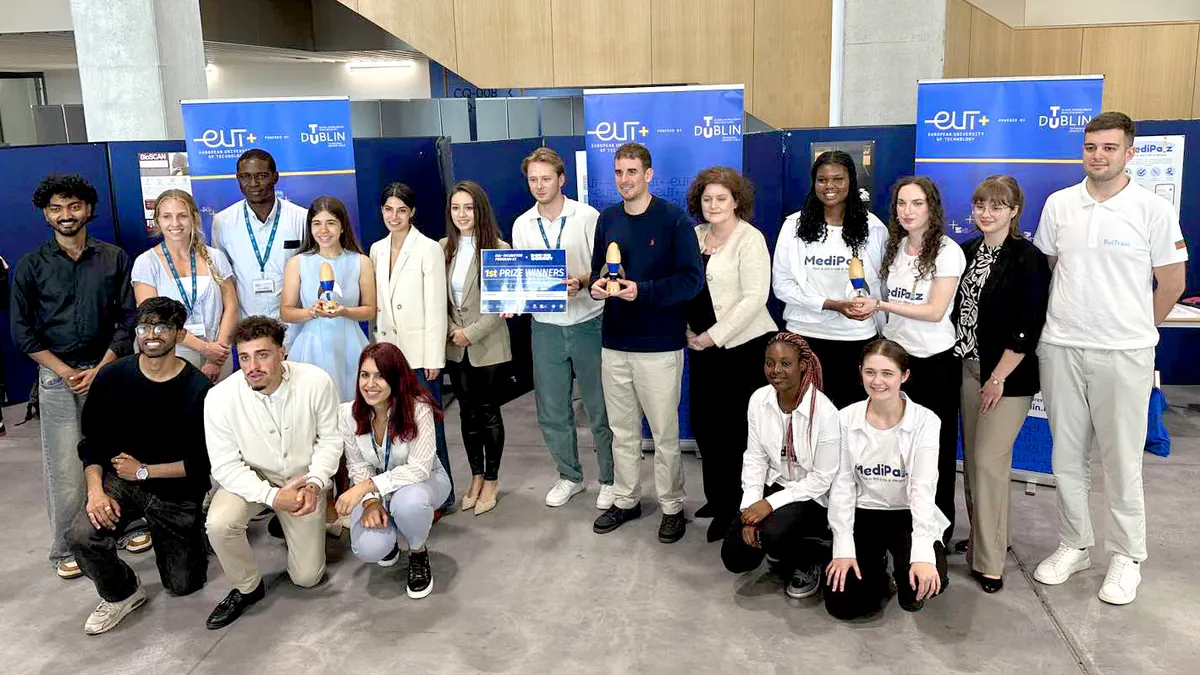
Events
The Technical University – Sofia with a worthy performance at the final of the international Incubation Program for Entrepreneurship in Dublin
July 04, 2026
Read more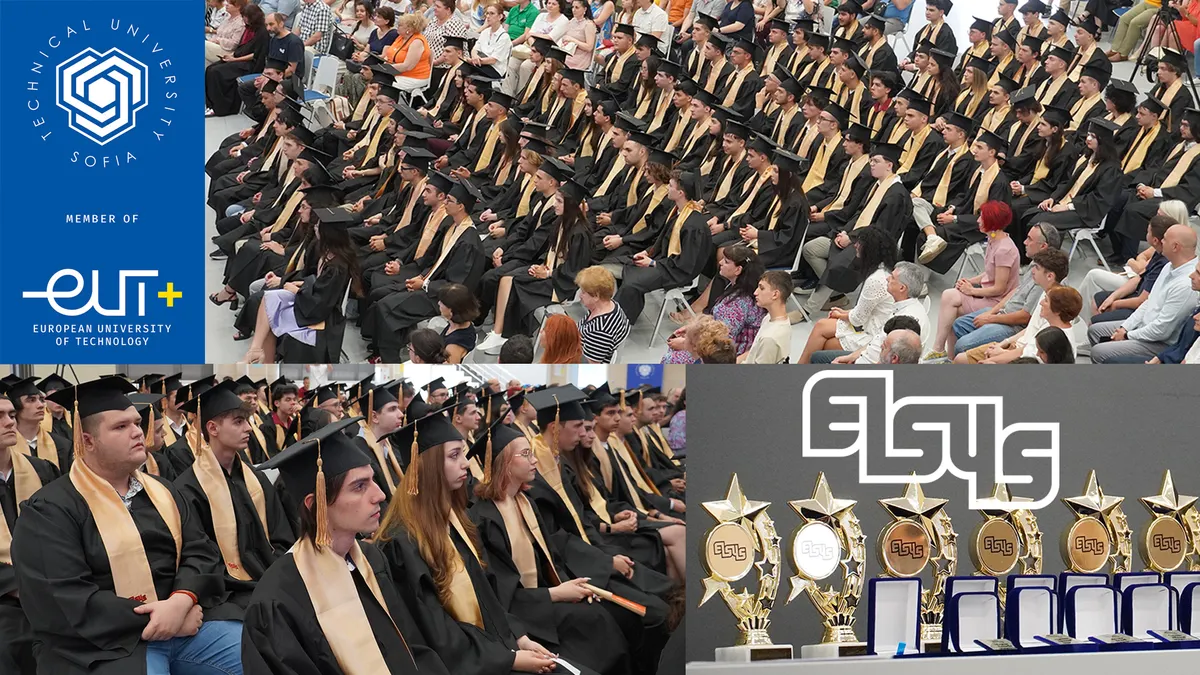
Events
The talented 34th Graduation Class of TUT received their graduation diplomas
June 23, 2026
Read more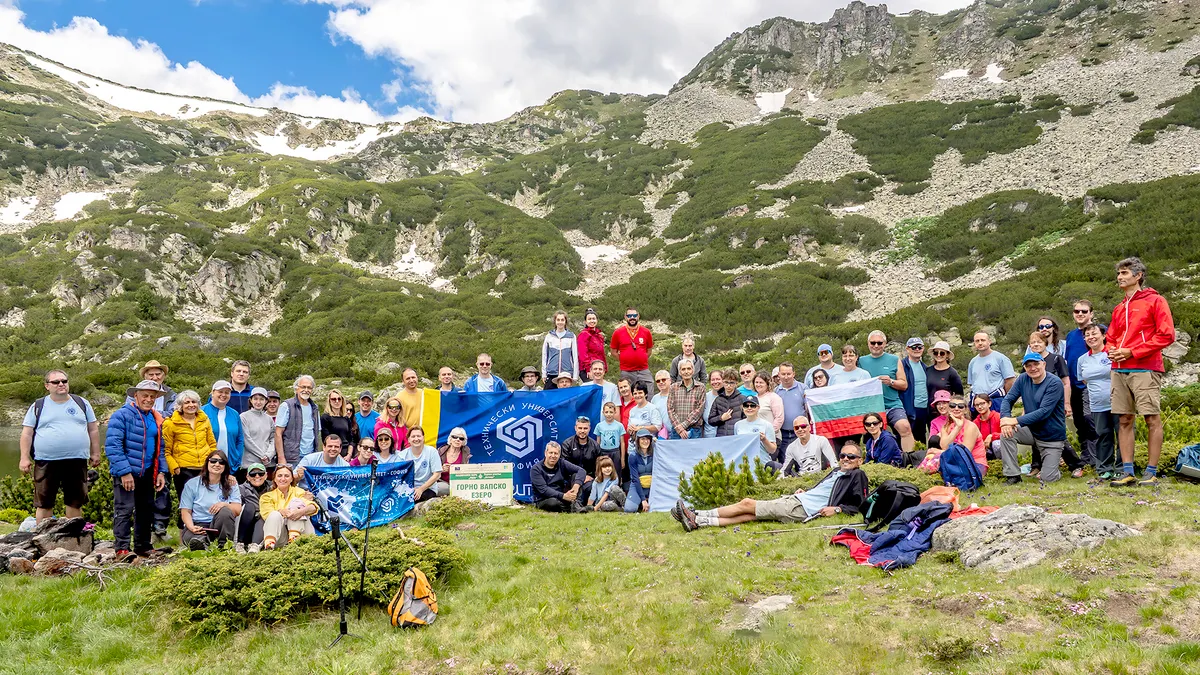
Events
The Technical University – Sofia conquered Rila
June 23, 2026
Read more