
The internationalization of the university is a prerequisite for its sustainable development, explained the rector of the Technical University – Sofia
The internationalization of the university, both as a presence in the international research space and as an attraction of leading and established foreign researchers, is a prerequisite for its sustainable development, increasing the quality and recognizability of scientific research and, not least, a guarantee for modern training in accordance with the requirements of the labor market.
This was stated in an interview with bTV by the rector of the Technical University – Sofia, Prof. Georgi Venkov.
The full text of the interview follows.
Very recently, at a major scientific conference, the Technical University – Sofia presented the work and achieved results of the large-scale project "Improving Research Capacity and Quality for International Recognizability and Sustainability of TU – Sofia," funded by the National Recovery and Resilience Plan. What are the achievements of the research groups working on the project? Are the results achieved so far optimistic?
Thanks to the funding from the National Recovery and Resilience Plan, TU – Sofia has successfully implemented its strategic goals related to scientific research, international recognizability, and technological development. Currently, 30 research groups are actively working in priority and highly important for society scientific fields – from digitalization, information security, mechatronics, and artificial intelligence to green energy, circular economy, and healthy living. In order to ensure the development of modern but currently less represented fields at the university, three of the groups are led by leading scientists from the USA, Portugal, and China. This is strong evidence of the university's international recognition. The results achieved so far give us confidence that we are on the right path to establishing TU – Sofia as a center of excellence in scientific achievements with global influence.
The Technical University has managed to attract scientists from all over the world to Sofia as postdoctoral researchers and established researchers, and strives to attract as teachers and leading world-class scientists in strategically important scientific fields? Is this a guarantee for world-class education?
The attraction of foreign researchers not only enriches the academic environment but also plays a key role in establishing the Technical University – Sofia as a leading, internationally recognized, and attractive research and educational center. Internationalization and intercultural development are characteristic of many leading world universities. The international presence of researchers, as well as teachers and students, is one of the leading criteria by which universities are evaluated by international ranking systems such as the Times Higher Education World University Ranking and the QS University Ranking. The internationalization of the university, both in terms of presence in the international research space and in attracting leading and established foreign researchers, is a prerequisite for its sustainable development, increasing the quality and recognizability of scientific research, and, not least, a guarantee of modern education in accordance with labor market requirements.
TU – Sofia is a leading research university in the country and is part of the European Technological University EUT+, which also includes a number of established European technical universities. How does this cooperation open new horizons for students and teachers?
The membership of TU – Sofia in the EUT+ Alliance opens new horizons and places the university on the map of next-generation European higher education. This cooperation provides students, researchers, and teachers with the unique opportunity to study, teach, and conduct scientific activities at any of the nine partner universities in Europe. Thus, they become true global citizens – with access to diverse academic cultures, innovative practices, and broad opportunities for professional development. This is not just a partnership – it is a new model of European education.
TU-Sofia is included in the international QS World University Rankings: Sustainability 2025, largely thanks to the work of the scientific group led by you. How does being part of global ranking classifications obligate the University? How do you follow the concept of sustainable development in the activities of the institution?
The inclusion of the university in this prestigious ranking is an independent assessment of our activities aimed at achieving sustainable development. I do not believe that our inclusion in global rankings obliges us to do one thing or another; on the contrary, our presence in these rankings is a recognition of our consistent efforts. Of course, our goal is always to improve ourselves and make the world around us a better place to live, which in turn is evaluated by global rankings. Regarding sustainable development, I often say that we should not view sustainable development as a framework or obligation, but rather as a way of thinking, a life philosophy. This is exactly what we strive to do with our colleagues from the Center for Sustainable Development, integrating into the university's entire workflow various principles and ideologies that would truly help society achieve sustainable development. Regarding our core activities, I could say that the Technical University – Sofia strives to exert influence through three main pillars: the educational process, scientific research, and technical measures. All curricula include disciplines where technical methods and tools are studied, both proven technological solutions and those in the research stage, directly related to achieving one or more of the 17 UN goals. Our research activity is strongly focused on sustainable solutions, covering the entire spectrum of fundamental and applied sciences. Regarding the technical measures we implement, it is difficult to list them all, but perhaps it is important to note our motivation to undertake such investments, namely that a higher education institution should not be viewed solely as a means of achieving sustainable development through education and/or research; it can be an entity that exerts influence. Over 11,000 students are enrolled at our university, and more than 2,500 teaching, administrative, and support staff work there. The number of people permanently engaged in university processes is comparable to the population of beautiful Bulgarian cities such as Balchik, Pomorie, Kavarna, Kozloduy, and Radnevo. If we cannot influence and set an example for society, it would not be fair to expect these same people to change their way of life later, simply because it is required by legislation or to report progress in achieving sustainable development goals.
Cybersecurity and artificial intelligence are among the fastest-developing areas that are also priorities for TU – Sofia. The university prepares specialists in the IT sector, starting from the high school level. How does the university meet industry needs to prepare not just specialists in these fields, but innovators and leaders?
TU – Sofia does not merely prepare specialists in IT, cybersecurity, and artificial intelligence – we build exceptionally well-prepared engineers, future leaders, innovators, and entrepreneurs. Schools such as TUES (Technological University Electronic Systems) and the National Professional Gymnasium for Computer Technologies and Systems in Pravets are part of this vision – they provide early professional orientation and practical training. Many graduates of these schools continue their development as our students, and some even as doctoral candidates.
At the same time, the university is in continuous dialogue with industry. Representatives of many leading international companies participate in the development of curricula and programs, and are also invited as guest lecturers. This ensures that the educational programs meet the real needs of business. Our graduates succeed not only as excellent and sought-after employees, but also as entrepreneurs and innovators – drivers of technological change.
How does the university work with industrial partners, the startup ecosystem, and state institutions to create an innovative ecosystem around TU – Sofia?
TU – Sofia has a clearly expressed role not only as an educational institution, but also as an active participant in the development and growth of the economy of Bulgaria and the EU. The university is not just a source of highly qualified personnel – it is an environment for creating new technologies, developing research capacity, and implementing innovations with real market value.
Through long-term partnerships with leading industrial companies, technology parks, and enterprises, we build a sustainable ecosystem in which scientific ideas find their way to practical implementation. The university works jointly with business on a number of projects for the development of new products, implementation of innovations, and technology transfer. We support student innovation projects and entrepreneurial initiatives by providing access to scientific infrastructure, expertise, and mentoring support.
At the same time, we actively cooperate with state institutions to form policies and initiatives that promote innovation and digital transformation in Bulgaria. We are convinced that a modern university must be not only a generator of knowledge, but also a driver of economic and social development. The innovative environment around TU – Sofia is proof that when academia, industry, and the state work together, scientific research can become a real contribution to the future of the country.
Biographical note
VENKOV, Georgi Penchev (28.05.1970, Sofia) – mathematician, professor. Graduated from SU "St. Kliment Ohridski" in 1995, majoring in differential equations. Defended a dissertation for the degree of "Doctor" on the topic: "Direct and Inverse Scattering Problem" (TU-Sofia, 2003). Specialized as a NATO fellow in nonlinear equations of mathematical physics at the University of Pisa, Italy (2005). Recipient of the "Golden Book" award of the Council of the European Scientific and Cultural Community for contribution to the development of Bulgarian science and culture (2013).
His professional career began in the Department of Differential Equations, FPMI, TU-Sofia, as an assistant (1995), associate professor in mathematical modeling and applications of mathematics (2008) and professor of differential equations (2018). Deputy head of the Department of Differential Equations (2009), head of the Department of Algebra and Geometry (2011-2012), Dean of FPMI (2013-2019), Deputy Rector for Academic Staff and Coordination (2019-2023) and Deputy Rector for Educational Activities, Accreditation and Academic Staff (2023-2025), Rector of TU-Sofia (from 2025).
He leads the creation and development of the Center for Sustainable Development at TU-Sofia, head of the university laboratory "Sustainable Development and Circular Economy". The Center for Sustainable Development is the first in Bulgaria, covering all activities and aspects of sustainable development necessary to achieve the goal defined by Brundtland in 1987, namely "Sustainable development meets the needs of the present without compromising the ability of future generations to meet their own needs". The center works on covering the social, legal and economic aspects of sustainability, concerning both Technical University – Sofia and the community as a whole. Technical innovations related to achieving sustainable development are considered, studied and developed in the research laboratory "Sustainable Development and Circular Economy".
Main areas of scientific and teaching activity: ordinary and partial differential equations, mathematical modeling, scattering theory, evolutionary equations, nonlinear equations in quantum mechanics, Schrödinger and Hartree equations. Prof. Georgi Venkov has developed a number of innovative educational programs for students, including "Mathematical Modeling and Optimization of Processes in Nuclear Reactors".
Author of 10 textbooks and study guides and more than 80 scientific publications in international specialized journals and reports at international conferences. Chairman of the organizing committee of the international conference AMEE, organized by FPMI at TU-Sofia (2013-2019). Member of ISAAC (International Society for Analysis, its Applications and
Computation), of the National Committee on Mathematics for the International Mathematical Union, of the Union of Mathematicians in Bulgaria and the Union of Scientists in Bulgaria.
12.06.2025
btv.bg
The internationalization of the university, both as a presence in the international research space and as an attraction of leading and established foreign researchers, is a prerequisite for its sustainable development, increasing the quality and recognizability of scientific research and, not least, a guarantee for modern training in accordance with the requirements of the labor market.
This was stated in an interview with bTV by the rector of the Technical University – Sofia, Prof. Georgi Venkov.
The full text of the interview follows.
Very recently, at a major scientific conference, the Technical University – Sofia presented the work and achieved results of the large-scale project "Improving Research Capacity and Quality for International Recognizability and Sustainability of TU – Sofia," funded by the National Recovery and Resilience Plan. What are the achievements of the research groups working on the project? Are the results achieved so far optimistic?
Thanks to the funding from the National Recovery and Resilience Plan, TU – Sofia has successfully implemented its strategic goals related to scientific research, international recognizability, and technological development. Currently, 30 research groups are actively working in priority and highly important for society scientific fields – from digitalization, information security, mechatronics, and artificial intelligence to green energy, circular economy, and healthy living. In order to ensure the development of modern but currently less represented fields at the university, three of the groups are led by leading scientists from the USA, Portugal, and China. This is strong evidence of the university's international recognition. The results achieved so far give us confidence that we are on the right path to establishing TU – Sofia as a center of excellence in scientific achievements with global influence.
The Technical University has managed to attract scientists from all over the world to Sofia as postdoctoral researchers and established researchers, and strives to attract as teachers and leading world-class scientists in strategically important scientific fields? Is this a guarantee for world-class education?
The attraction of foreign researchers not only enriches the academic environment but also plays a key role in establishing the Technical University – Sofia as a leading, internationally recognized, and attractive research and educational center. Internationalization and intercultural development are characteristic of many leading world universities. The international presence of researchers, as well as teachers and students, is one of the leading criteria by which universities are evaluated by international ranking systems such as the Times Higher Education World University Ranking and the QS University Ranking. The internationalization of the university, both in terms of presence in the international research space and in attracting leading and established foreign researchers, is a prerequisite for its sustainable development, increasing the quality and recognizability of scientific research, and, not least, a guarantee of modern education in accordance with labor market requirements.
TU – Sofia is a leading research university in the country and is part of the European Technological University EUT+, which also includes a number of established European technical universities. How does this cooperation open new horizons for students and teachers?
The membership of TU – Sofia in the EUT+ Alliance opens new horizons and places the university on the map of next-generation European higher education. This cooperation provides students, researchers, and teachers with the unique opportunity to study, teach, and conduct scientific activities at any of the nine partner universities in Europe. Thus, they become true global citizens – with access to diverse academic cultures, innovative practices, and broad opportunities for professional development. This is not just a partnership – it is a new model of European education.
TU-Sofia is included in the international QS World University Rankings: Sustainability 2025, largely thanks to the work of the scientific group led by you. How does being part of global ranking classifications obligate the University? How do you follow the concept of sustainable development in the activities of the institution?
The inclusion of the university in this prestigious ranking is an independent assessment of our activities aimed at achieving sustainable development. I do not believe that our inclusion in global rankings obliges us to do one thing or another; on the contrary, our presence in these rankings is a recognition of our consistent efforts. Of course, our goal is always to improve ourselves and make the world around us a better place to live, which in turn is evaluated by global rankings. Regarding sustainable development, I often say that we should not view sustainable development as a framework or obligation, but rather as a way of thinking, a life philosophy. This is exactly what we strive to do with our colleagues from the Center for Sustainable Development, integrating into the university's entire workflow various principles and ideologies that would truly help society achieve sustainable development. Regarding our core activities, I could say that the Technical University – Sofia strives to exert influence through three main pillars: the educational process, scientific research, and technical measures. All curricula include disciplines where technical methods and tools are studied, both proven technological solutions and those in the research stage, directly related to achieving one or more of the 17 UN goals. Our research activity is strongly focused on sustainable solutions, covering the entire spectrum of fundamental and applied sciences. Regarding the technical measures we implement, it is difficult to list them all, but perhaps it is important to note our motivation to undertake such investments, namely that a higher education institution should not be viewed solely as a means of achieving sustainable development through education and/or research; it can be an entity that exerts influence. Over 11,000 students are enrolled at our university, and more than 2,500 teaching, administrative, and support staff work there. The number of people permanently engaged in university processes is comparable to the population of beautiful Bulgarian cities such as Balchik, Pomorie, Kavarna, Kozloduy, and Radnevo. If we cannot influence and set an example for society, it would not be fair to expect these same people to change their way of life later, simply because it is required by legislation or to report progress in achieving sustainable development goals.
Cybersecurity and artificial intelligence are among the fastest-developing areas that are also priorities for TU – Sofia. The university prepares specialists in the IT sector, starting from the high school level. How does the university meet industry needs to prepare not just specialists in these fields, but innovators and leaders?
TU – Sofia does not merely prepare specialists in IT, cybersecurity, and artificial intelligence – we build exceptionally well-prepared engineers, future leaders, innovators, and entrepreneurs. Schools such as TUES (Technological University Electronic Systems) and the National Professional Gymnasium for Computer Technologies and Systems in Pravets are part of this vision – they provide early professional orientation and practical training. Many graduates of these schools continue their development as our students, and some even as doctoral candidates.
At the same time, the university is in continuous dialogue with industry. Representatives of many leading international companies participate in the development of curricula and programs, and are also invited as guest lecturers. This ensures that the educational programs meet the real needs of business. Our graduates succeed not only as excellent and sought-after employees, but also as entrepreneurs and innovators – drivers of technological change.
How does the university work with industrial partners, the startup ecosystem, and state institutions to create an innovative ecosystem around TU – Sofia?
TU – Sofia has a clearly expressed role not only as an educational institution, but also as an active participant in the development and growth of the economy of Bulgaria and the EU. The university is not just a source of highly qualified personnel – it is an environment for creating new technologies, developing research capacity, and implementing innovations with real market value.
Through long-term partnerships with leading industrial companies, technology parks, and enterprises, we build a sustainable ecosystem in which scientific ideas find their way to practical implementation. The university works jointly with business on a number of projects for the development of new products, implementation of innovations, and technology transfer. We support student innovation projects and entrepreneurial initiatives by providing access to scientific infrastructure, expertise, and mentoring support.
At the same time, we actively cooperate with state institutions to form policies and initiatives that promote innovation and digital transformation in Bulgaria. We are convinced that a modern university must be not only a generator of knowledge, but also a driver of economic and social development. The innovative environment around TU – Sofia is proof that when academia, industry, and the state work together, scientific research can become a real contribution to the future of the country.
Biographical note
VENKOV, Georgi Penchev (28.05.1970, Sofia) – mathematician, professor. Graduated from SU "St. Kliment Ohridski" in 1995, majoring in differential equations. Defended a dissertation for the degree of "Doctor" on the topic: "Direct and Inverse Scattering Problem" (TU-Sofia, 2003). Specialized as a NATO fellow in nonlinear equations of mathematical physics at the University of Pisa, Italy (2005). Recipient of the "Golden Book" award of the Council of the European Scientific and Cultural Community for contribution to the development of Bulgarian science and culture (2013).
His professional career began in the Department of Differential Equations, FPMI, TU-Sofia, as an assistant (1995), associate professor in mathematical modeling and applications of mathematics (2008) and professor of differential equations (2018). Deputy head of the Department of Differential Equations (2009), head of the Department of Algebra and Geometry (2011-2012), Dean of FPMI (2013-2019), Deputy Rector for Academic Staff and Coordination (2019-2023) and Deputy Rector for Educational Activities, Accreditation and Academic Staff (2023-2025), Rector of TU-Sofia (from 2025).
He leads the creation and development of the Center for Sustainable Development at TU-Sofia, head of the university laboratory "Sustainable Development and Circular Economy". The Center for Sustainable Development is the first in Bulgaria, covering all activities and aspects of sustainable development necessary to achieve the goal defined by Brundtland in 1987, namely "Sustainable development meets the needs of the present without compromising the ability of future generations to meet their own needs". The center works on covering the social, legal and economic aspects of sustainability, concerning both Technical University – Sofia and the community as a whole. Technical innovations related to achieving sustainable development are considered, studied and developed in the research laboratory "Sustainable Development and Circular Economy".
Main areas of scientific and teaching activity: ordinary and partial differential equations, mathematical modeling, scattering theory, evolutionary equations, nonlinear equations in quantum mechanics, Schrödinger and Hartree equations. Prof. Georgi Venkov has developed a number of innovative educational programs for students, including "Mathematical Modeling and Optimization of Processes in Nuclear Reactors".
Author of 10 textbooks and study guides and more than 80 scientific publications in international specialized journals and reports at international conferences. Chairman of the organizing committee of the international conference AMEE, organized by FPMI at TU-Sofia (2013-2019). Member of ISAAC (International Society for Analysis, its Applications and
Computation), of the National Committee on Mathematics for the International Mathematical Union, of the Union of Mathematicians in Bulgaria and the Union of Scientists in Bulgaria.
12.06.2025
btv.bg
Latest News and Events
View all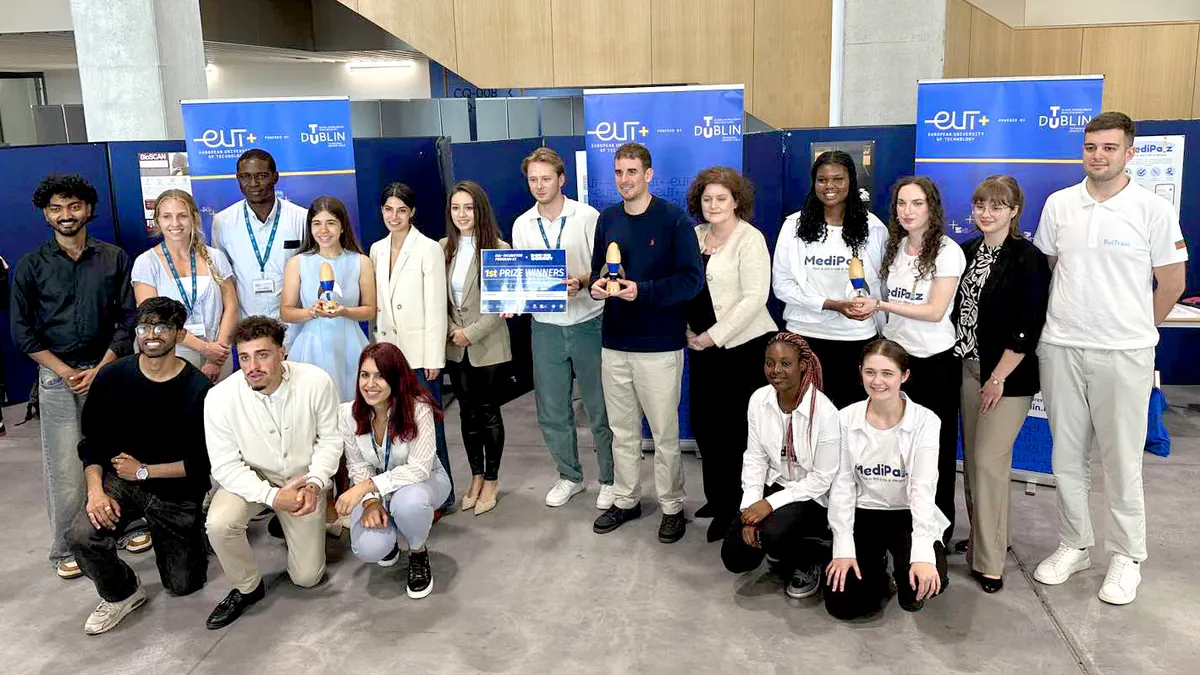
Events
The Technical University – Sofia with a worthy performance at the final of the international Incubation Program for Entrepreneurship in Dublin
July 04, 2026
Read more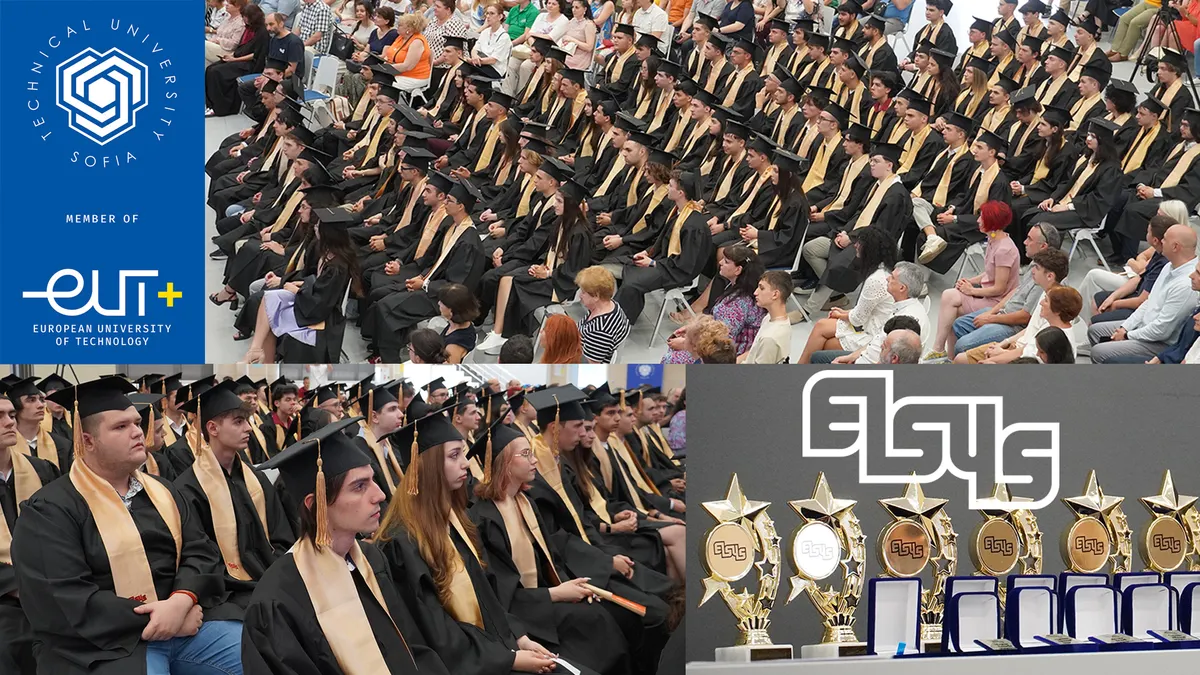
Events
The talented 34th Graduation Class of TUT received their graduation diplomas
June 23, 2026
Read more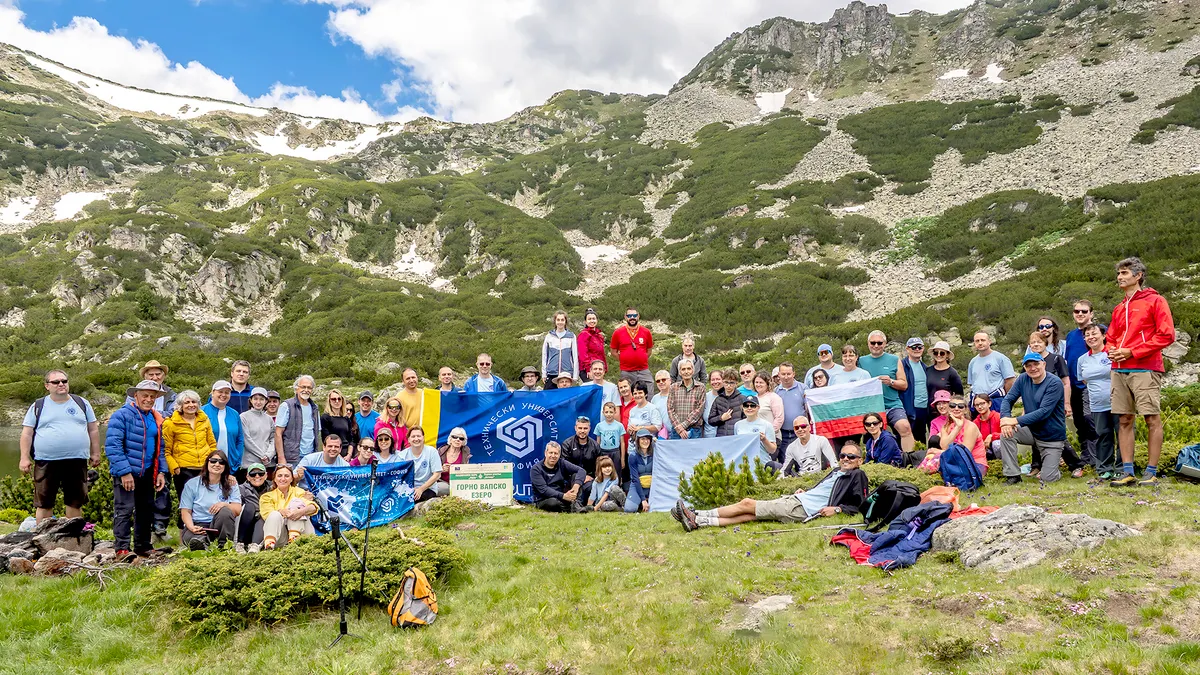
Events
The Technical University – Sofia conquered Rila
June 23, 2026
Read more