
bnr.bg
For over 30 years, two Bulgarian universities have been offering quality education in French for technical and engineering specialties and degrees recognized worldwide. That is why the professors proudly state that none of their graduates are unemployed.
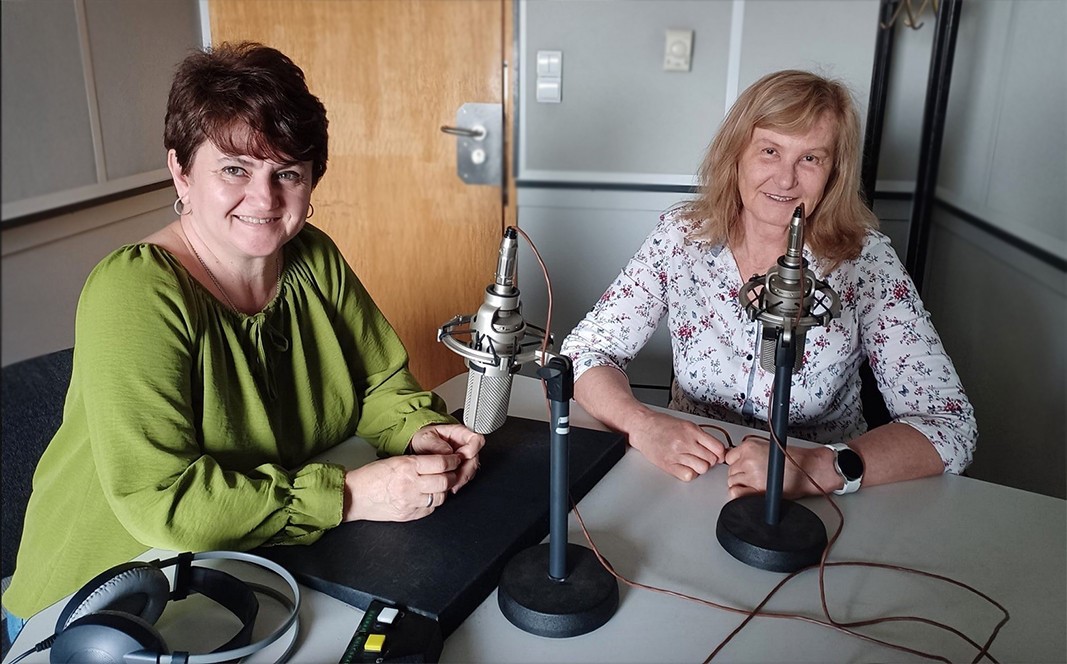
The Technical University and the University of Chemical Technology and Metallurgy in Sofia hold the so-called French accreditation. This means that the education is five years long and all graduates receive a master's degree. "As in medicine, four years are not enough for preparation in engineering sciences," explains the French understanding of education Prof. Slavka Tsanova from the Technical University.
"We offer two specialties," she continues in an interview for Radio Bulgaria. "Our students graduate with a Bulgarian diploma but also have a certificate. After their third year, they choose whether to study Informatics and Communications or Electronics, Electrical Engineering and Automation. We have guest lecturers from France, as well as many foreign students from Tunisia, Morocco, Algeria, Cameroon, and Côte d'Ivoire. Many French students are also enrolled in our program. Nevertheless, thanks to the Bulgarian-French Chamber of Commerce with over 300 companies, the interest in our graduates is high, and they can find a worthy career even in their own country. Often, companies conduct joint courses with the universities and in the last years of study prepare their future employees.
"Most of our students manage to find a job in their specialty even before defending their thesis," adds Senior Assistant Vladislava Ivanova. "During the mandatory internships, which are many times more numerous compared to those in Bulgarian disciplines at our university, students have the opportunity to get acquainted with various companies and institutes of the Bulgarian Academy of Sciences, where they may stay after graduation. We also have a career center that facilitates the connection between students and business."
The requirements for Bulgarian applicants to enroll in Francophone specialties are different. At the Technical University, applicants apply with mathematics and physics plus French language (those who graduated from French high schools are exempt from the French language exam). At the University of Chemical Technology and Metallurgy, there is no entrance test; the grades from the state maturity exams are what matter. The same rules apply to potential students from the European Union. There are also two Council of Ministers decrees for young people from North Macedonia or of Bulgarian origin, for whom education is free.
The procedure for candidates from outside the EU is quite more complex and involves the legalization of the diploma in their home country and obtaining a stamp or apostille depending on the agreement with Bulgaria.
"This year we have many candidates, but we will see if they will succeed – says Prof. Slavka Tsanova. – I am speaking specifically about the first steps in the countries of Central and West Africa, where we do not have embassies and everything is carried out through our diplomatic mission in Nigeria. Future students must go in person or in some complicated way to have the necessary documents notarized at the embassy, after which they must send their diplomas translated into Bulgarian to our country and apply for a visa."
For several years, discussions have been ongoing regarding the simplification of the procedure, but no decision has been reached yet. Lecturers are convinced that the significant difficulties that non-EU applicants must overcome, on one hand, test their motivation, and on the other hand, act as a barrier against criminal activities and even terrorism. "Our international students are excellent," summarizes Prof. Slava Tzanova.
There are many reasons why young people choose to study at a university in Bulgaria, as highlighted by Prof. Tzanova and Senior Assistant Ivanova, and one of them is the financial value of education. At HTMU, the French language specialization for EU citizens is free, as it is considered a priority area for the development of our economy, while for others it costs 1500 euros. At TUS, the semester tuition fee for Informatics and Communications is 2000 euros, while Electronics, Electrical Engineering and Automation is 200 euros cheaper.
"We are a friendly people – Prof. Slava Tsanova further argues in favor of studying here. – Not only is our food nice, our climate is also nice. Here, foreign students find friends, can live with other young people, and there is no racism at the university. They also get used to our culture and learn the Bulgarian language. Obviously, they like it, because now we have many more applicants than before."
The number of students is increasing due to the friendly environment, believes and Asst. Prof. Vladislava Ivanova.
"In our university, there is an Erasmus Student Network, where students take care of each other during their stay – she adds. – Subsequently, they go on trips together not only in Bulgaria but also abroad. Moreover, the Student Council is a very strong institution, and I am proud of our students because they organize various events through which they can get to know each other and unite. Another argument is the languages – almost everyone here speaks English or French. And our nature is beautiful. So students are truly satisfied when they come to study in Bulgaria.
More about French language training at the Technical University and the University of Chemical Technology and Metallurgy in Sofia – listen to the audio file:
bnr.bg, 17.05.2024