

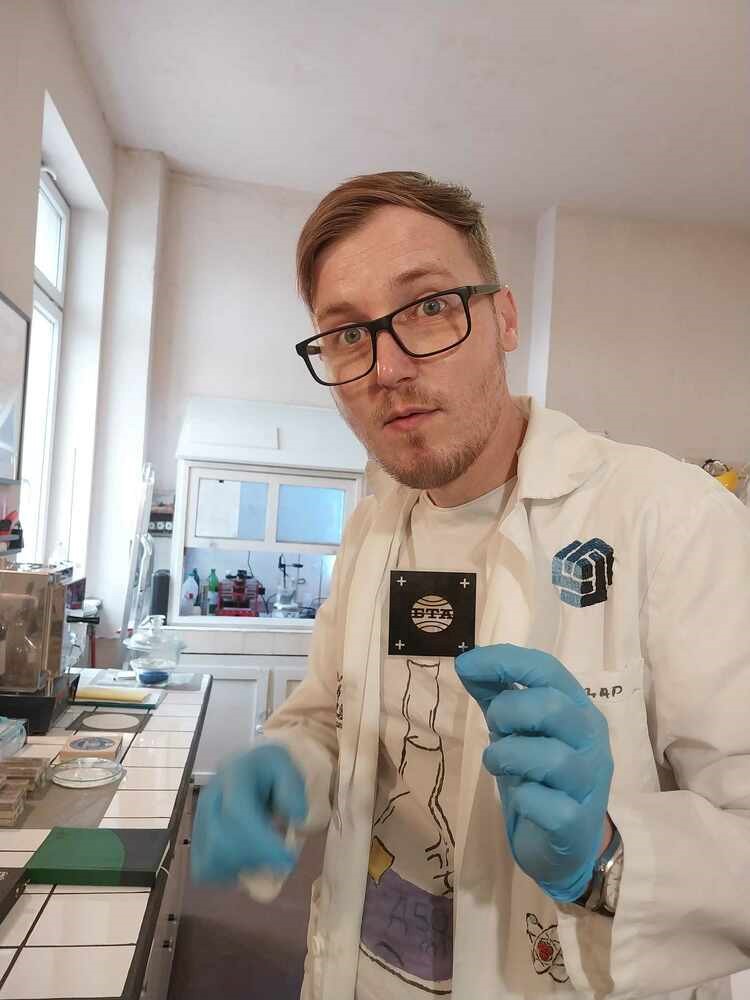
As a true science communicator and finalist in the international edition of
FameLab, Dr. Bozhidar Stefanov – a lecturer in the Department of Chemistry at the Technical
University (TU) – Sofia, proposed to illustrate one of the directions of the latest
project, which he leads, with a demonstration of the process of creating the logo
of the Bulgarian News Agency (BTA) by activating chemical
reactions using light.
The project of TU - Sofia is titled "Photocatalytic activity of thin
films with selectively photofixed cocatalysts" with partners SU "St.
"Kliment Ohridski" and the Institute of Catalysis - BAS, and is funded by the Fund
"Scientific Research" under the Ministry of Education and Science.
We meet in Dr. Stefanov's laboratory at TU. It is an incredible feeling to
talk to someone who loves their workspace so much and
everything they do here. He talks about the stages of building and caring for
the laboratory, as well as about every item in it – from test tubes and scientific
installations to furniture and signs on the walls. Most of the equipment
he has constructed himself. With parts from various devices, aluminum strips for floors
coverings (purchased from hardware stores) and photographic materials have created
impressive high-tech products: dip-coater – a device for drawing
thin layers, photo-fixator – an automatic ultraviolet photoexposer,
electrochemical cells.
"Since I was young, I have loved making things with my hands," explains Dr. Bozhidar Stefanov. And
since he was young, he has loved asking himself the question: "What happens if..." He has embroidered
the Periodic Table of Mendeleev on the back of his work apron, along with figures of
flasks, test tubes, and has drawn chemical equipment with textile paints on several
T-shirts. After uploading photos of one of the self-made
laboratory instruments to the internet, Chinese manufacturers contacted him and asked
if he could produce the same product for them. While the cost of
original laboratory equipment is several thousand euros, the ones created by Dr.
Stefanov cost only about ten leva in materials.
Skilled and inventive in the Renaissance sense of the word, the young scientist has already
prepared the molds for the BTA logo and is proceeding to the three main stages of
the process of materializing the idea of driving chemical reactions through
light usage: applying a thin layer of titanium dioxide on
microscopic glass (1), photochemical activation of the surface (2) and
silvering/copper plating (3).
"We use light to transfer the image from the photomask directly onto
the surface where we want to depict it. In a similar way, chips and
circuit boards in electronic devices are made (this is called photolithography). But
the difference is that there the process is subtractive, there is waste. The entire surface is
covered with a conductive layer, then a photosensitive substance is applied -
photoresist, which is exposed through a mask. Next, the photoresist is developed and washed away from the areas that were not exposed. The unprotected
surface is chemically treated to dissolve (remove) the excess
material. While you see what happens in our case: first, we use glass as a
substrate, which is unusual, and second, we treat it so that it itself under
the action of light deposits silver, followed by copper (in two steps). Copper
is added by the chemical metallization method,” explains Dr. Bao, as his
students call him.
And he points out the advantage of using silver nanoparticles in
surface activation, because the established industrial technology uses a palladium activator, priced at several hundred leva per
gram. "The idea is that through this technique - with light energy directed at a very thin layer of titanium or zinc oxide (they are photocatalysts - materials capable of using light energy for chemical processes) - coatings can be created that split water into hydrogen and oxygen. Using the techniques developed during the project, the two reactions can be spatially separated - into two different locations. It is also possible to draw electrical circuits directly onto the surface from liquid by depositing conductive copper layers. In this way, my students also created humidity sensors," explains Dr. Stefanov. This is also one of the practical applications of the research: the production of sensors on glass. "The same layers, for example, on which we can form these conductive images, I have previously used for air purification on glass - by this method, a 'smart' window can be made that not only purifies the air in the room using solar energy but also measures the air quality in the premises - humidity percentage, presence of pollutants, etc. A window that is self-powered by solar energy as well," adds the young scientist.
His colleague from Sofia University "St. Kliment Ohridski" Nina Kuneva,
who is a co-author on the project, uses the same technology to create coatings that
purify water from pharmaceutical molecules that treatment plants cannot
remove. The young researcher is a recipient of one of the UNESCO scholarships
in the "Women in Science" competition.
"I have been dealing with these things for 16 years and I am still interested" - says Dr. Stefanov and gifts BTA the two logos drawn with light - the copper and
the silver. His request is for us to track how the samples develop: "After all, they are on
a photoactive surface; with copper, I haven't noticed any negative
effects within a year, but it might turn slightly dark spots. With silver, I'm not sure, it's a bit temperamental and there's a chance either the surrounding surface will gray
over time, or the gray area will fade if stored in the dark and then
darken again if exposed to light - I don't know why this happens, but it's a topic for another
project, because it's some kind of photochromic effect."
bta.bg,13.02.2024
Latest News and Events
View all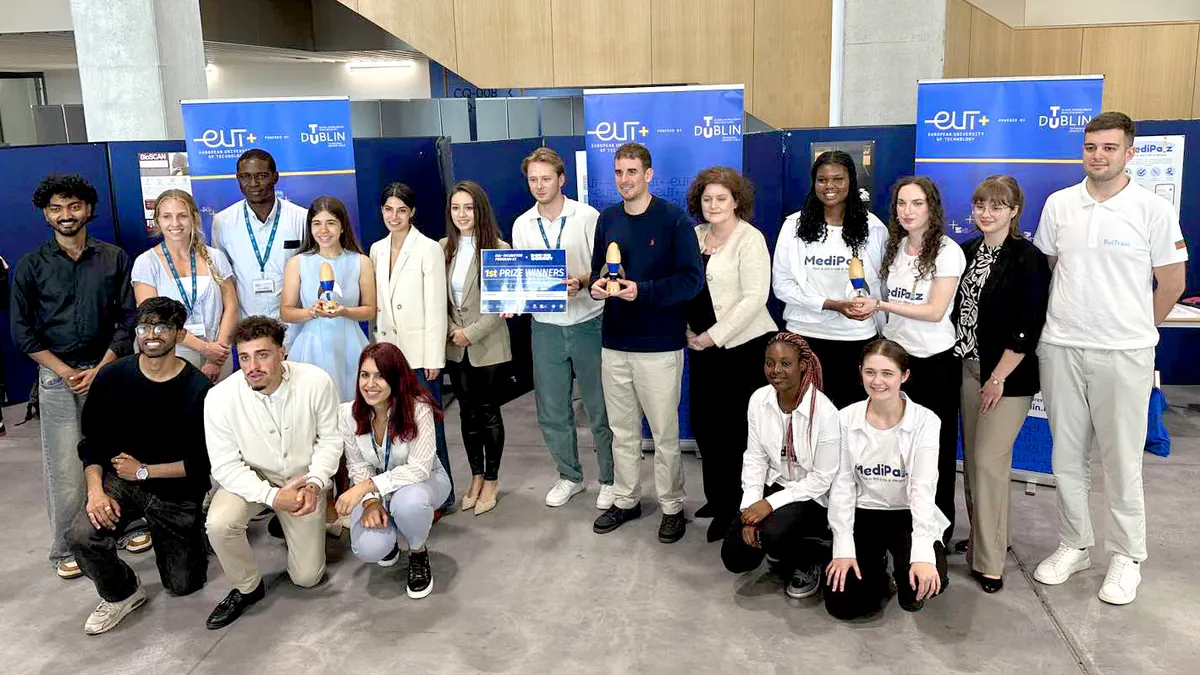
Events
The Technical University – Sofia with a worthy performance at the final of the international Incubation Program for Entrepreneurship in Dublin
July 04, 2026
Read more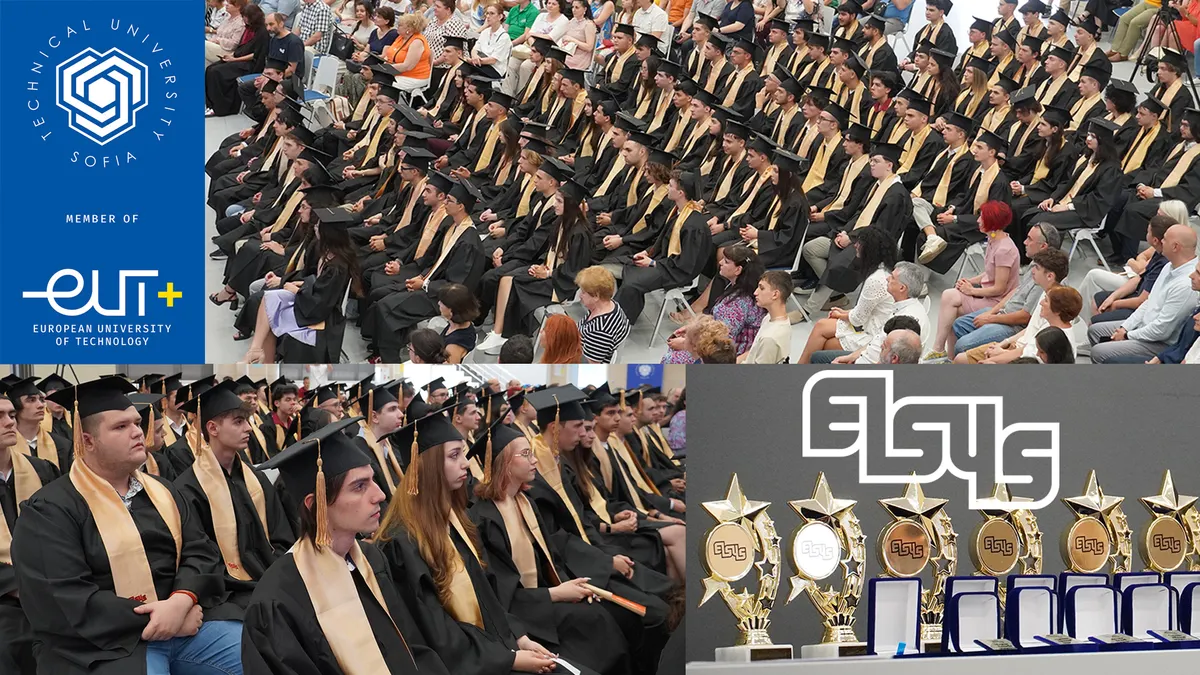
Events
The talented 34th Graduation Class of TUT received their graduation diplomas
June 23, 2026
Read more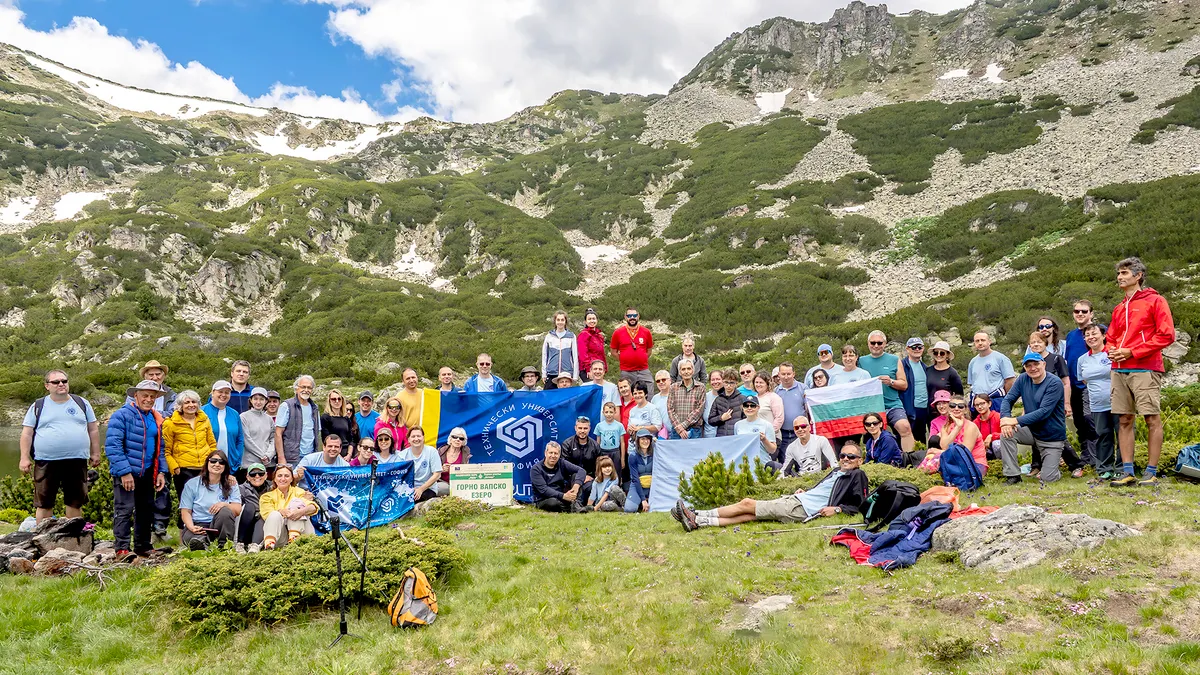
Events
The Technical University – Sofia conquered Rila
June 23, 2026
Read more