
13.07.2021
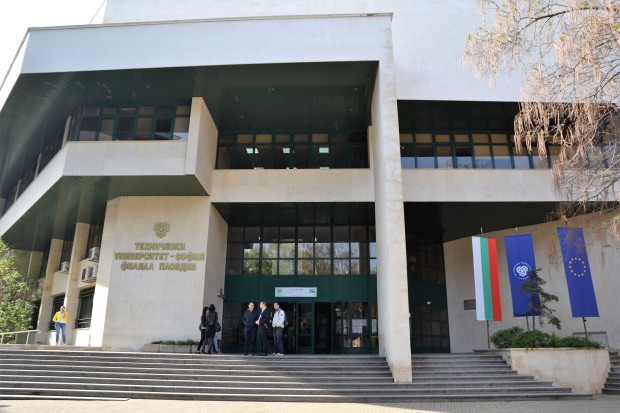
Actually, the exact name of the four-year project, which started in September 2020, is "European Network for Building a System to Support Elderly People Living Alone". However, the 70 research centers, universities, industrial companies, social organizations, ethics and law experts from 37 countries, mostly from the EU, participating in it already call it among themselves "Good brother". In contrast to that scary "Big Brother" from George Orwell's novel "1984". The Bulgarian participant in the project is the Laboratory of Biomedical Engineering at the Technical University – Plovdiv Branch. Here is what the head of the laboratory, Prof. Dr. Galidiya Petrova, said about the work of the Bulgarian scientists in this innovative project: "Our common goal is a better quality of life for elderly people living independently. It is about using communication technologies based on audio and video surveillance. The technologies should help to instantly detect problems with health and physical status. For example, if an elderly person feels faint and falls at home, artificial intelligence should immediately assess the situation and find help." The project should create standards that future creators and participants in these monitoring systems for elderly people living alone will follow. Ethics and law specialists will set the limitations imposed by entering the personal space of elderly people. After joint work with these scientists, the Plovdiv engineers train "Good Brother" to monitor and always be ready to help when needed. At the Technical University – Plovdiv Branch, experiments have already begun to determine the critical areas in an apartment of an elderly person living alone. There, researchers have installed 6 low-resolution infrared cameras so that the person's face cannot be recognized. "The technical solution we are developing must be inexpensive, easy to connect and integrate with existing structures, and allow for seamless scaling of the number of monitored individuals. With the help of our system, we will be able to detect changes in behavior due to dementia, as well as the need for rehabilitation. We will create a database of video and audio signals from our observations, which can then be used by various researchers." - Prof. Petrova concluded. Biomedical Engineering - this specialization at the Technical University – Plovdiv branch requires future engineers to have certain medical knowledge. "When designing medical equipment, the engineer must always think about who and where will use it. In practice, there are examples where excellent equipment from an engineering perspective did not find application in medicine because it was not accepted by the medical community. The reason: it was difficult for medical staff to work with these devices. That is why we train our students to test their new devices in several clinics for at least 6 months when they design them. For a biomedical engineer to be good in their field, they must also get a whiff of the hospital" - Prof. Galidiya Petrova is categorical. Her students work as service engineers for companies that design, manufacture, and sell medical equipment. Large healthcare facilities also need medical engineers to maintain the equipment, train medical staff on new technology, and advise managers when purchasing medical devices and systems.
See the article here
Plovdiv24.bg, 13.07.2021