
29.04.2021
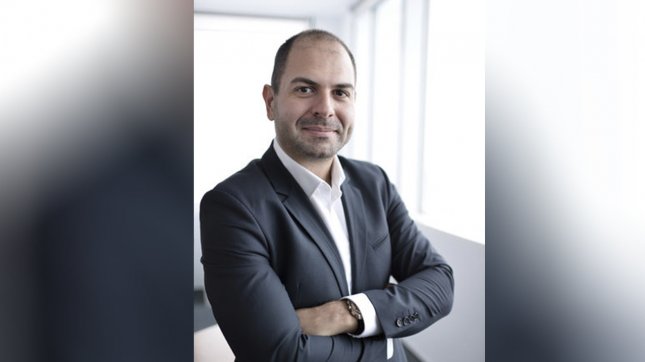
Car suppliers in Bulgaria are in an accelerated phase of recovery – Ivan Mihaylov, Managing Director of Visteon Electronics Bulgaria, to Economy.bg. Visteon Electronics Bulgaria is already the leading technology center of the company for all of Europe. "We are developing not only in terms of the number of employees, but also in terms of important projects for leading manufacturers in the automotive industry," Ivan Mihaylov, Managing Director of the technology company, shared with Economy.bg. According to him, the automotive sector will continue its stable recovery in 2021, and car component suppliers in our country are already in an accelerated phase of recovery. How the pandemic affected the business of Visteon Electronics Bulgaria, how many and what type of specialists the company plans to hire in 2021, when the automotive sector will return to growth, whether the crisis is a brake or an accelerator for innovations – we discussed these and other questions with Ivan Mihaylov, Managing Director of Visteon Electronics Bulgaria and Chairman of the Board of "Automotive Cluster Bulgaria".
-Ivan, how is Visteon Electronics Bulgaria going through the crisis caused by the COVID pandemic?
-I would say that as a company we are going through the crisis in a structured and responsible manner. We strive to apply the right balance by creating an increasingly flexible work environment that primarily guarantees the safety of our employees, but at the same time maintains strong belonging and good collaboration within the team. As a result of the faster-than-expected recovery of the automotive industry worldwide, the challenge for us as an important part of it is to continue to discover talents, together with whom we will implement the growing number of large-scale international projects for leading automotive companies in the sector. The complexity of the projects and the need for top talents has not changed, quite the opposite – the market today is developing with even greater dynamics and the challenges before us are even greater.
-What were the biggest challenges for your company in adapting to the new reality?
-Traditionally, there are a number of activities in our work that cannot or would be difficult to perform remotely. The biggest challenge for us was to quickly switch to remote work mode, while at the same time restructuring our processes and systems to ensure comfortable and safe work from home, while successfully, qualitatively and on time working on all projects.
-How many people work in the company at the moment? In our last conversation a year ago, you planned expansion. Are these plans still relevant?
-We continued to develop even during the crisis. Today, Visteon Electronics Bulgaria is the company's leading technology center for all of Europe, with 20 years of expertise in automotive electronics. Our engineering teams work on over 250 projects for global leaders in the automotive industry. We are growing not only in terms of the number of employees but also in terms of important projects for leading manufacturers, while simultaneously enhancing our expertise. Currently, we have 100 open positions, some of which are unique to our market. This places our technology center on a completely different level.
-What kind of specialists will you need?
-We are continuously expanding, and talent selection has not stopped even during the crisis. Our range is broad, so I would advise anyone who is interested to keep an eye on our current open positions.
-What work model are you following currently, and how will you work in the future?
-Currently, we are working under a hybrid model with all necessary rotations and measures to protect the health of our team. We are functioning well and efficiently, and we do not expect significant changes to this model in the future. Of course, we are observing trends and reevaluating the role of the office as a real environment for exchanging ideas. The lessons learned and accumulated experience over the past year have made us adaptive and flexible. The health of our teams will always remain our number one priority.
-A recent study showed that many of the newly hired in software companies in Bulgaria are Bulgarians who have returned from abroad. Are you also observing a similar trend?
-We have witnessed this trend firsthand. Over the past two years, more than 10 experienced Bulgarian engineers have returned from abroad and started working with us. Unfortunately, as a whole, this trend is still weakly expressed at the moment.
-You had plans to expand to other cities. What stage are they at?
-As a consequence of the crisis, there is a trend for people to settle in smaller settlements, further away from the big city. At the moment, we are reassessing the market, weighing the possibilities for remote work from different settlements, without the need to physically open offices.
-Has the global chip shortage affected your business in any way?
-We are aware of the situation and are working in close collaboration with our suppliers and clients on this issue.
-Is the crisis a brake or an accelerator for innovation?
-Undoubtedly, it is an accelerator. We are witnessing an accelerated process of digital transformation, as well as changes in the environment, such as electromobility, 5G connected technologies, and others. Many of them were in their infancy even before the Covid crisis, but it accelerated their development and, of course, had an impact on our projects, priorities, and the company's technological development roadmap.
-When do you expect the automotive sector to fully recover?
-The sector began to recover as early as 2020, with the pace significantly outpacing forecasts. We expect 2021 to show a stable trend in this direction, as we have observed since its beginning. Specifically for Bulgaria, I would say that automotive suppliers are also in an accelerated phase of recovery.
-How can Bulgaria take advantage of Europe's desire to shorten supply chains?
-Bulgaria's historically key position as a preferred destination for a number of manufacturing and R&D activities in the automotive sector is a prerequisite for us to continue attracting new investments, but above all to retain the investors who are already in the country. We have all the conditions, as a result of the global situation at the moment, as well as the plans of the European Union for development to attract new investments, as well as to encourage the startup environment. However, we must also take into account the activity of our neighboring countries and not forget the competitive environment in which we are located. In it, not only the flat tax is attractive for these investments, but above all the people.
-How do you think the coronavirus crisis will change the industry in our country and around the world?
-We will increasingly realize the need for urgent digitalization in all spheres, but especially where it has not happened so far. I expect accelerated implementation of "Industry 4.0", as we increasingly start looking towards "Industry 5.0". It is also good to use the changes that the Covid crisis imposed to improve the quality of education, which has always been a key factor for our competitiveness as a country. I am happy that at Visteon we have the opportunity to contribute in this direction. It is extremely important for us not only to work with the best engineers, but also to support the realization of the next generation who want to develop in this field. We work in close partnership with the Technical University of Sofia, Plovdiv University "Neofit Rilski", Burgas University "Prof. Assen Zlatarov", we support the Professional Gymnasium for Computer Programming and Innovation in Burgas, the Professional Gymnasium "Velizar Peev" in the town of Svoge, we conduct our own engineering academy every year, as well as internships and workshops in specialized high schools in our country.
See the article here
Economy.bg, 29.04.2021
Car suppliers in Bulgaria are in an accelerated phase of recovery – Ivan Mihaylov, Managing Director of Visteon Electronics Bulgaria, to Economy.bg. Visteon Electronics Bulgaria is already the leading technology center of the company for all of Europe. "We are developing not only in terms of the number of employees, but also in terms of important projects for leading manufacturers in the automotive industry," Ivan Mihaylov, Managing Director of the technology company, shared with Economy.bg. According to him, the automotive sector will continue its stable recovery in 2021, and car component suppliers in our country are already in an accelerated phase of recovery. How the pandemic affected the business of Visteon Electronics Bulgaria, how many and what type of specialists the company plans to hire in 2021, when the automotive sector will return to growth, whether the crisis is a brake or an accelerator for innovations – we discussed these and other questions with Ivan Mihaylov, Managing Director of Visteon Electronics Bulgaria and Chairman of the Board of "Automotive Cluster Bulgaria".
-Ivan, how is Visteon Electronics Bulgaria going through the crisis caused by the COVID pandemic?
-I would say that as a company we are going through the crisis in a structured and responsible manner. We strive to apply the right balance by creating an increasingly flexible work environment that primarily guarantees the safety of our employees, but at the same time maintains strong belonging and good collaboration within the team. As a result of the faster-than-expected recovery of the automotive industry worldwide, the challenge for us as an important part of it is to continue to discover talents, together with whom we will implement the growing number of large-scale international projects for leading automotive companies in the sector. The complexity of the projects and the need for top talents has not changed, quite the opposite – the market today is developing with even greater dynamics and the challenges before us are even greater.
-What were the biggest challenges for your company in adapting to the new reality?
-Traditionally, there are a number of activities in our work that cannot or would be difficult to perform remotely. The biggest challenge for us was to quickly switch to remote work mode, while at the same time restructuring our processes and systems to ensure comfortable and safe work from home, while successfully, qualitatively and on time working on all projects.
-How many people work in the company at the moment? In our last conversation a year ago, you planned expansion. Are these plans still relevant?
-We continued to develop even during the crisis. Today, Visteon Electronics Bulgaria is the company's leading technology center for all of Europe, with 20 years of expertise in automotive electronics. Our engineering teams work on over 250 projects for global leaders in the automotive industry. We are growing not only in terms of the number of employees but also in terms of important projects for leading manufacturers, while simultaneously enhancing our expertise. Currently, we have 100 open positions, some of which are unique to our market. This places our technology center on a completely different level.
-What kind of specialists will you need?
-We are continuously expanding, and talent selection has not stopped even during the crisis. Our range is broad, so I would advise anyone who is interested to keep an eye on our current open positions.
-What work model are you following currently, and how will you work in the future?
-Currently, we are working under a hybrid model with all necessary rotations and measures to protect the health of our team. We are functioning well and efficiently, and we do not expect significant changes to this model in the future. Of course, we are observing trends and reevaluating the role of the office as a real environment for exchanging ideas. The lessons learned and accumulated experience over the past year have made us adaptive and flexible. The health of our teams will always remain our number one priority.
-A recent study showed that many of the newly hired in software companies in Bulgaria are Bulgarians who have returned from abroad. Are you also observing a similar trend?
-We have witnessed this trend firsthand. Over the past two years, more than 10 experienced Bulgarian engineers have returned from abroad and started working with us. Unfortunately, as a whole, this trend is still weakly expressed at the moment.
-You had plans to expand to other cities. What stage are they at?
-As a consequence of the crisis, there is a trend for people to settle in smaller settlements, further away from the big city. At the moment, we are reassessing the market, weighing the possibilities for remote work from different settlements, without the need to physically open offices.
-Has the global chip shortage affected your business in any way?
-We are aware of the situation and are working in close collaboration with our suppliers and clients on this issue.
-Is the crisis a brake or an accelerator for innovation?
-Undoubtedly, it is an accelerator. We are witnessing an accelerated process of digital transformation, as well as changes in the environment, such as electromobility, 5G connected technologies, and others. Many of them were in their infancy even before the Covid crisis, but it accelerated their development and, of course, had an impact on our projects, priorities, and the company's technological development roadmap.
-When do you expect the automotive sector to fully recover?
-The sector began to recover as early as 2020, with the pace significantly outpacing forecasts. We expect 2021 to show a stable trend in this direction, as we have observed since its beginning. Specifically for Bulgaria, I would say that automotive suppliers are also in an accelerated phase of recovery.
-How can Bulgaria take advantage of Europe's desire to shorten supply chains?
-Bulgaria's historically key position as a preferred destination for a number of manufacturing and R&D activities in the automotive sector is a prerequisite for us to continue attracting new investments, but above all to retain the investors who are already in the country. We have all the conditions, as a result of the global situation at the moment, as well as the plans of the European Union for development to attract new investments, as well as to encourage the startup environment. However, we must also take into account the activity of our neighboring countries and not forget the competitive environment in which we are located. In it, not only the flat tax is attractive for these investments, but above all the people.
-How do you think the coronavirus crisis will change the industry in our country and around the world?
-We will increasingly realize the need for urgent digitalization in all spheres, but especially where it has not happened so far. I expect accelerated implementation of "Industry 4.0", as we increasingly start looking towards "Industry 5.0". It is also good to use the changes that the Covid crisis imposed to improve the quality of education, which has always been a key factor for our competitiveness as a country. I am happy that at Visteon we have the opportunity to contribute in this direction. It is extremely important for us not only to work with the best engineers, but also to support the realization of the next generation who want to develop in this field. We work in close partnership with the Technical University of Sofia, Plovdiv University "Neofit Rilski", Burgas University "Prof. Assen Zlatarov", we support the Professional Gymnasium for Computer Programming and Innovation in Burgas, the Professional Gymnasium "Velizar Peev" in the town of Svoge, we conduct our own engineering academy every year, as well as internships and workshops in specialized high schools in our country.
See the article here
Economy.bg, 29.04.2021