
31.08.2020
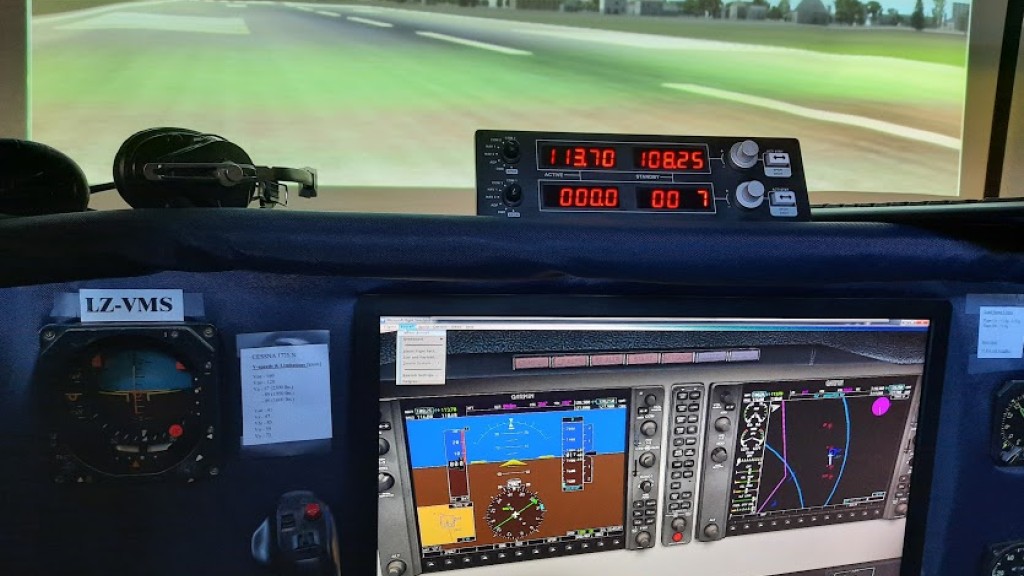
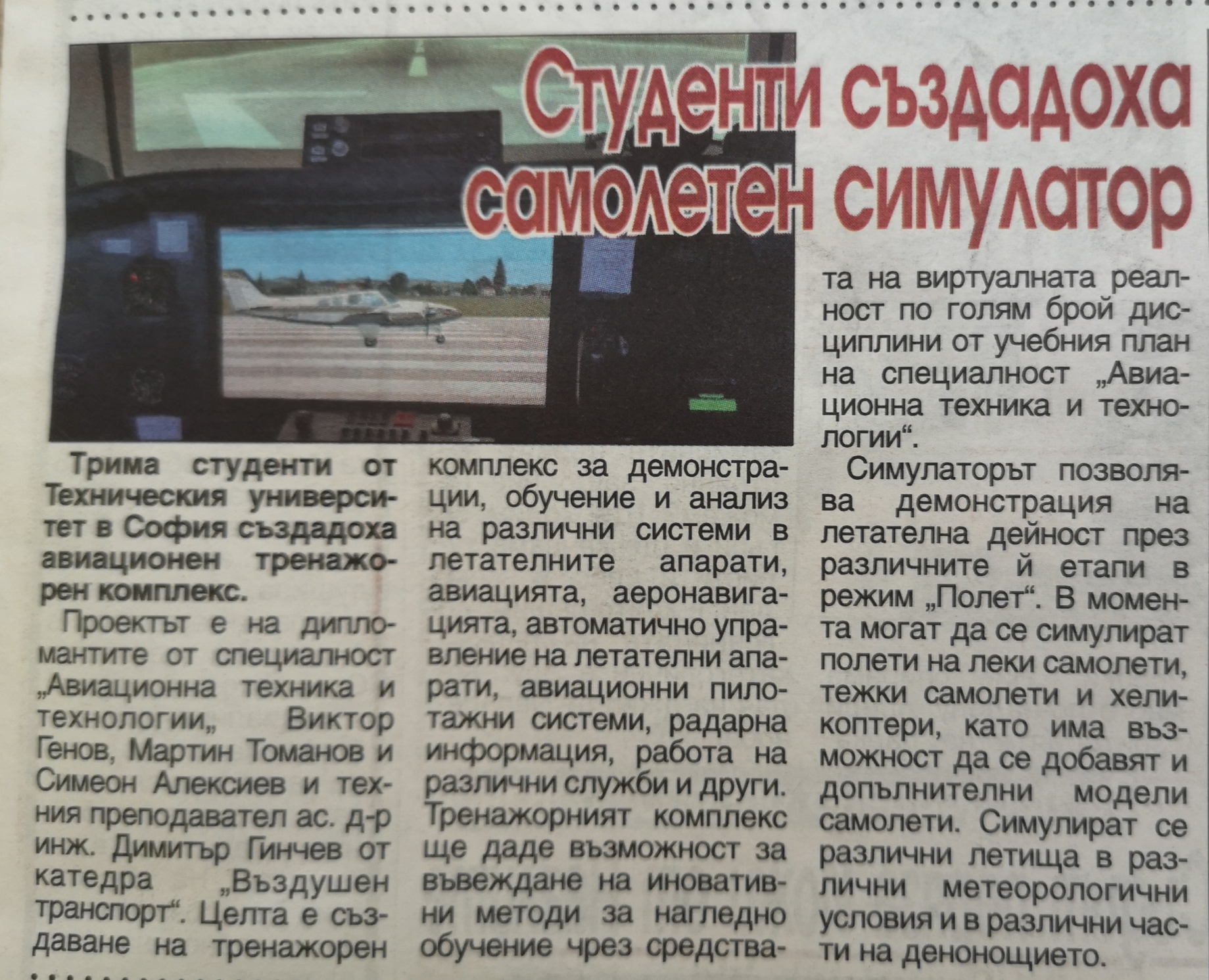
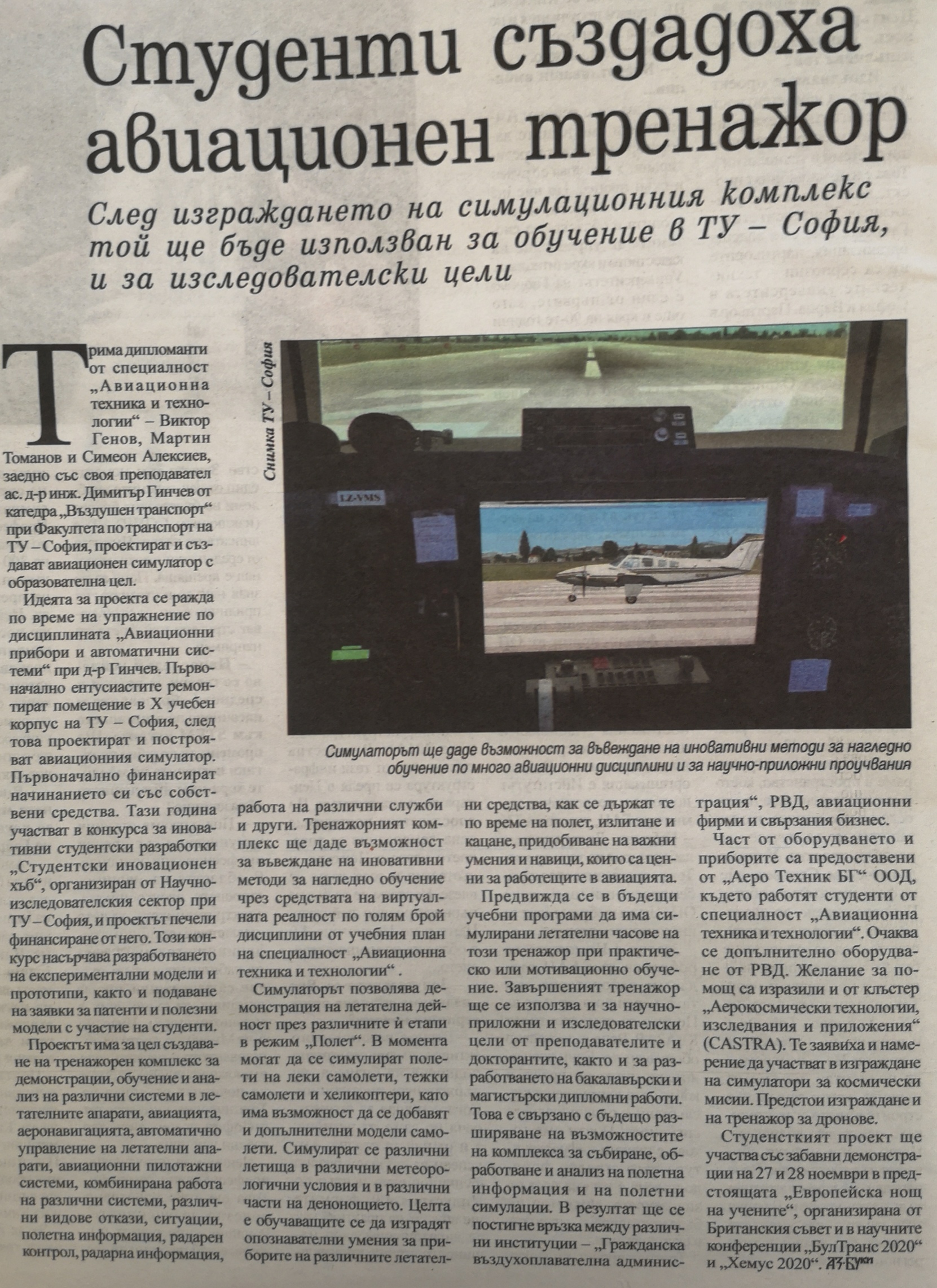
The complex will be used for training and research purposes. The simulator complex will serve for demonstrations, training, and analysis of aviation systems. A team of three graduates and a lecturer from the "Aviation Engineering and Technology" specialty at the Technical University – Sofia designed and created an aviation simulator for educational purposes, the university announced. Viktor Genov, Martin Tomanov, and Simeon Aleksiev from the Department of Air Transport at the Faculty of Transport came up with the idea during a practical session in the course "Aviation Instruments and Automatic Systems" under Assistant Professor Dr. Eng. Dimitar Ginchev. The enthusiasts renovated a room in the 10th academic building of TU-Sofia, after which they designed and built the aviation simulator. Initially, they funded their project with their own funds. This year, they participated in the competition for innovative student developments "Student Innovation Hub," organized by the Research Sector of TU-Sofia, and the project won funding from it. The competition encourages the development of experimental models and prototypes, as well as submitting patent and utility model applications with student participation. The project aims to create a simulator complex for demonstrations, training, and analysis of various systems in aircraft and aviation. The simulator complex will enable the introduction of innovative methods for visual training using virtual reality tools across a large number of courses in the curriculum of the "Aviation Engineering and Technology" specialty, TU-Sofia announced. The simulator allows the demonstration of flight activities through their various stages in "Flight" mode. Currently, flights of light aircraft, heavy aircraft, and helicopters can be simulated, with the possibility of adding additional aircraft models. Different airports are simulated under various meteorological conditions and at different times of the day. The simulator allows the demonstration of flight activities through their various stages. The goal is for trainees to develop recognition skills for the instruments of different aircraft, how they behave during flight, takeoff, and landing, and to acquire important skills and habits that are highly valued in aviation. According to the lecturers from the Department of Air Transport, simulated flight hours on the simulator are planned for future curricula. This will be practical or motivational training. The completed simulator complex will also be used for applied research and research purposes by the lecturers and doctoral students of the Department of Air Transport, as well as for the development of bachelor's and master's thesis works. Future expansion of the complex's capabilities for collecting, processing, and analyzing flight information and flight simulations is planned. This will result in connections between various institutions – the "Civil Aviation Administration," "Air Traffic Control" (ATC), aviation companies, and related businesses. Some of the equipment and instruments were provided by the company "Aero Technik BG," where students from the "Aviation Engineering and Technology" specialty also work. Additional equipment from ATC is expected to be received. Assistance in building the simulator and training is also expected from the Cluster "Aero-Space Technologies, Research and Applications" (CASTRA). The construction of a training center with a drone simulator is also planned. The student project will participate with fun demonstrations on November 27-28, 2020, at the upcoming edition of "European Researchers' Night," organized by the British Council, and at the scientific conferences "BulTrans-2020" and "Hemus 2020".
See the article here
Technews.bg, 31.08.2020
Somputerworld.bg, 31.08.2020
Rublics.bg, 31.08.2020
BTA, 31.0.2020
newspaper "Telegraph", 01.09.2020, p.9
newspaper "Az Buki", issue 36/03-09.IX.2020, p. 20