

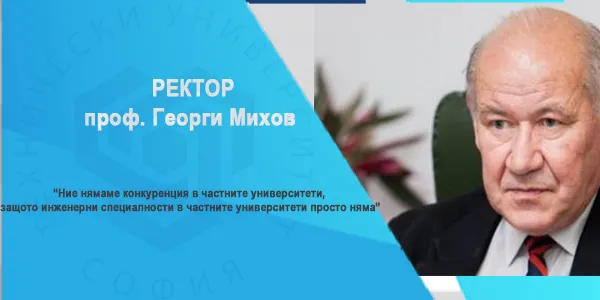
If "Folksvagen" builds a plant here, we can supply it with personnel
Focus
We have no competition in private universities because there are simply no engineering specialties in private universities
Author
Emil Spahiyiski
In Bulgaria, as well as in the world, there is a huge shortage of personnel in engineering professions. Industry and business increasingly turn to universities to stimulate training in certain professions. Education itself is specific, extremely expensive, and for this reason private educational institutions avoid opening such specialties. The campaign to recruit students in higher education institutions has also started. What can the Technical University offer to make it attractive to high school graduates.
- You have so many titles - corresponding member of the Bulgarian Academy of Sciences, professor, Doctor of Technical Sciences. How should I address you, Mr. Mihov?
- The most valuable form of address is "engineer".
- I won't hide it – I have always treated mathematics and physics poorly, and they have treated me the same way. If I had to choose a profession now, how would you convince me to study at the Technical University?
- I would convince you with the history, present, and future prospects. To date, we have produced over one hundred thousand engineers. Engineers who have built an entire Bulgaria and who have found good employment not only in the country but also abroad. Hundreds of scientists have emerged from our university, and seven academicians are our alumni. Currently, we offer training in eleven professional fields, six of which are in technical sciences and confer the title of "engineer." In all these six engineering fields, we are ranked first in the rating system.
- Why? Because of the employment prospects for graduates?
- The quality of education and subsequent employment are paramount. These are the main parameters by which an educational institution is evaluated. Of course, the quality of education includes the quality of the teaching staff, the material base, and the academic documentation. Last year, the institutional evaluation by the National Agency for Evaluation and Accreditation was 9.56 on a ten-point scale. In fact, this is the highest score ever received by a Bulgarian university.
We have 14 faculties here in Sofia, two in Plovdiv, and one in the city of Sliven. Additionally, under our management, we have three colleges – one in Sofia, one in Sliven, and our newest one, which is also our pride, is the Mechanical Engineering College in the city of Kazanlak.
- You mention Kazanlak; it seems you are closely connected to the needs of the industry?
- Yes, this is a college that fully serves enterprises in the region, including those from the Military-Industrial Complex. I could talk a lot about the college – it has been in existence for three years now – and it has many, many excellent students who study there, and whose employment is guaranteed.
- What prospects do your students have if they decide to go abroad afterwards?
- If someone envisions themselves abroad in advance, we offer training in three foreign faculties – for German engineering education and industrial management, the Faculty for Francophone training in electrical engineering, and the third is the English Faculty of Industrial Engineering. The training is conducted in the respective language by Bulgarian and foreign teachers. They are connected with universities in the respective countries, and graduates receive double diplomas that are recognized in the European Union.
However, I want to emphasize that our training is very demanding because we focus on quality, and not everyone manages to graduate, but those who do graduate find it very easy to realize themselves. By the second year, it becomes clear who will continue and who will drop out, because that is when courses in fundamental sciences begin.
- Let me guess – higher mathematics.
- Yes, that too. The scarecrow of everyone.
- Currently, you have over 11,000 students. Are you tempted to accept more students to have more income for the university?
- We prioritize quality over numbers. In the last five years, the state order we have declared has been almost unchanged, around 3,500-3,600, and the execution is around 96 and 99 percent. This shows a constant retention of admissions at our university compared to the state order. Unfortunately, in the last four to five years, the number of students who wish to attend the university has slightly decreased. If we speak in terms of numbers, it is around 10 percent. The reasons are demographic; many children go to study abroad, and there is insufficient affinity of society towards engineering education. Currently, there is a shortage of engineers both here and abroad. Anyway, this profession is very difficult to acquire because it is very responsible.
- You mentioned that over 100,000 people have graduated from the university and they have built Bulgaria. After the changes, it seems that the industry collapsed completely. How does the country look from this perspective today?
- It was so, but today there is obviously an upturn in the industry. This is evident from the fact that there is a high demand for personnel. Obviously, there is also a shortage of such personnel. I can even say that the opening of the College in Kazanlak was dictated precisely by this acute shortage of personnel for the industry, especially in mechanical engineering specialties.
- Which are the most sought-after specialties in the market according to your observations?
- Without a doubt, these are IT technology specialists – the demand is highest there, and of course, the pay as well. We have no problems with filling the positions there.
- How do you cope with the competition from private educational institutions?
- We do not have competition from private universities, because there are simply no engineering specialties in private universities. Not only are they not attractive, but they are also expensive to study. To produce one engineer requires a very expensive material base, which private higher education institutions cannot afford. There are only two universities that offer communication and computer technology as a specialty. But when we talk about energy, shipping, aviation, continuing with electrical engineering, electronics and automation, with general engineering – they are not present in private universities.
- Do you think that if Volkswagen builds that notorious plant here, we can supply them with personnel?
- I know about this project and I can say that we can supply them with specialists – not only engineers, but also people from the middle management. Perhaps not immediately, not all at once, but we have the potential to produce these personnel.
- In which directions can Bulgaria, as an industry, technology, compete at the world level with powerful economies such as those of the USA, China, South Korea, European countries?
- We successfully compete in the field of IT technologies, in the field of electrical engineering, electronics and automation, in the field of communication and computer technology.
- How do you build up the material and technical base? You said it is quite expensive.
- The funds for the base are acquired in several ways. Those coming through the budget are not sufficient, so the university participates in national and European projects - through the Ministry's research fund, European projects for human resources development "Horizon 2020", and we are involved in the construction of three centers of excellence and one for competencies, where the university's share is about 152 million leva, which is a significant amount. We hope that through these funds we will be able to improve our infrastructure and material base, because this will directly reflect on the quality of education.
- How does the industry support you?
- The demand for personnel drives private companies to invest heavily in the Technical University, furnishing centers and laboratories entirely at their own expense. I would mention all telecommunications operators, as well as companies like "Telemehanik" in the field of automation. In the transport sector as well.
- In the rector's courtyard, I also saw quite a few girls. Are women interested in engineering specialties at all?
- Oh, increasingly so. Both in military affairs and in technology, and they are competing very well with men. And not only are they competing, but they are also motivating them to study more.
- Do you have any ladies who graduated from your university and you are proud of them?
- There are quite a few prominent ones, yes. I would mention a female engineer who graduated in machine construction technology - the Speaker of Parliament, Mrs. Tsveta Karayancheva.
- Yes, she is definitely prominent. And besides, you are both from Kardzhali.
- We are from the same city, but I did not have the opportunity to know her before she entered politics at such a high position. I would also mention the former Deputy Prime Minister Lydia Shuleva, who also graduated from the Technical University. I would also mention the current Deputy Minister of Education – Tanya Mihaylova. Also – the well-known Sasha Bezukhanova and many others.
- If you were to ask the state for help – legislative, financial, what would it be?
- What I would like, especially legislatively, is to resolve the possibilities for shared resources among universities. State universities, especially those located in Student City and originating from the former Polytechnic, have many common aspects – concerning teaching in mathematics, physics, and chemistry. One university is better at one thing, the other at another. The same applies to sports complexes. Our base, for example, is used by five universities, and in some way this needs to be regulated legislatively. This means we can provide training to each other in certain specialties and disciplines.
- How would this look in reality?
- Quite specifically, a common center for mathematics training could be created, which would serve the University of Mining and Geology, the University of Chemistry, and the University of Forestry Technology. The same could happen with training in chemistry and foreign languages. In this way, both human and material resources can be combined. This will lead to cost reduction and an increase in the quality of education.
- And won't this lead to the reduction of teaching staff?
- Unlikely. We currently have a shortage of teachers, so there is no danger of teachers being laid off. See, sharing will give all these universities the opportunity to improve the quality of education.
- What are the salary standards for engineers?
- They vary. In the IT sector, they receive serious salaries and bonuses. This, in turn, causes many Bulgarian specialists to return home. In the field of mechanical engineering and energy, salaries are still not high enough, which leads to a brain drain. I will admit that it is difficult for us to fill positions for energy specialists. This is a problem for both society and business. We rely on business. If it is not there, we will not be here either. Therefore, it is participating more actively not only in supporting the university but even in developing the curricula, because it is directly concerned. Without active interaction between the university and business, engineering education is impossible.
- You are proud that the first television station in our country started operating at the Technical University. Is that true?
- Facts speak louder than anything else. Attempts to transmit a television signal began as early as 1951. At that time, very few countries in the world had television. The first broadcast was made in 1952. At that time, a television signal was transmitted via wire between two laboratories. Wireless broadcasting began on May 1, 1954. This took place from a tower on the roof of the old university building, near the monument to Vasil Levski, which is now the "Square 500" gallery. A program was broadcast two days a week - two hours of films and short reports. A television center was also created, and note that it existed until 1960. And a year earlier, BNT was created. It is remarkable that we had two programs from the very beginning.
Our guest
Academician Prof. Dr. Eng. Georgi Slavchev Mihov is a Bulgarian scientist, electronics engineer, inventor, Rector of the Technical University of Sofia since 2014, Corresponding Member of the Bulgarian Academy of Sciences since 2018.
Mihov is an alumnus of the "Hristo Botev" Language High School in Kardzhali. He graduated from VMEI "Lenin" (now Technical University) in Sofia with a major in "Electronic Engineering." He is an inventor.
Prof. Mihov was the Scientific Secretary of the Specialized Scientific Council on Electronic and Computer Engineering at the Higher Attestation Commission (2004-2010). He is a member of the Scientific Council of the Institute of Biophysics and Biomedical Engineering of the BAS (2010) and of the Union of Scientists in Bulgaria (section "Biomedical Engineering").
Latest News and Events
View all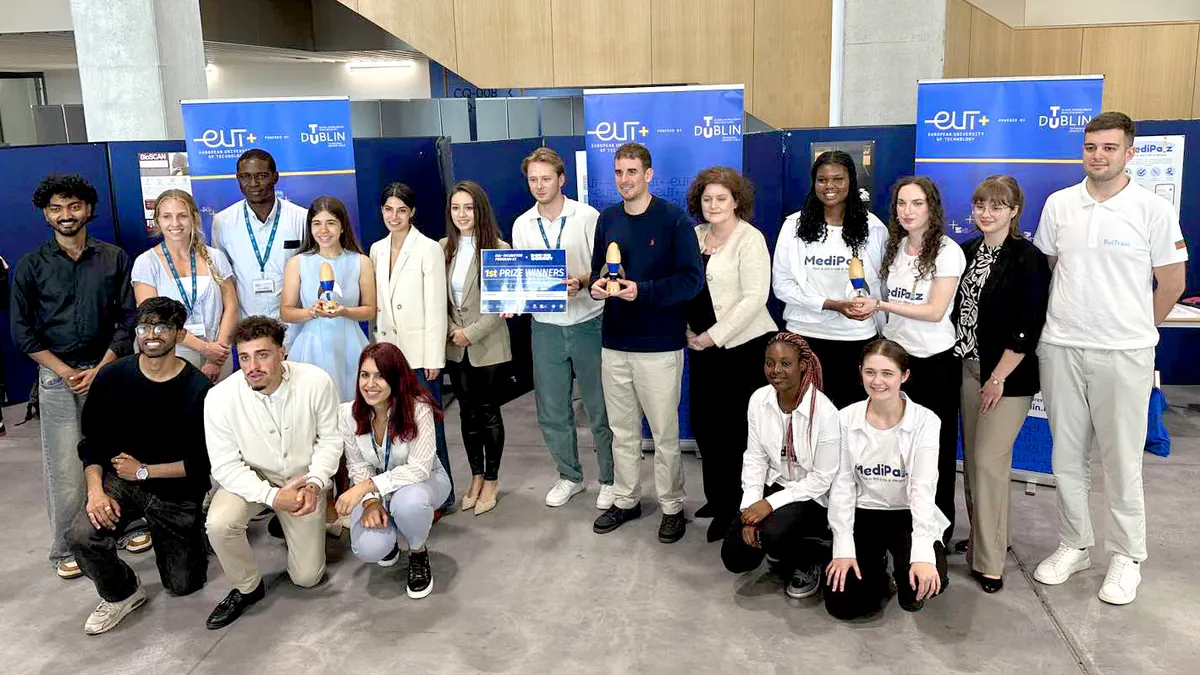
The Technical University – Sofia with a worthy performance at the final of the international Incubation Program for Entrepreneurship in Dublin
July 04, 2026
Read more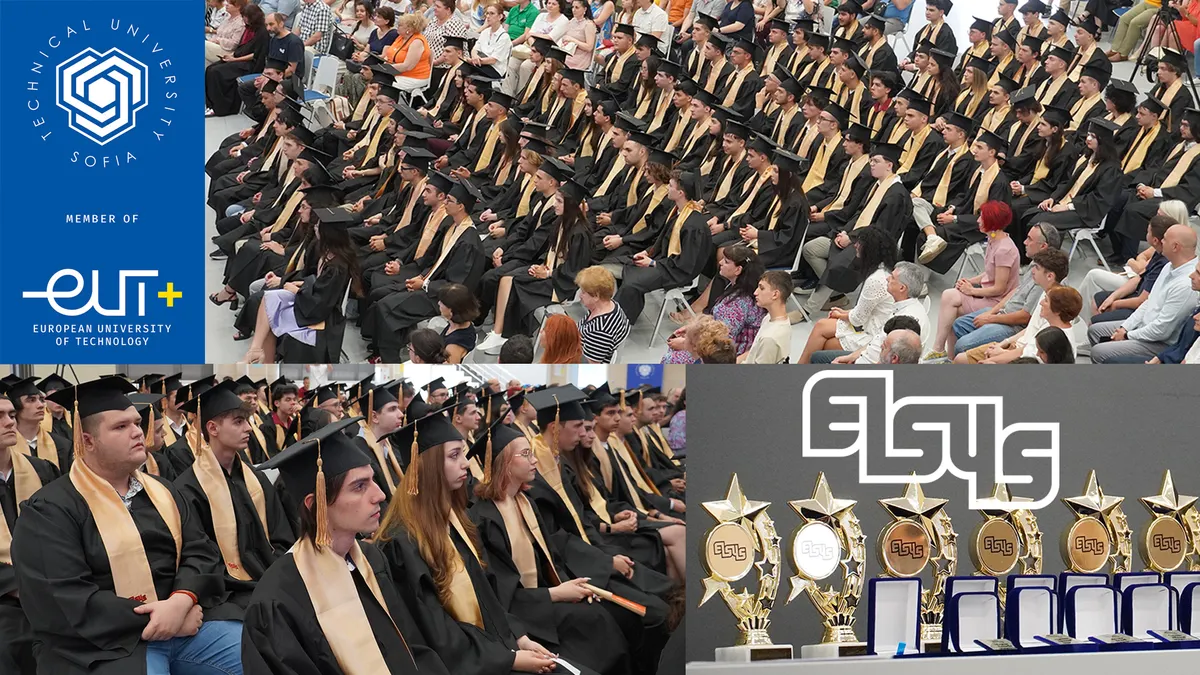
The talented 34th Graduation Class of TUT received their graduation diplomas
June 23, 2026
Read more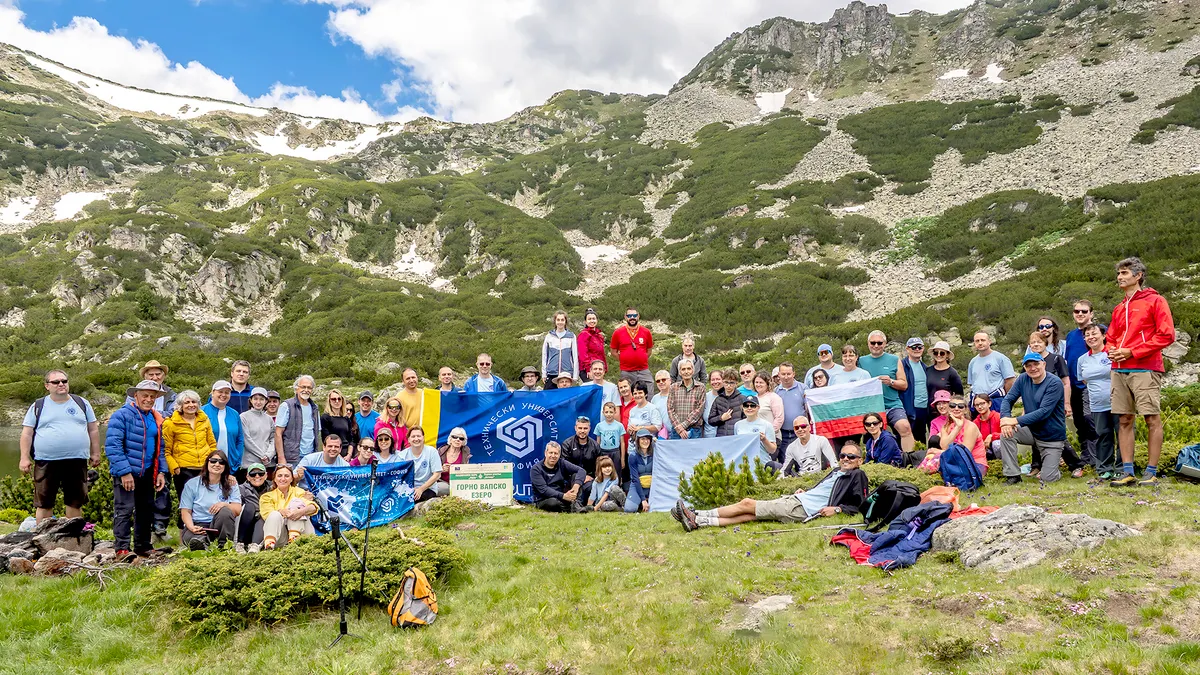
The Technical University – Sofia conquered Rila
June 23, 2026
Read more