
European XFEL (X-ray + Freier Elektronenlaser) is the most powerful X-ray laser in the world, with a 3.4 km linear accelerator. The international research facility officially entered into operation on May 4, 2017, in the Hamburg area. Built 37 meters underground, it contains a 2.1 km superconducting linear accelerator, in which electrons will be accelerated to an energy of 17.5 GeV. After reaching the limit speed, they begin to shine with an electron and photon beam that produces extremely short and synchronized X-ray flashes (shots) – 27,000 per second, one billion times more than conventional laser sources. The project, according to preliminary data, is valued at 1.22 billion euros and has been implemented and funded by a consortium of 14 countries.
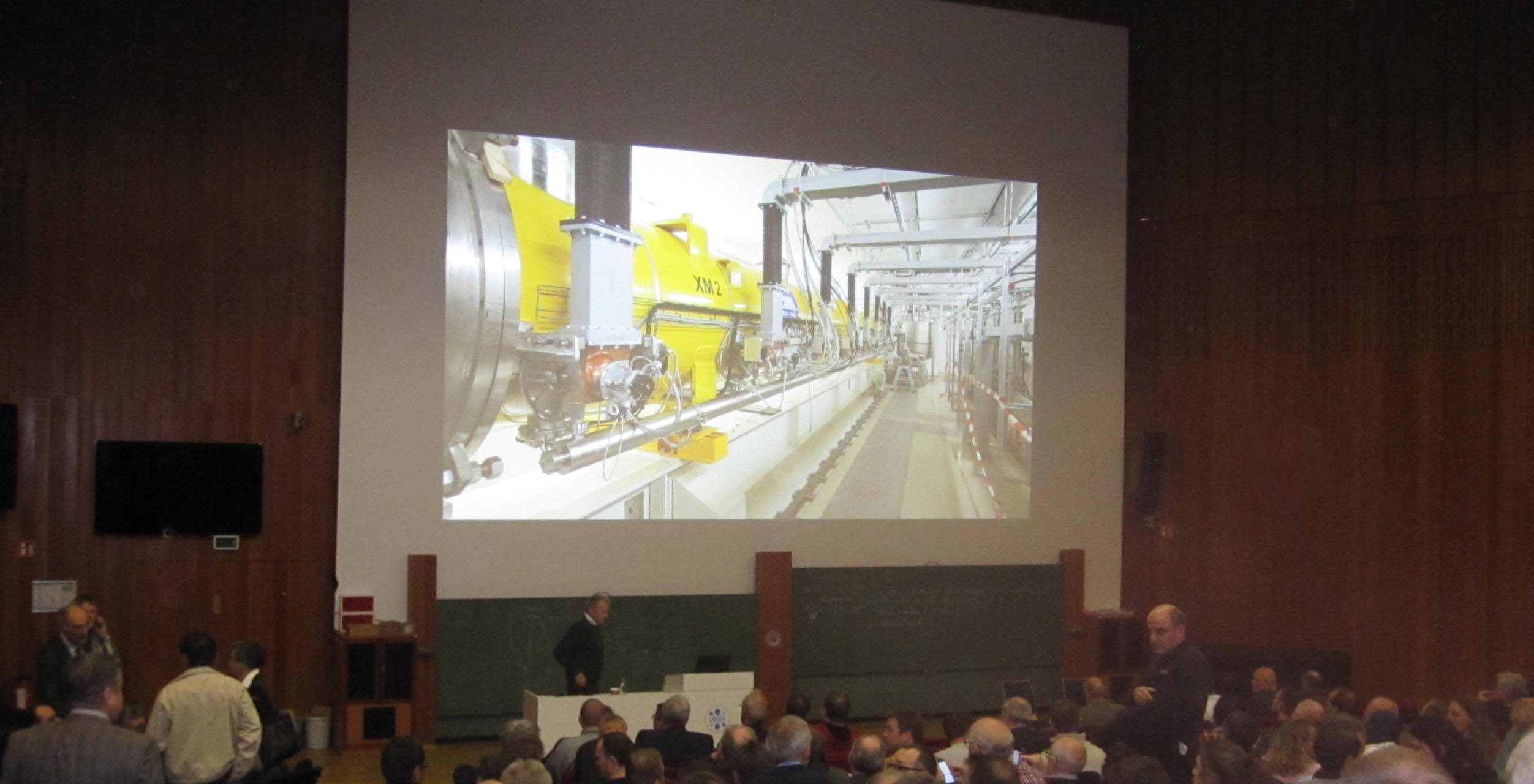 The linear collider, which is unique in the world, will open up completely new possibilities for scientific research and industrial application. Research groups from all over the world will investigate nanometer structures, fast processes, and extreme states, creating 3D images of viruses and proteins and filming chemical reactions in real time. In other words, it will find applications primarily in medicine (for the first time, scientists will have the opportunity to track changes occurring in cells in diseases such as Alzheimer's and AIDS, for biological research and life-saving treatment, virus analysis), monitoring chemical synthesis for material analysis in nanotechnology, for research in astrophysics, energy, electronics, photonics, and the environment.
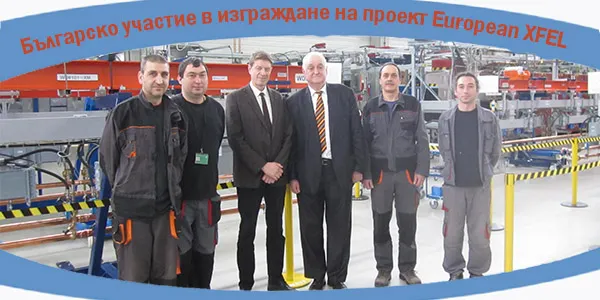
Bulgarian scientists, engineers, and specialists who participated in the construction of important systems in the accelerator were also invited to the official opening on May 4. On the Bulgarian side, TUS and Mikro Plus-Apostolov EOOD participated in the construction of XFEL.
Bulgaria joined the construction 10 years ago with the exceptionally difficult task: Engineering support for mechanical structures for waveguide distribution systems being built for the XFEL project. In this task, the following was carried out on our part: structural documentation was prepared for all waveguide components, designed and manufactured:
- compact high-power high-frequency switches (5MW),
- used in testing the cryomodules,
- compact phase regulators,
- specialized high-power manual switches / high-frequency energy distributors,
- pneumatic power supply systems providing specialized operating conditions for waveguide systems,
- all support structures for waveguide systems, primarily applying kinematic principles in design,
- all water-cooling systems for waveguide distribution systems, mounted to cryomodules.
Bulgarian specialists participated in the design of the assembly and testing line for waveguide systems, where more than 150 technological operations are performed. All technological equipment and fixtures, as well as specialized metrological fixtures for this line, were designed and manufactured in Bulgaria. Throughout the production cycle for the assembly of waveguide systems, quality management, including all measurement procedures for controlling the geometric parameters of components, products, and systems, were developed by TU-Sofia in the Scientific-Application Laboratory 'Coordinate Measurements in Mechanical Engineering', headed by Assoc. Prof. Dr. Dimitar Dyakov. Specialists from the Department of 'Precision Engineering and Instrumentation' participated in tasks related to Bulgaria's involvement in the XFEL project.
The assembly of all waveguide systems for the XFEL project was carried out by Bulgarian specialists. For this activity, 15 Bulgarian specialists participated over 4 years, but now certain maintenance activities are also being performed by Bulgarian specialists.