

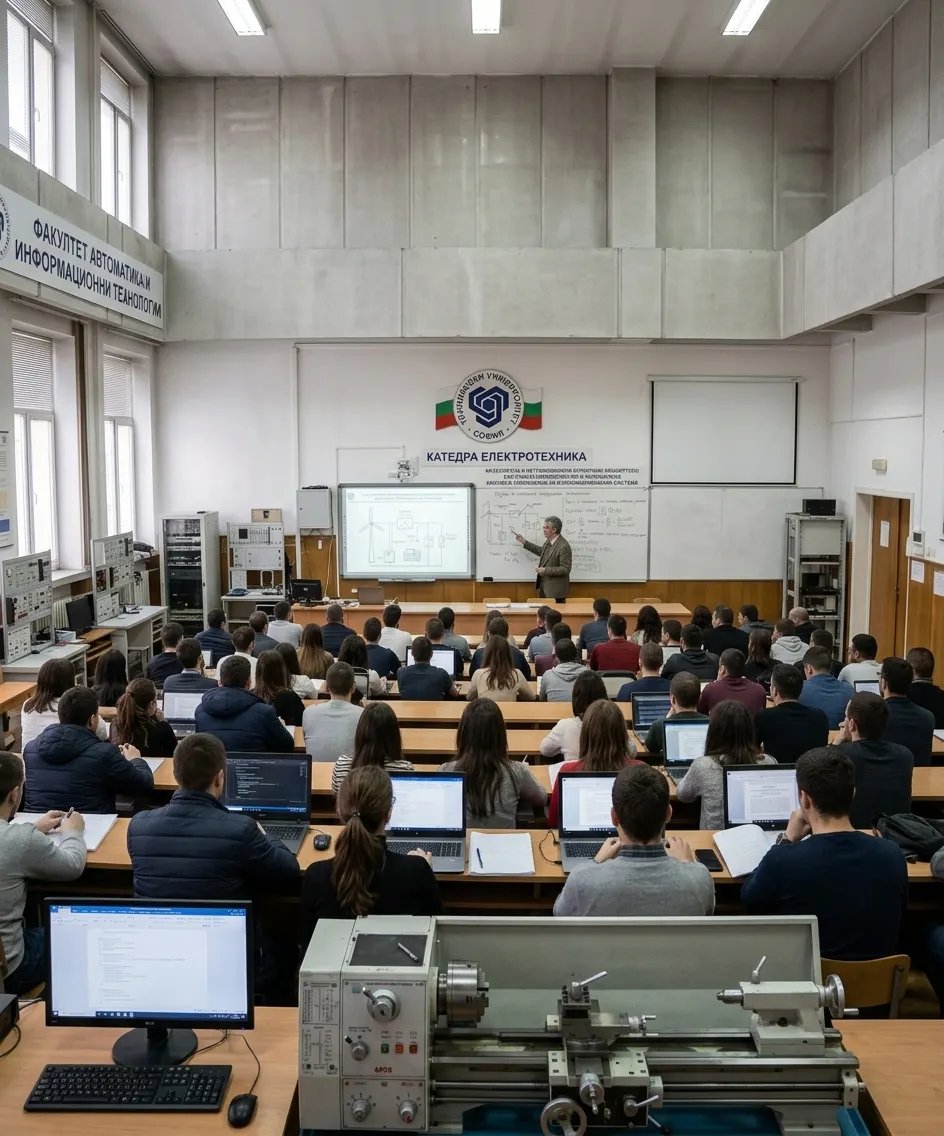
Graduates with an educational and qualification level of "Bachelor" in specialties from the professional directions "5.2 Electrical Engineering, Electronics and Automation" or "5.3 Communication and Computer Engineering" may apply for full-time or part-time study. Full-time study lasts 1.5 academic years, including the development of a thesis, while part-time study lasts 2 academic years, including the development of a thesis. The average grade from the diploma and the diploma defense (BQF Level "Bachelor") of the applicants must be at least "Good".
Graduates with a BQF Level "Bachelor" or BQF Level "Master" in other specialties from the professional field 5. Technical Sciences may apply for a "Master" in the specialty "Electrical Engineering" after completing bridging studies - three semesters within one academic year. The bridging courses are part-time and paid.
Graduates with a BQF Level "Professional Bachelor" from the professional direction 5.2. Electrical Engineering, Electronics and Automation may apply for a "Master" in the specialty "Electrical Engineering" after completing additional studies. The studies are conducted over two semesters and are paid.
The training includes seven mandatory and five elective courses. The mandatory courses provide fundamental training in numerical methods for modeling, simulating, and analyzing electromechanical systems, microprocessor control of electromechanical systems, and quality management. The elective courses are oriented towards various modern areas of electrical engineering and electrical technologies and guide students in choosing a topic for their diploma project. The diploma thesis is developed during the third semester.
The broad base of knowledge and skills that graduates of the Master's program in "Electrical Engineering" acquire ensures them good acceptance and successful implementation in the public and private sectors in:
• scientific research, design, engineering and consulting firms for the construction of electrical power facilities
• scientific research, design, engineering and consulting firms for the development and implementation of energy-efficient management of technological processes, electric drives, building automation
• industrial enterprises, firms and units for the development and production of electrical products using CAD/CAM technologies and systems
• electricity distribution companies, representative offices of leading foreign companies.
After gaining a certain amount of practical experience, they can also perform managerial, teaching and scientific research activities.
Master's electrical engineers may continue their studies in a doctoral program to obtain the academic and professional degree "Doctor".