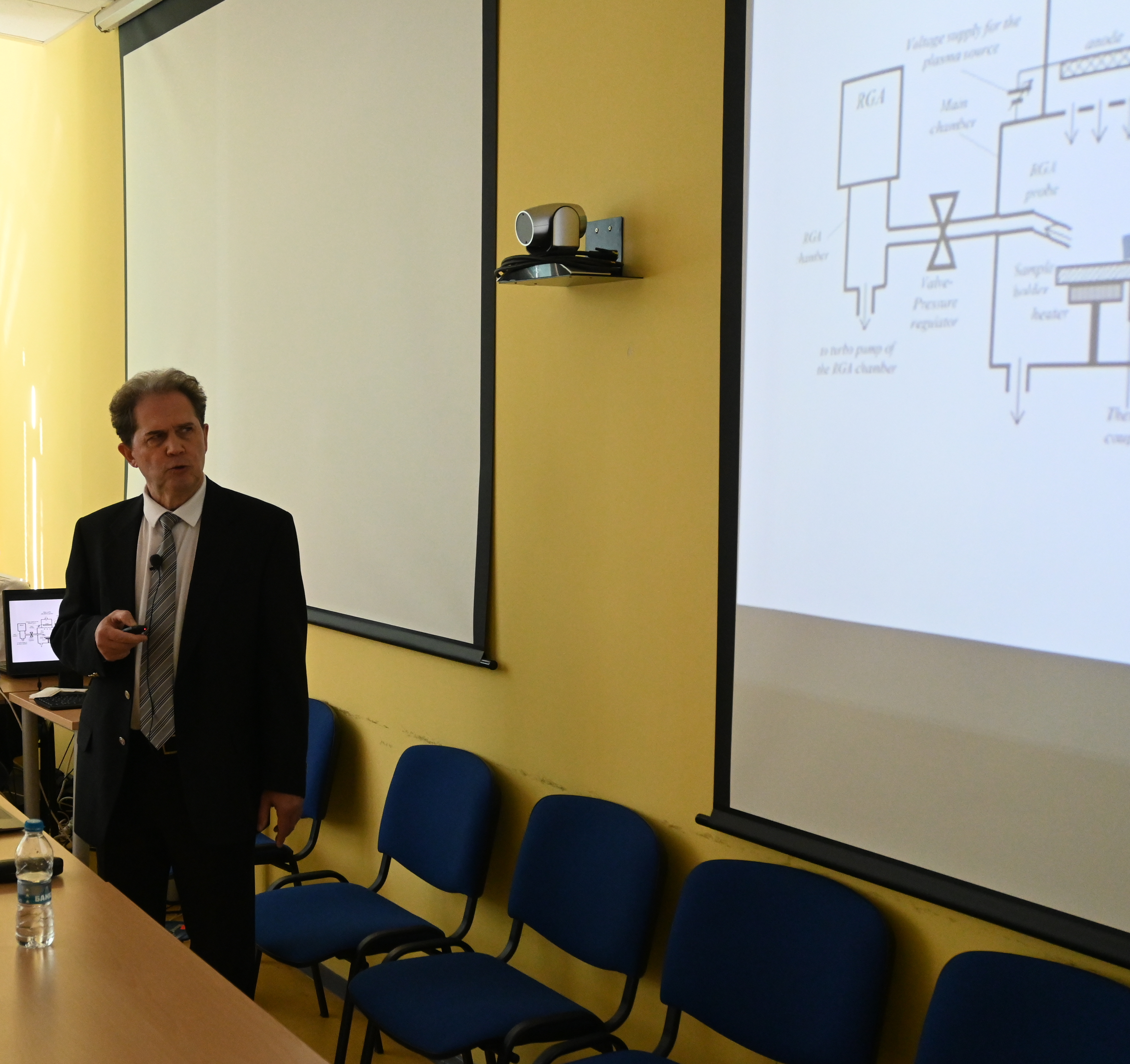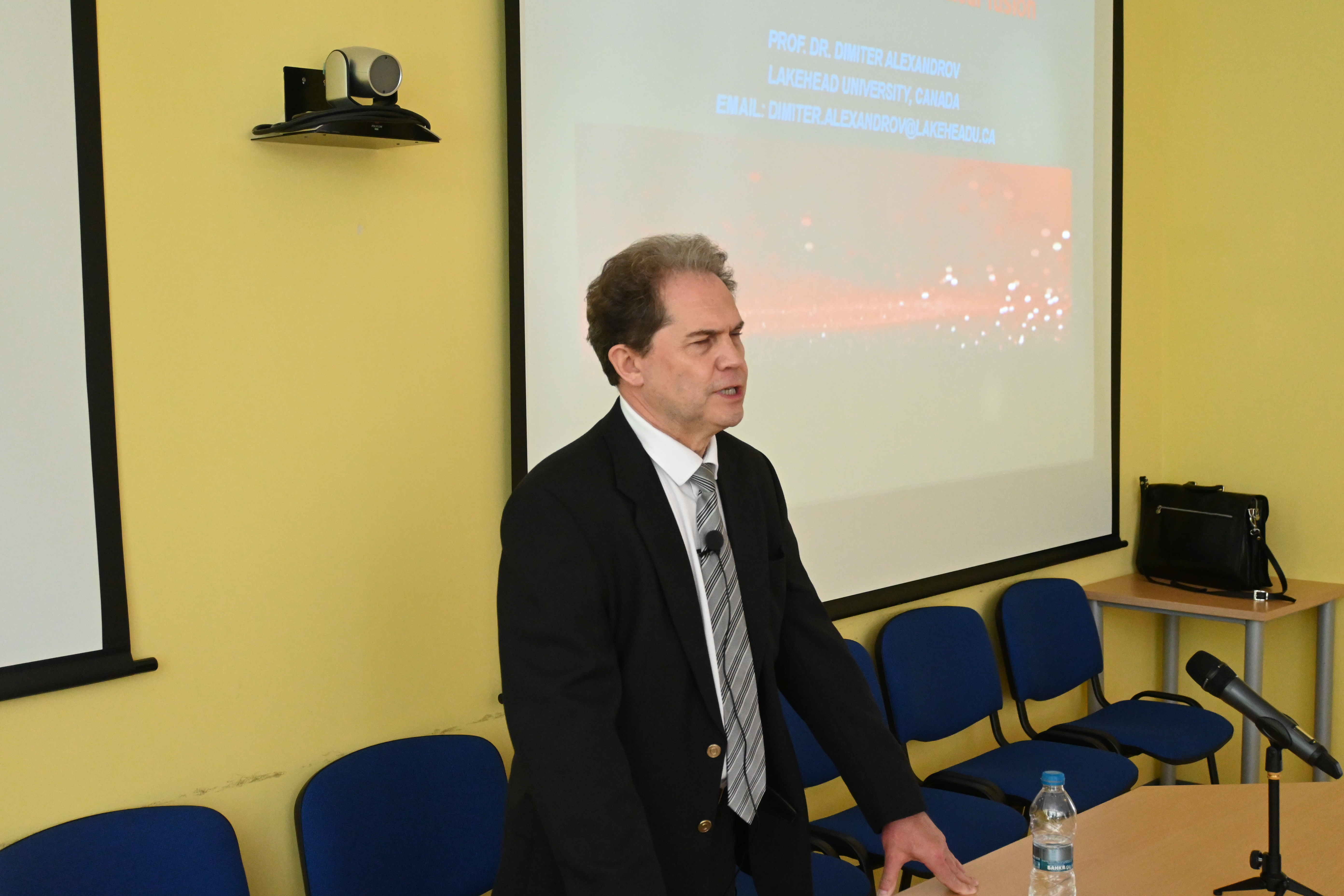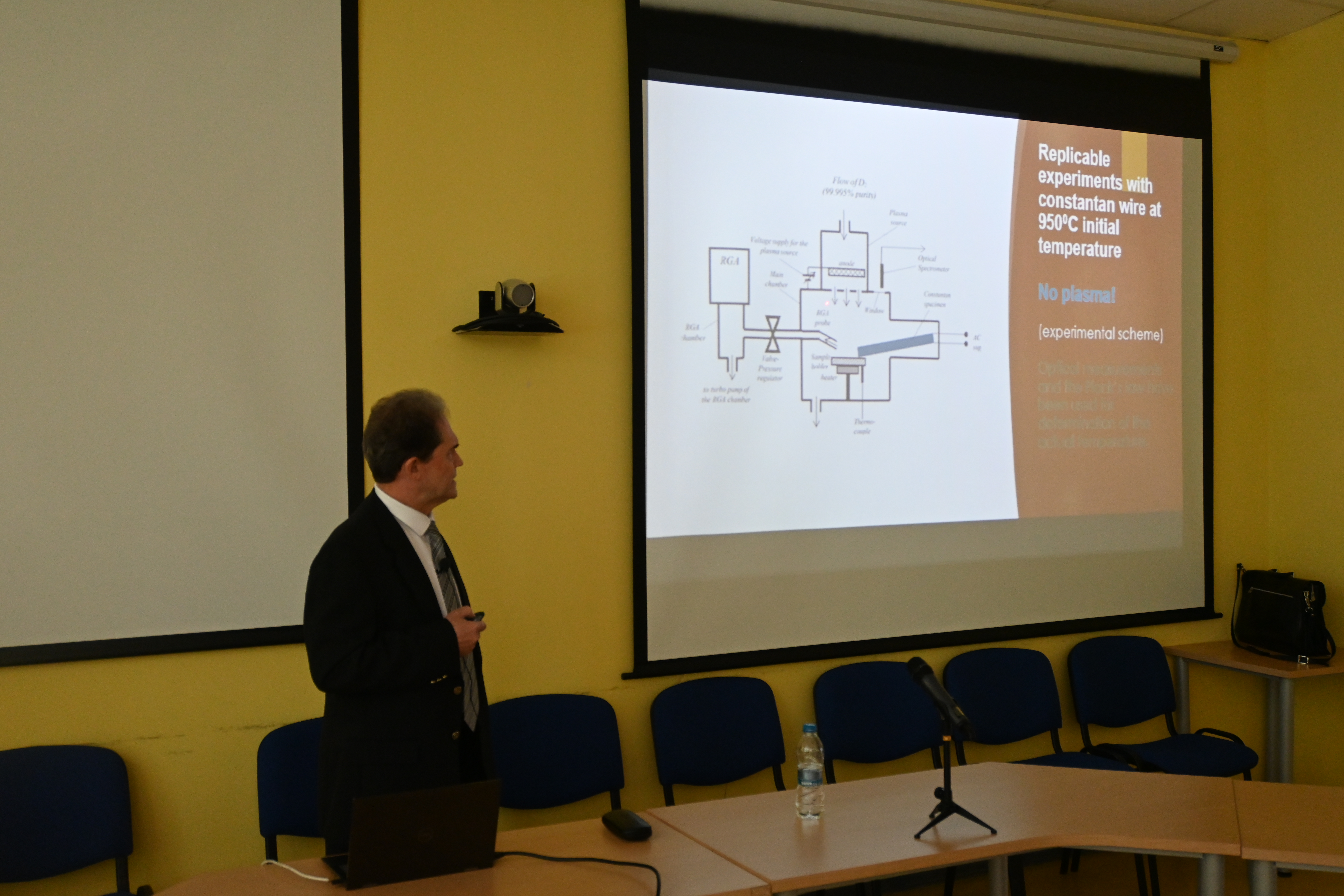

На 20.09.2022 (вторник) от 10:30 ч. в конферентната зала на Библиотечно-информационния център на ТУ-София се проведе лекция на гост-лектора проф. д-р Димитър Александров на тема „Навлизане в горещ етап на студения ядрен синтез“. Професор Димитър Александров е на посещение в ТУ – София във връзка с проект по програмата Еразъм+, КА107. Той е дългогодишен преподавател и учен в областта на полупроводниковите технологии, микро- и наноелектрониката. Защитава дисертация в ТУ-София през 1988 г. и до 1999 г. работи като главен асистент в катедра "Микроелектроника". Бил е на специализация в Университета в Квебек, Онтарио, Канада (1997-1999). През периода 1999 – 2011 г. е доцент в Университета Лейкхед в Канада, а през 2011 г. става професор там. От 2009 г. е ръководител на Лаборатория за изследване на полупроводници. Член е на редица професионални организации, като Materials Research Society, International Society for Condensed Matter Nuclear Science, Professional Engineers Ontario и Canadian Nuclear Society. Неговите научни интереси са в областите микроелектроника, материалознание и ядрена физика.
За контакти:
Prof. Dr. Dimiter Alexandrov, Department of Electrical Engineering, Lakehead University, 955 Oliver Road, Thunder Bay, Ontario P7B 5E1, Canada. Phone: +1-807-343-8311, Email: dimiter.alexandrov@lakeheadu.ca
Абстракт на лекцията:
Successfully performed replicable experiments about cold nuclear fusion reactions in constantan specimens are reported. These experiments were performed successfully thanks to the initial author’s research in the field of cold nuclear fusion as the corresponding results were partially published in the International Journal of Energy Research, 45(8), pp.12234-12246 (2021). Two types of experiments were performed: i) Several replicable experiments were performed at an initial temperature of 9500C of the constantan wires. In all experiments, explosive evaporations of the wires occurred momentarily after the beginning of the interactions of these wires with deuterium gas (D) injected in the chamber. The copper metal release was observed in the experiments. The released excess momentary power was at least greater than 3400W, the density of this power was at least 2280 W/g in terms of the constantan wire and the ratio (Released Excess Power)/(Initial heating electrical power) ≈ 15 and greater. No external radiation was registered. ii) A lot of replicable experiments were performed at initial temperatures of the constantan wires in the range 6600C – 6900C as the specimens were not destroyed during the experiments and they were used in other further experiments. The heated constantan wires interacted with injected deuterium gas (D) having room temperature and certain pressures for different experiments. The temperatures of the constantan wires began to increase at ~8 seconds after the beginning of injection of the deuterium gas and additional increases with 3000C – 3160C for different experiments were reached at ~25 seconds. The released excess power was in the range 158W – 179W, the density of the released excess power was in the range ~105W/g – 119W/g in terms of the constantan wire and the ratio (Released Excess Power)/(Initial heating electrical power) ≈ 2.7 for different experiments. No external radiation was registered. Although no external radiation (gamma rays and neutrons) was registered, the observed released excess power was of nuclear origin due to the following proofs: a) The observed released excess power was not of electrical origin, because the parameters of the heating circuit remained unchanged during the experiments; b) The observed release of excess power of chemical origin was ~0.18% of the total released excess power; c) Significant density of the released excess power in terms of the mass of the constantan wire; and d) Registered release of helium (3He and 4He). The corresponding presentation will be based mainly on short video clips and on pictures proving the successfully performed cold nuclear fusion experiments reported in this abstract.